
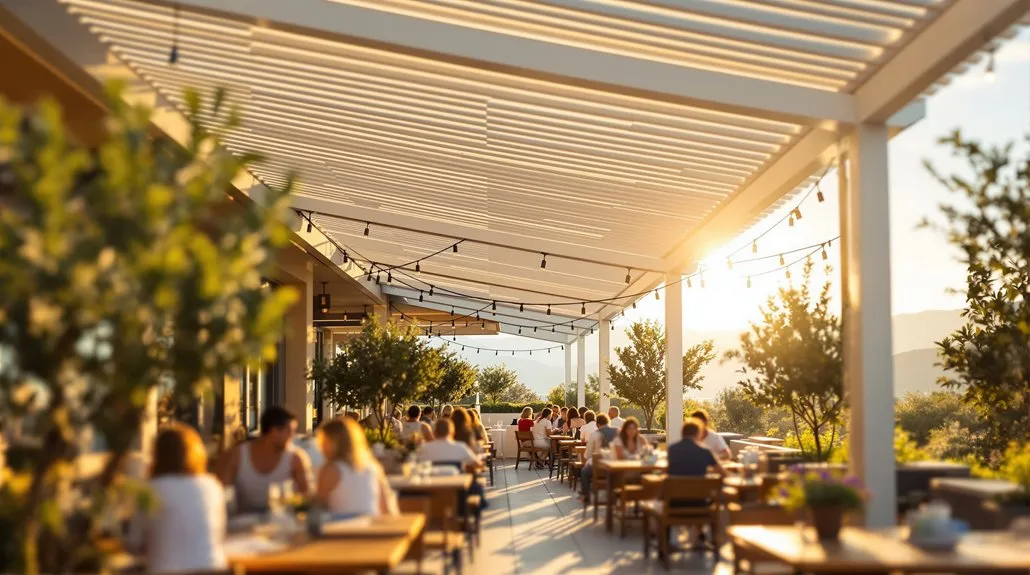
Restaurants choose louvered pergolas because they keep outdoor seating open and profitable in any weather. You can rotate the adjustable roof slats to block rain, filter harsh sunlight, or maximize airflow whenever conditions shift. Unlike umbrellas or awnings, they’re durable, low-maintenance, and purpose-built for commercial use. They also signal permanence to guests, encouraging longer stays and repeat visits. Keep going to discover everything you need to know before making this investment.
Key Takeaways
- Adjustable louvers control sunlight, airflow, and rain, keeping outdoor seating comfortable without forcing guests indoors during weather changes.
- Fully closed louvers shed rain, while built-in gutters channel water away, keeping dining areas dry and usable.
- Unlike umbrellas or awnings, louvered pergolas offer superior durability, adaptability, and lower long-term maintenance costs.
- Expanded, weather-protected seating increases revenue through longer guest stays and consistent year-round table turnover.
- The permanent structure signals stability and professionalism, builds customer trust, and encourages repeat visits.
What a Louvered Pergola Is and How It Works
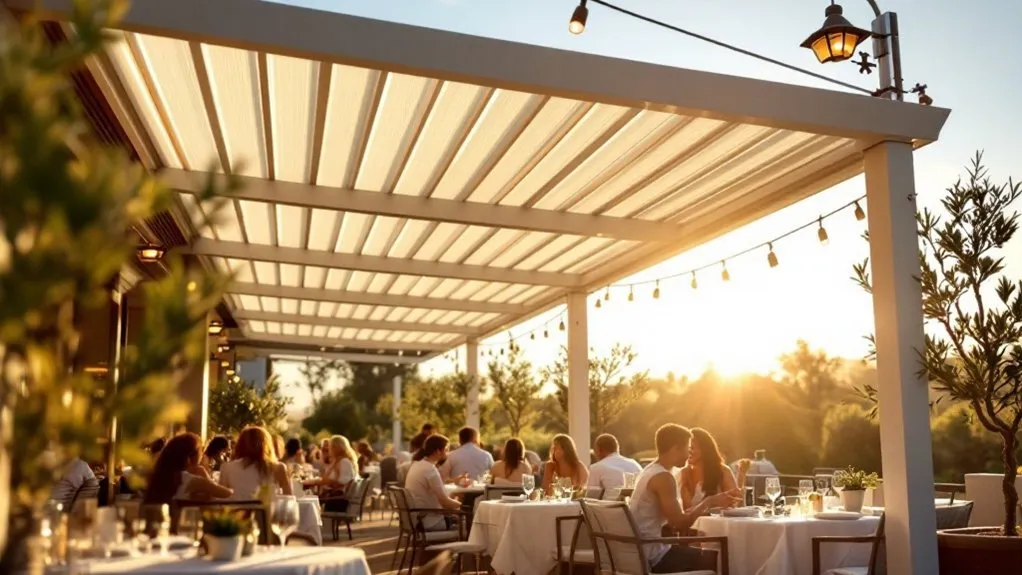
A louvered pergola is an outdoor structure with adjustable roof slats that let you control sunlight, airflow, and rain coverage with the turn of a crank or the tap of a button.
You can rotate the louvers fully open to let in sunlight, angle them to filter harsh glare, or close them completely during rain.
Many systems include built-in gutters that channel water away from your seating area.
Whether you’re operating a rooftop bar or a street-level patio, you’re getting a structure that adapts to changing weather without requiring you to close down your outdoor space.
Rain, Sun, and Wind: What Louvered Pergolas Actually Protect Against
Rain is where louvered pergolas earn their keep. When you close the louvers fully, they form a tight, overlapping seal that sheds water away from the seating area below. Guests stay dry without retreating inside.
Sun control works differently. You angle the louvers to block harsh midday glare while still letting diffused light through. This keeps tables comfortable without making the space feel enclosed.
Wind protection is more limited. Louvers disrupt airflow and reduce gusts, but they won’t stop strong lateral wind the way solid walls do.
For full wind coverage, you’ll need optional side screens.
Louvered Pergolas vs. Umbrellas, Awnings, and Fixed Roofs
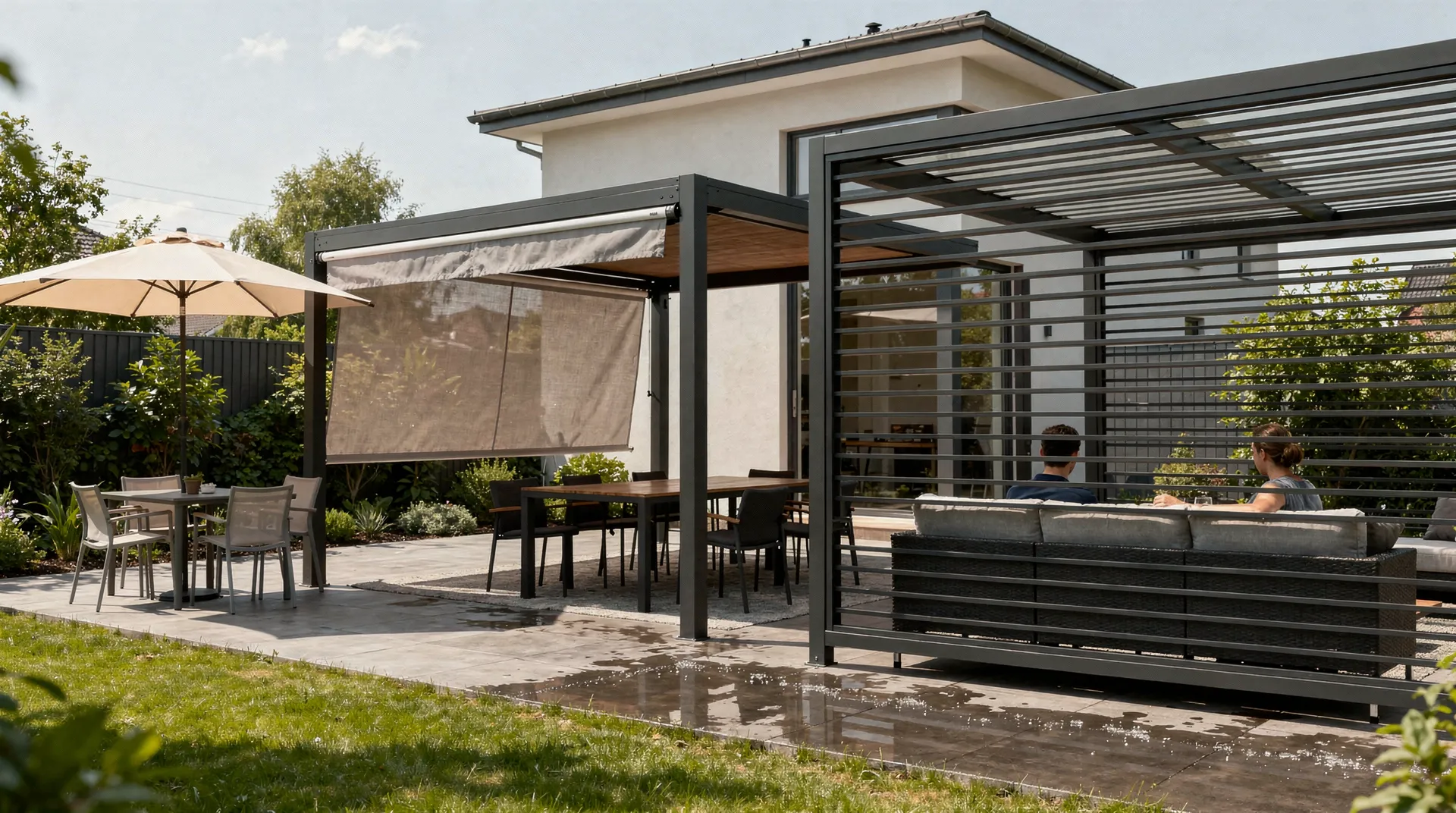
When you’re weighing shelter options for outdoor seating, each solution makes a different trade-off between flexibility, durability, and cost.
Umbrellas are affordable but unstable in wind and offer minimal coverage.
Awnings extend shade effectively yet can’t adapt to changing weather and deteriorate faster.
Fixed roofs provide solid protection but eliminate airflow, trap heat, and require permits.
Louvered pergolas outperform all three by letting you control light, ventilation, and rain protection on demand.
They’re built to last, require less maintenance than fabric alternatives, and add permanent architectural value without sacrificing the open-air feel your guests actually want.
More Seats, More Revenue: The Business Case
Outdoor seating directly drives revenue, and a louvered pergola lets you maximize it.
With adjustable louvers, you don’t have to shut down tables every time clouds roll in or temperatures spike. You keep guests seated longer, turn tables more consistently, and fill capacity during shoulder seasons when competitors lose business to bad weather.
Adjustable louvers mean fewer shutdowns, longer stays, and tables that keep turning no matter the forecast.
The structure also signals permanence to customers — it’s not a temporary canopy you fold up after service. That perceived stability builds trust and encourages repeat visits.
When you compare the cost per additional seat to the annual revenue it generates, a louvered pergola pays for itself faster than most expect.
How a Better Outdoor Space Elevates the Guest Experience
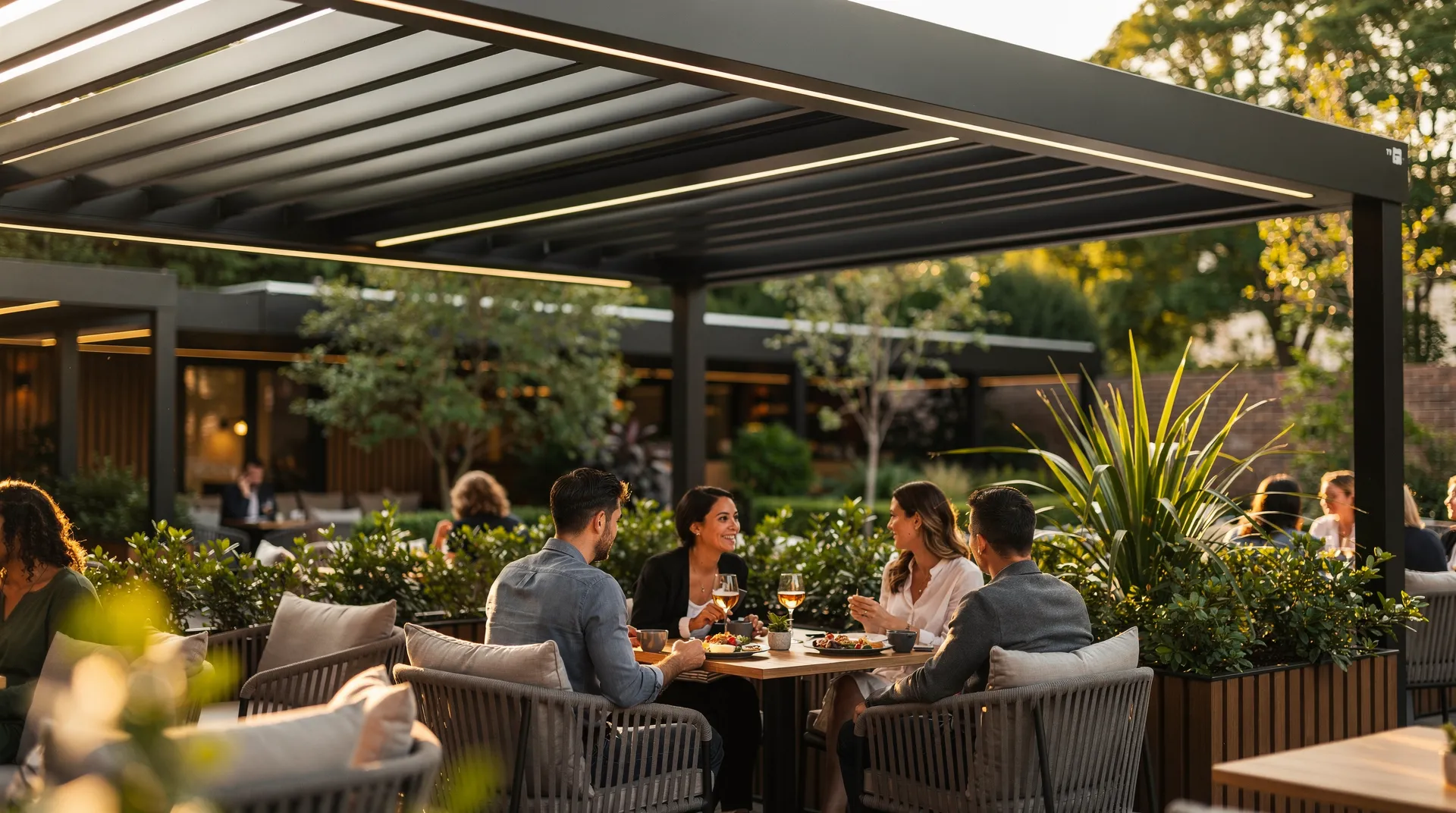
Revenue matters, but what keeps guests coming back is how they feel while they’re there. A louvered pergola transforms your patio into a space guests actually want to linger in. That translates directly into longer visits and stronger loyalty.
A well-designed outdoor space delivers:
- Comfort – Adjustable louvers control sun, shade, and airflow on demand.
- Ambiance – Integrated lighting creates atmosphere day or night.
- Privacy – Defined structure gives guests a sense of enclosure without feeling closed in.
- Consistency – Protection from light rain means the experience doesn’t stop when weather shifts.
Lighting, Heaters, and Smart Controls Worth Adding
A louvered pergola gives you the structure—but the right add-ons turn it into a year-round revenue asset.
Integrate recessed LED lighting to extend evening seating without harsh glare.
Recessed LED lighting extends your evening seatings, creating ambiance guests enjoy without the distraction of harsh glare.
Add infrared heaters to the frame so guests stay comfortable when temperatures drop.
Use ceiling fans during warmer months to improve airflow and reduce heat buildup.
Smart control panels let you adjust louvers, lighting, and heaters from a single interface—saving staff time and improving response speed.
These integrated systems don’t just add comfort; they let you manage the entire space efficiently and keep tables filled across more seasons.
What a Commercial Louvered Pergola Actually Costs
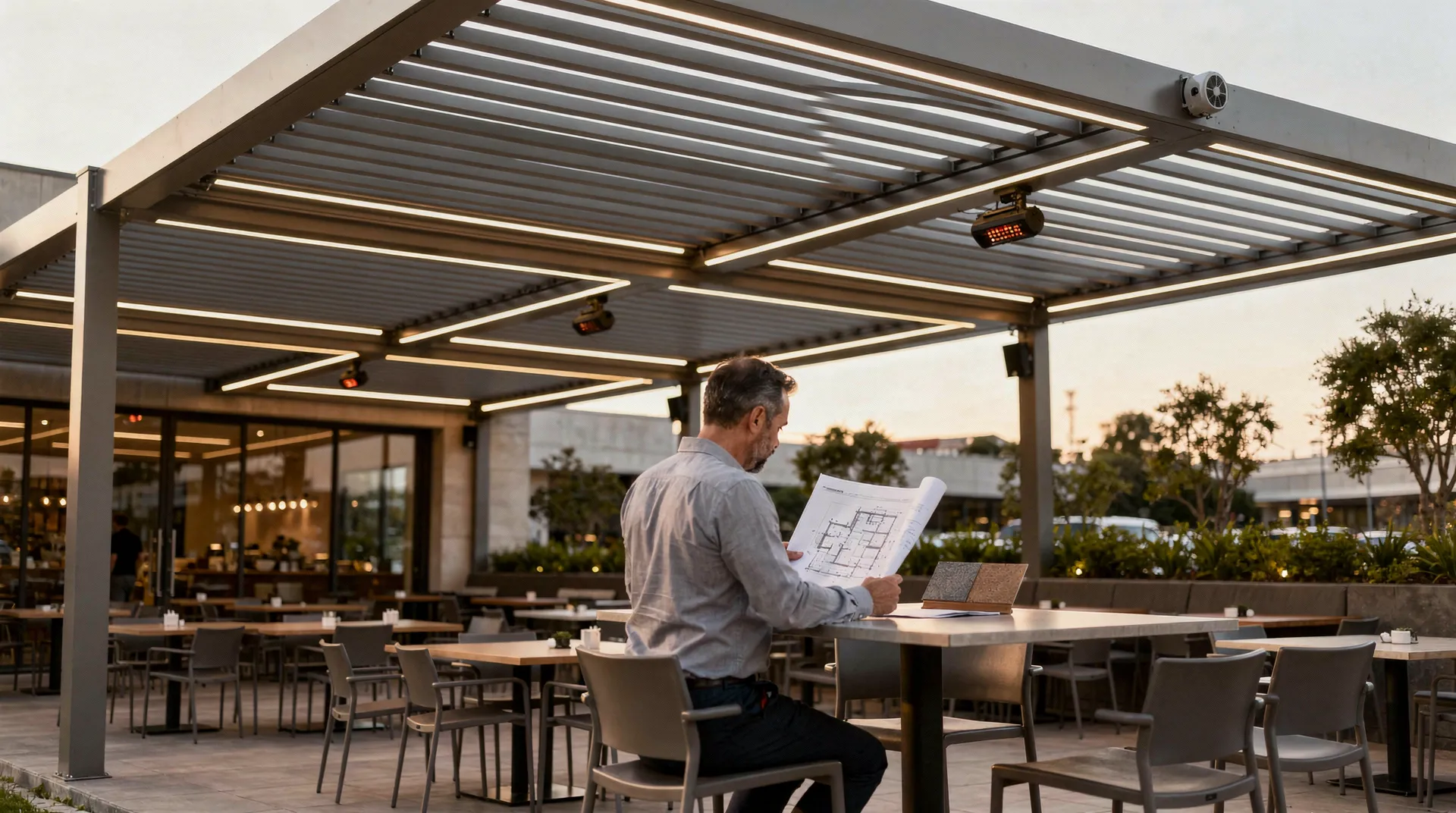
Commercial louvered pergolas range from $15,000 to $80,000 or more, depending on size, materials, and the number of features you add.
You’re investing in a revenue-generating structure, not just shade.
Here’s what drives your final number:
- Size and span — larger footprints multiply material and labor costs quickly
- Motorization and smart controls — automation adds $3,000–$8,000 depending on complexity
- Integrated lighting and heaters — expect $2,000–$5,000 per zone
- Permits and installation — commercial-grade installation typically runs 20–30% of material costs
Budget carefully, and that investment pays for itself through increased seating capacity and year-round revenue.
Permits, Installation, and What to Expect From the Process
Before your louvered pergola goes up, you’ll need to navigate permits, inspections, and contractor coordination—and that process takes longer than most owners expect.
Most municipalities require structural permits, and some demand wind-load engineering documentation. Budget four to eight weeks for approvals before installation even begins.
Installation itself typically runs three to five days depending on structure size and site conditions.
You’ll coordinate between your pergola supplier, a licensed contractor, and possibly an electrician if you’re adding lighting or heating.
Ask your supplier upfront which permits they handle versus what falls on you—that clarity prevents costly delays.
Sizing, Materials, and Supplier Criteria for Restaurant Pergolas
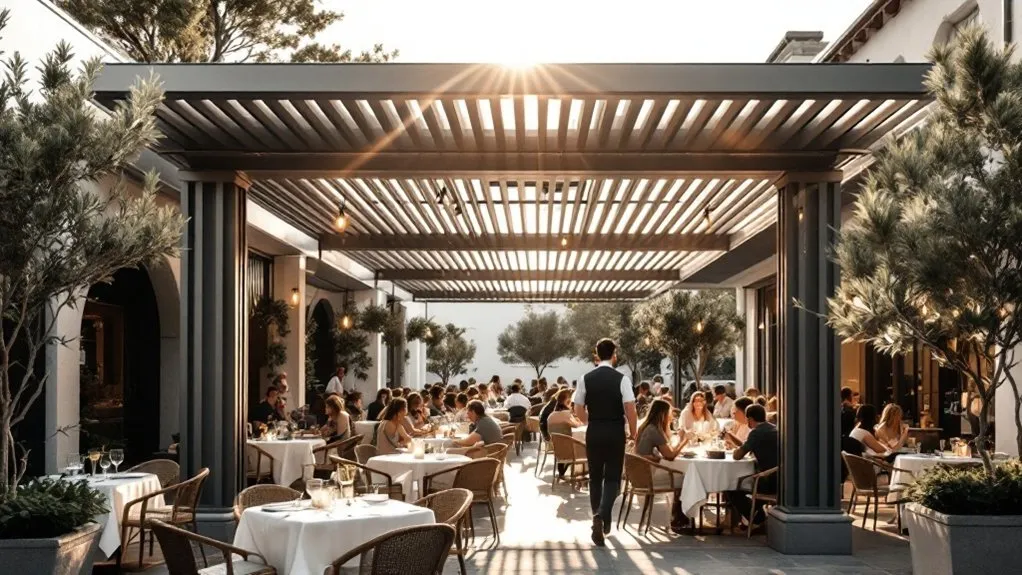
Sizing your louvered pergola correctly starts with your seating layout—calculate square footage per covered zone rather than eyeballing the footprint.
Nail your pergola sizing by mapping your seating zones first—square footage per area beats guessing every time.
When evaluating suppliers and materials, prioritize these four criteria:
- Aluminum grade — 6063-T5 or 6061 alloy handles commercial load requirements
- Louver pitch range — confirm 0°–150° rotation for full weather adaptability
- Span capability — structural bays should cover 20+ feet without interior posts
- Warranty terms — demand minimum 10-year structural, 5-year finish coverage
Vet suppliers by requesting commercial project references, lead times, and integrated drainage documentation before signing anything.
Frequently Asked Questions
Can Louvered Pergolas Withstand Heavy Snow Loads in Colder Climates?
Yes, you can rely on louvered pergolas to handle heavy snow loads, but you’ll need to choose a model specifically engineered for cold climates.
Look for aluminum structures with high load ratings, typically 40+ pounds per square foot. You should also close the louvers at a slight angle to shed snow naturally.
Regular maintenance and proper installation guarantee your pergola won’t buckle under winter’s harshest conditions.
Do Louvered Pergolas Require Regular Maintenance or Professional Servicing Schedules?
Yes, you’ll need regular maintenance to keep your louvered pergola in top condition.
Clean the louvers periodically to remove dirt and debris, lubricate the motorized components annually, and inspect the frame for signs of wear or corrosion.
Most manufacturers recommend scheduling professional servicing every one to two years.
Fortunately, you won’t find the upkeep overwhelming, as modern louvered pergolas are designed for durability and minimal maintenance requirements.
Are Louvered Pergolas Customizable to Match Existing Restaurant Branding or Aesthetics?
Yes, you can fully customize louvered pergolas to match your restaurant’s branding and aesthetics.
You’ll find options for various colors, finishes, and frame materials that complement your existing décor. You can also add integrated lighting, retractable screens, and decorative elements that reinforce your brand identity.
Many manufacturers offer powder-coating in virtually any color, so you’re never locked into a standard look. Your outdoor space can feel like a seamless extension of your interior design.
How Long Does a Commercial Louvered Pergola Typically Last Before Replacement?
With proper maintenance, you can expect your commercial louvered pergola to last 15 to 25 years before needing replacement.
Aluminum models tend to outlast wood options since they resist rust, rot, and warping.
You’ll extend its lifespan considerably by cleaning regularly, lubricating moving parts, and addressing minor repairs quickly.
The quality of your initial installation and the manufacturer’s build standards also play a major role in determining how long it’ll serve your restaurant.
Can Louvered Pergolas Be Relocated if a Restaurant Moves or Closes?
Yes, you can relocate a louvered pergola if your restaurant moves or closes.
Most commercial systems use bolted connections and modular components, making disassembly and reinstallation feasible. Hire experienced installers to document the process carefully and protect key components during transport.
However, it’s not always cost-effective, so weigh relocation expenses against the structure’s age, condition, and the new site’s compatibility before deciding.
Conclusion
You’re not just adding shade when you install a louvered pergola — you’re investing in a revenue-generating space that works year-round. From weather protection to guest comfort, the advantages stack up fast. Once you’ve weighed the costs, permits, and supplier options covered in this guide, you’ll have everything you need to make a confident decision that transforms your outdoor seating into one of your restaurant’s strongest assets.