
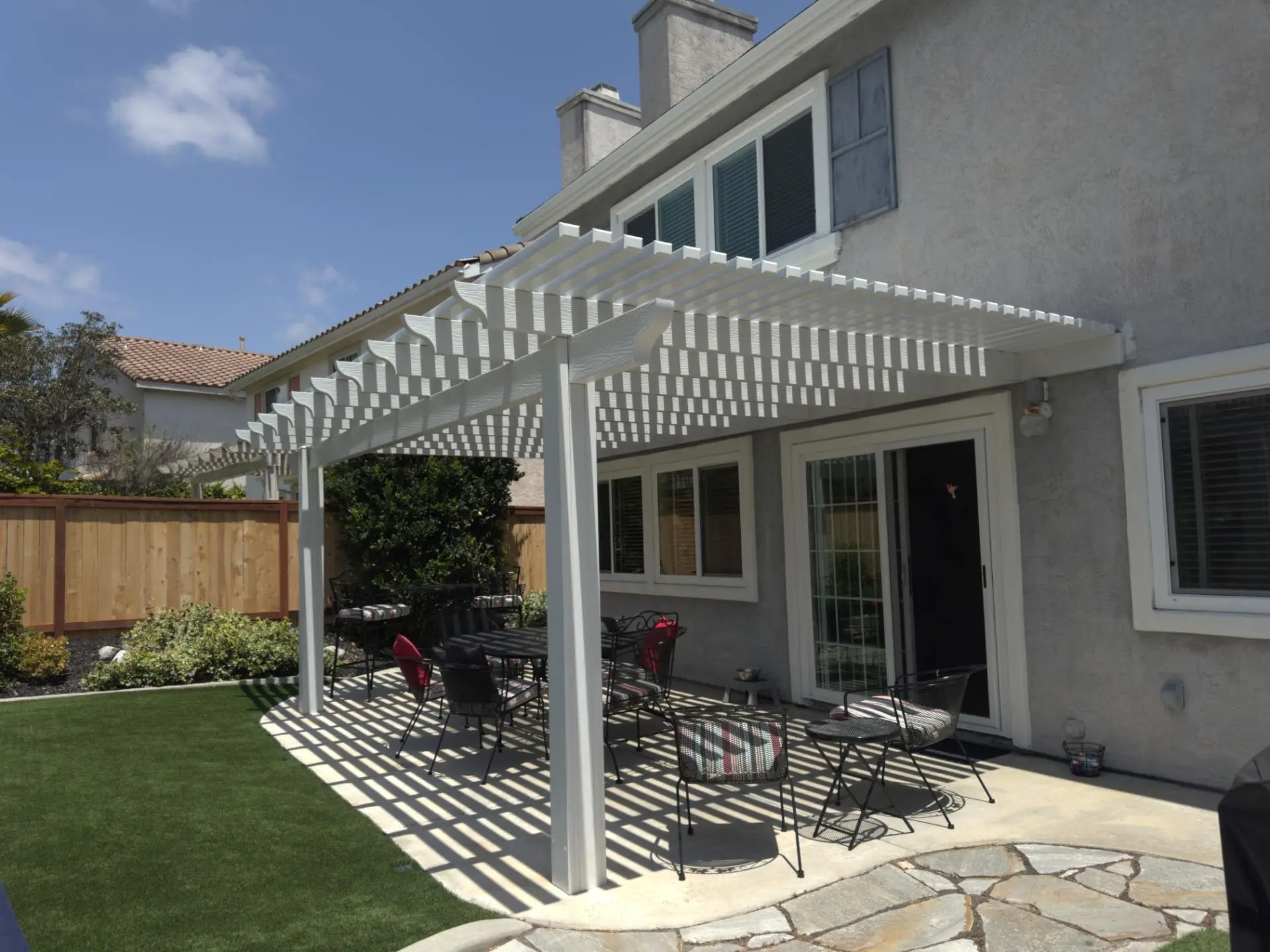
Aluminum pergolas offer superior fire safety compared to wood structures, with ignition temperatures reaching 1,220°F versus wood’s 500-600°F threshold. You’ll benefit from Class A fire ratings and non-combustible properties that don’t emit volatile gases or spread flames. Insurance companies often reward these fire-resistant installations with lower premiums, while building departments may expedite permits for non-combustible outdoor structures. Your investment protects both your property and neighboring homes from fire hazards. Below, you’ll discover the complete science behind aluminum’s protective advantages.
Key Takeaways
- Aluminum pergolas achieve Class A fire ratings with ignition temperatures of 1,220°F, significantly higher than wood’s 500-600°F threshold.
- Non-combustible aluminum resists ember ignition and doesn’t emit volatile gases that feed fires, unlike traditional wood structures.
- Insurance companies often offer reduced premiums for properties with fire-resistant aluminum structures due to lower wildfire risks.
- Aluminum forms protective oxide layers when heated, maintaining structural integrity up to 1,221°F while actively resisting combustion.
- Fire-safe aluminum pergolas support integrated lighting and bold architectural designs without compromising safety or requiring high maintenance.
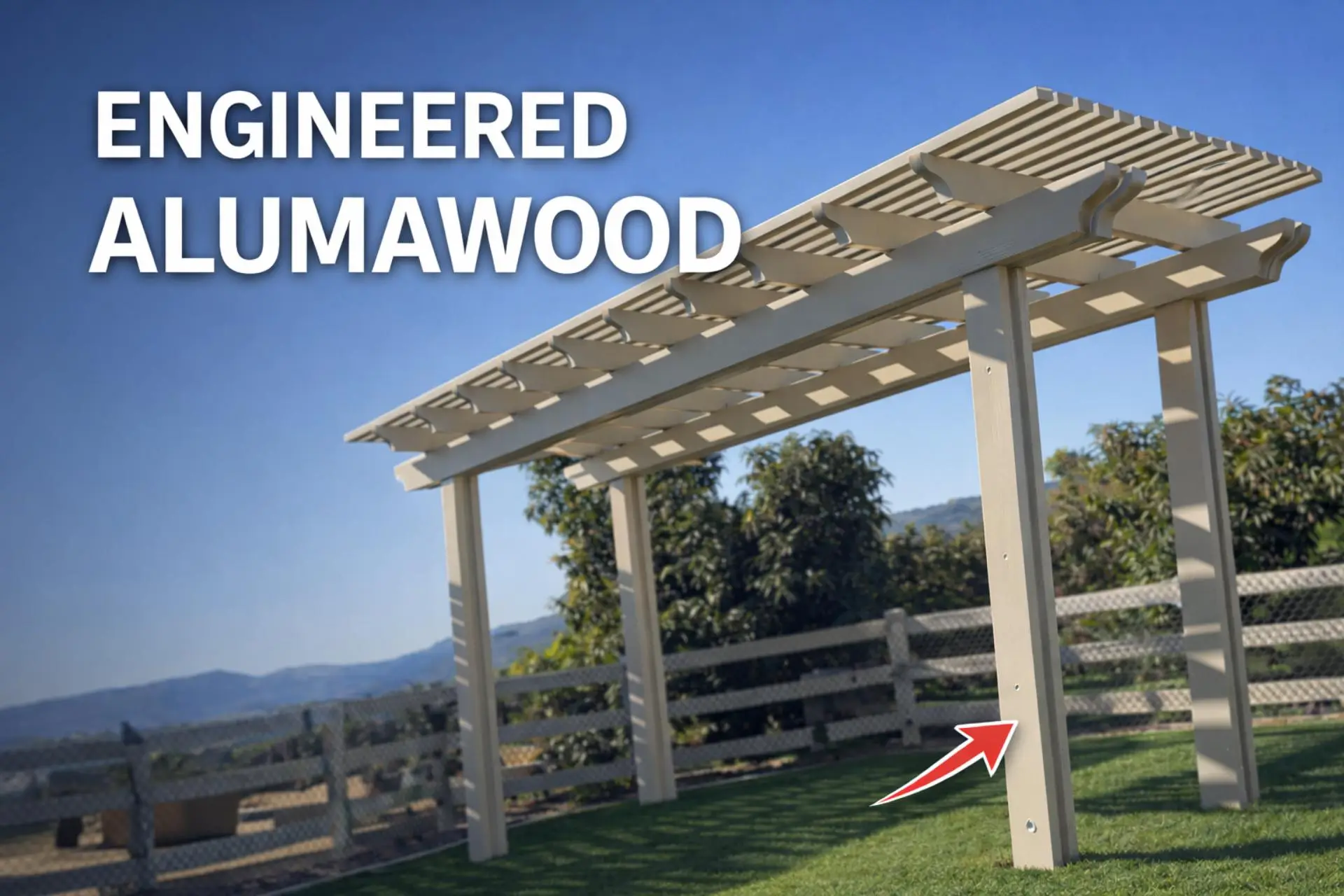
Watch a Real San Diego Build
An engineered freestanding Elitewood Alumawood pergola built on steel posts in concrete footings, with steel-reinforced header beams and lattice shade, in the hills of San Diego County.
Read the full transcript and project details: Engineered Alumawood Pergola Installation in Jamul, CA
Understanding Fire Resistance Ratings and Building Codes for Outdoor Structures
When installing an aluminum pergola on your property, you’ll need to understand the fire resistance ratings and building codes that govern outdoor structures in your area.
Building codes typically classify materials using fire resistance ratings, which measure how long structures can withstand fire exposure. Aluminum pergolas often receive Class A fire ratings, the highest classification available.
You’ll find that local authorities require permits for structures exceeding certain size limits or located within a certain distance of property lines. These regulations protect both your investment and neighboring properties.
Check with your municipal building department before installation, as requirements vary considerably between jurisdictions and can affect your project’s design specifications.
Aluminum vs. Wood: Comparing Fire Safety Performance in High-Risk Areas
Building codes become even more critical if you’re located in a high-risk fire zone, where material selection can mean the difference between property preservation and total loss. Aluminum pergolas greatly outperform wood in these dangerous conditions.
| Factor | Aluminum | Wood |
|---|---|---|
| Ignition Temperature | 1,220°F | 500-600°F |
| Fire Spread Rate | Non-combustible | Rapid |
| Ember Resistance | Excellent | Poor |
| Maintenance for Fire Safety | Minimal | High |
| Insurance Classification | Non-combustible | Combustible |
You’ll face lower insurance premiums and meet stricter building requirements with aluminum. Wood requires constant maintenance and fire-retardant treatments, and it creates additional fuel for spreading fires.
The Science Behind Aluminum’s Non-Combustible Properties
Understanding aluminum’s molecular structure reveals why it’s classified as non-combustible rather than fireproof. When exposed to extreme heat, aluminum won’t ignite or contribute fuel to flames like organic materials do.
Here’s what happens at the molecular level:
- Oxidation barrier formation: Aluminum forms a protective oxide layer instantly upon heating, preventing further combustion.
- High melting-point resistance – It maintains structural integrity until it reaches 1,221°F, far above typical fire temperatures.
- Zero volatile gas emission – Unlike wood, aluminum doesn’t release flammable gases that feed fires.
You’re getting material-level fire protection that actively resists combustion rather than simply delaying it.
Real-World Fire Protection Benefits for Your Property and Insurance
While aluminum’s molecular fire resistance offers theoretical protection, the practical benefits directly affect your property’s value and insurance costs.
You’ll often qualify for reduced homeowner’s premiums when installing fire-resistant structures like aluminum pergolas. Insurance companies recognize that these materials considerably lower wildfire and accidental fire risks. Your property becomes more attractive to buyers who prioritize safety features, especially in fire-prone regions.
Additionally, you’re protecting adjacent structures—decks, homes, and landscaping—from potential fires originating from the pergola. Many municipalities issue building permits more quickly for non-combustible outdoor structures, streamlining your installation process while demonstrating responsible property stewardship that neighbors and assessors appreciate.
Design Options That Maximize Both Safety and Style
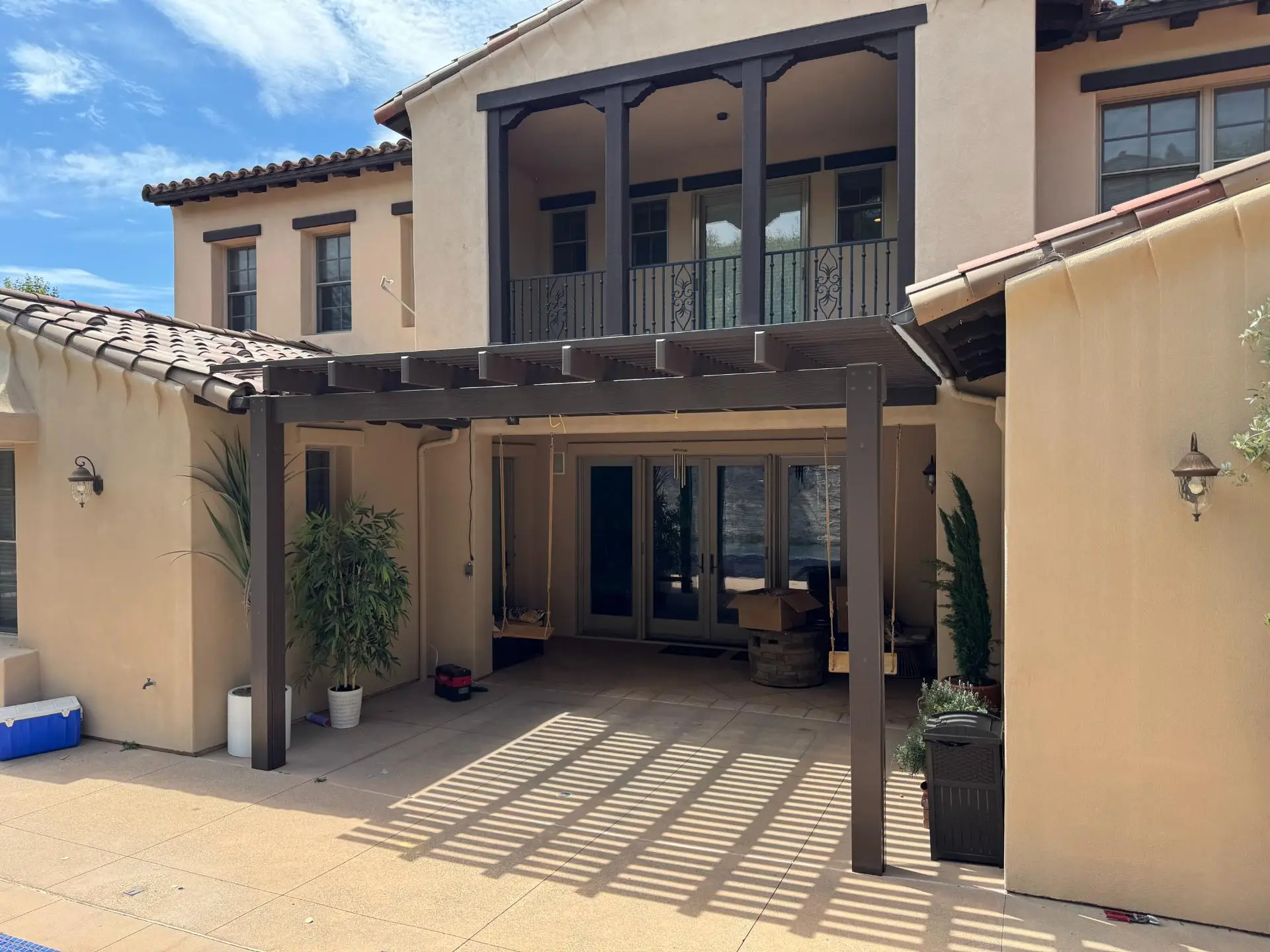
When you’re selecting an aluminum pergola design, you don’t have to sacrifice aesthetics for fire safety—the material’s inherent properties let you explore bold architectural choices that wooden structures can’t support.
Aluminum’s fire resistance opens up design possibilities that prioritize both protection and visual appeal:
- Integrated lighting systems – LED strips and fixtures can be safely embedded within aluminum frames without creating fire hazards.
- Open-beam configurations – Clean lines and exposed structural elements showcase modern aesthetics while maintaining maximum airflow.
- Mixed-material accents – Combine aluminum with fire-rated glass panels or stone elements for sophisticated designs that won’t compromise safety standards.
You’ll achieve stunning outdoor spaces without sacrificing protection.
Frequently Asked Questions
How Much Does an Aluminum Pergola Typically Cost Compared to Wood?
You’ll typically pay 20-40% more upfront for an aluminum pergola than for a wood pergola, with aluminum ranging from $15-30 per square foot versus wood’s $10-25 per square foot.
However, you’ll save money in the long term since aluminum doesn’t require staining, sealing, or replacing rotted boards.
When you factor in maintenance costs over 10-15 years, aluminum often becomes the more economical choice despite its higher initial investment.
What Maintenance Is Required to Keep Aluminum Pergolas Fire-Safe Over Time?
You’ll need minimal maintenance to keep your aluminum pergola fire-safe.
Simply inspect it annually for any debris buildup in joints or corners, and clear away accumulated leaves, pine needles, or other flammable materials.
Hose down the structure seasonally to remove dirt and grime.
Check that nearby vegetation hasn’t grown too close to the pergola.
Unlike wood, you won’t need to apply fire-retardant treatments or replace deteriorated materials that could become fire hazards.
Can I Install an Aluminum Pergola Myself or Need Professional Installation?
You can install an aluminum pergola yourself if you’re handy with tools and follow instructions carefully.
Most manufacturers provide detailed assembly guides and pre-drilled components, making DIY installation manageable.
However, you’ll need professional installation if you’re adding electrical work, dealing with complex site conditions, or lack experience with structural projects.
Consider your skill level, available time, and local building code requirements before deciding whether to tackle this project yourself.
Do Aluminum Pergolas Get Too Hot to Touch in Direct Sunlight?
Aluminum pergolas can get quite warm in direct sunlight, but they typically won’t become dangerously hot to touch.
You’ll find they heat up more than wood but less than steel or iron. The powder-coated finish helps reflect some heat, and aluminum dissipates temperature quickly.
If you’re concerned about heat, you can add shade cloth or climbing plants, or choose lighter colors that reflect more sunlight and help you stay cooler.
What Warranty Coverage Is Available for Aluminum Pergola Fire Safety Features?
You’ll find warranty coverage for aluminum pergola fire safety features varies by manufacturer, but most don’t specifically cover fire safety as a separate feature.
Instead, they’ll warranty the aluminum’s structural integrity and finish, which inherently includes its fire-resistant properties.
You should expect 10-25-year warranties on powder coating and structural components.
Always read the fine print carefully, as coverage terms differ greatly between brands and installation requirements.
Current San Diego County Price Ranges (2026)
Real ranges from our published San Diego County pricing guide. Final cost depends on size, post configuration, finish, and site engineering.
See the full breakdown on our published pricing page, or get a free quote for your exact project.