
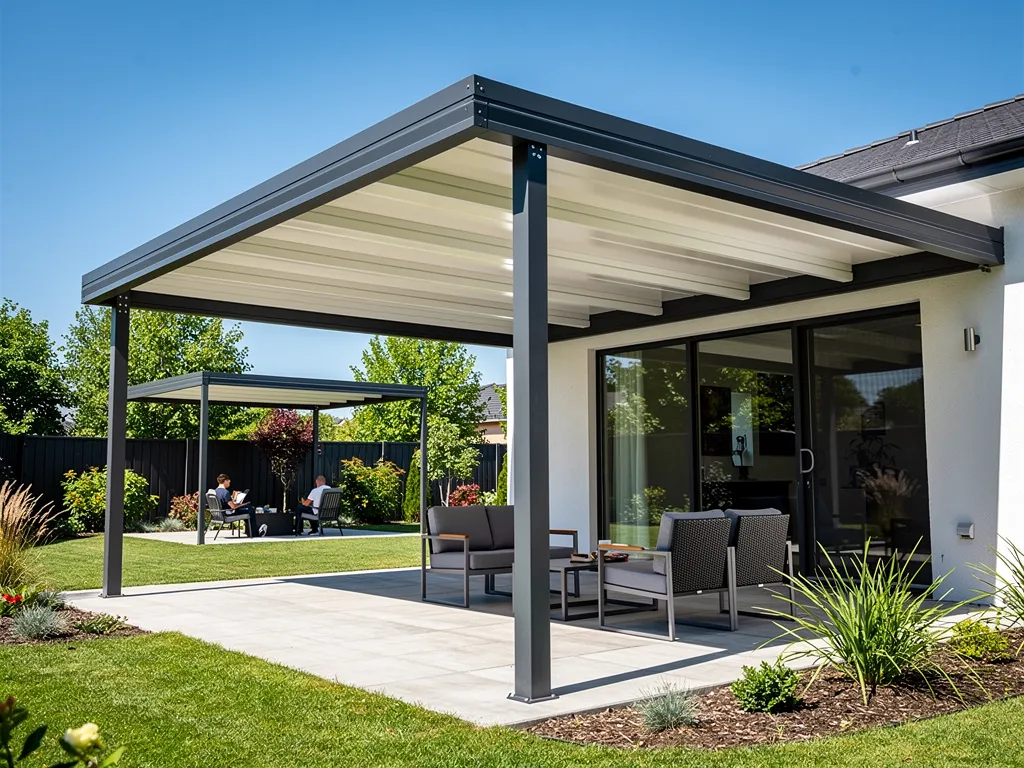
When summer heat turns your patio into an oven, insulated patio covers offer real relief. You’ll want panels with an R-value of R-10 or higher, aluminum or foam-core materials, and a load rating of at least 20 lbs per square foot. High-quality options can block up to 90% of radiant heat and drop surface temperatures by 20-30°F. The right cover depends on your space, budget, and installation needs—and there’s plenty more to contemplate before you choose.
Key Takeaways
Insulated patio covers with R-values of R-30 to R-38 can reduce surface temperatures by 20–30°F for extreme heat protection.
High-quality insulated panels block up to 90% of radiant heat, using foam cores between aluminum or steel sheets.
Look for panels with R-10 or higher, 2–4 inch thickness, and UV-resistant aluminum or foam core materials.
Choose between freestanding covers for placement flexibility or attached covers for easier installation and cost savings.
A minimum 20 lbs per sq. ft. load rating and 10-year warranty ensure durability and long-term performance.
The 7 Best Insulated Patio Covers for Extreme Heat
When temperatures soar, not all patio covers can handle the heat — but these seven options can.
Not every patio cover can take the heat — but the right one makes all the difference.
You’ll find choices ranging from aluminum insulated panels to polycarbonate roofing systems, each designed to block radiant heat effectively.
Whether you prefer a freestanding pergola with insulated rafters or a solid attached patio cover with foam-core panels, you’ve got real options.
These seven picks vary in price, installation complexity, and insulation rating.
Match your selection to your climate’s specific demands, your budget, and your home’s exterior style.
Each option delivers measurable heat reduction while keeping your outdoor space usable and comfortable.
What Should You Look for in an Insulated Patio Cover?
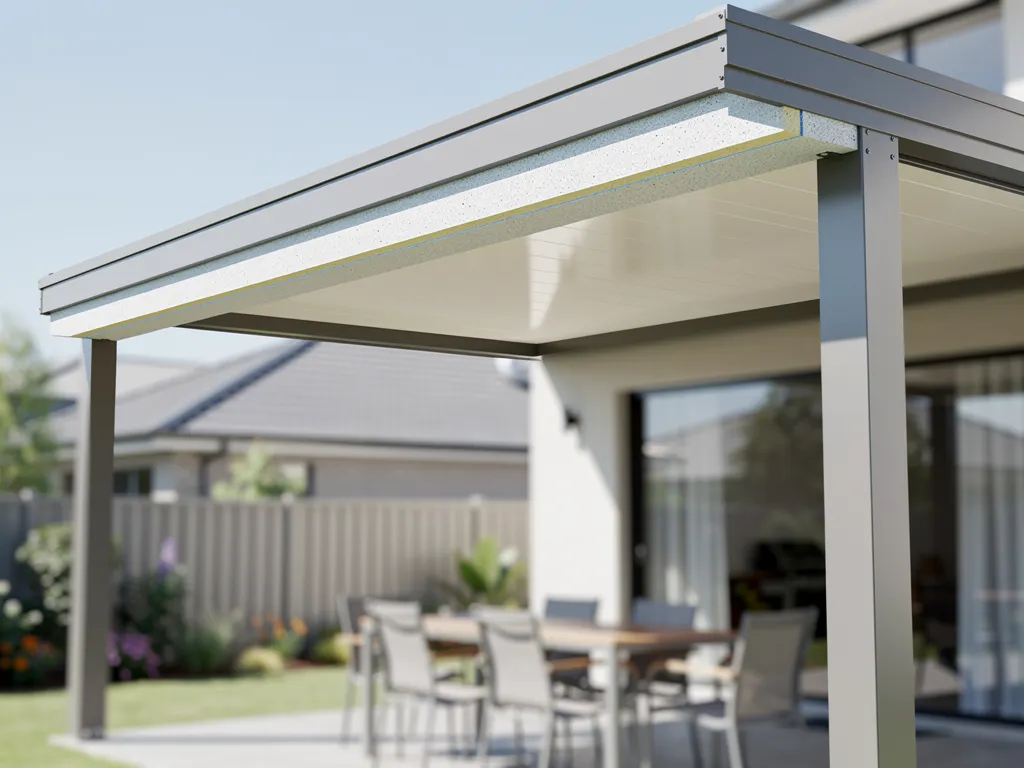
Narrowing down the best insulated patio cover from those seven options gets easier once you know what specifications actually matter. Focus on these key factors:
Prioritize higher R-values, strong load ratings, and durable materials to guarantee your cover handles extreme heat effectively.
What Makes an Insulated Patio Cover Actually Work?
Understanding what makes an insulated patio cover actually work comes down to how its components interact under heat stress. The core is typically a foam panel sandwiched between two steel or aluminum sheets.
That foam—usually polyurethane or polystyrene—blocks heat transfer instead of letting it pass through. The outer metal layer reflects solar radiation before it reaches the foam, while the inner layer stays cooler beneath your outdoor space.
Thicker panels mean better R-values, which directly measure resistance to heat flow. Without all three layers working together, you get shade, not real thermal protection.
Solid Foam Core vs. Reflective Barrier: Which Insulates Better?
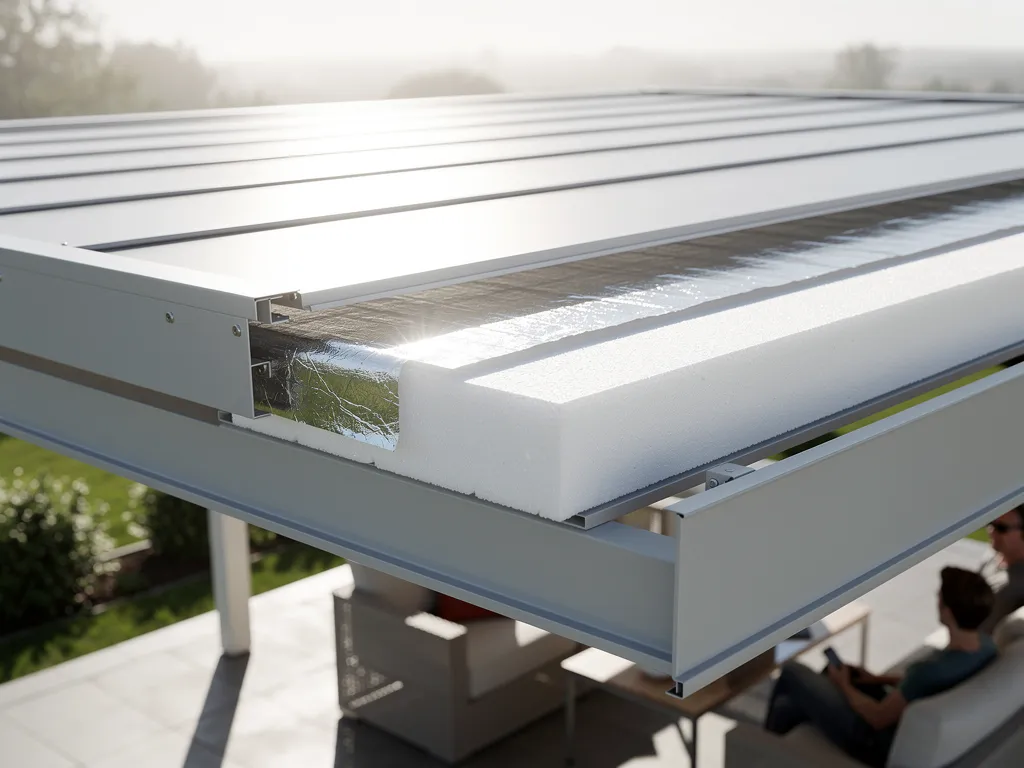
Understanding how insulated patio covers work raises a bigger question: between a solid foam core and a reflective barrier, which does more to keep heat out?
Foam cores absorb and slow heat transfer through conduction, giving you consistent temperature control even after sunset. Reflective barriers, however, deflect radiant heat before it penetrates the panel.
In extreme heat, you’ll want both working together. Most quality insulated covers combine them—foam for thermal mass, foil for reflection.
If you’re choosing between standalone options, foam outperforms reflective-only barriers in sustained, high-temperature conditions.
How Much Heat Can an Insulated Patio Cover Actually Block?
Exactly how much heat an insulated patio cover blocks depends on the panel’s R-value, material composition, and installation quality.
High-quality insulated panels with R-values between R-30 and R-38 can reduce surface temperatures by 20 to 30 degrees Fahrenheit compared to non-insulated covers. You’ll notice the difference immediately on days exceeding 100°F.
Insulated panels with R-values of R-30 to R-38 drop surface temperatures by up to 30°F on scorching days.
Panels with solid foam cores outperform single-layer alternatives by limiting heat transfer through conduction. However, gaps around edges, improper sealing, or poor overhead ventilation can undercut performance considerably.
When you install correctly, an insulated patio cover can block up to 90% of radiant heat penetration.
Freestanding or Attached: Which Type Fits Your Space?
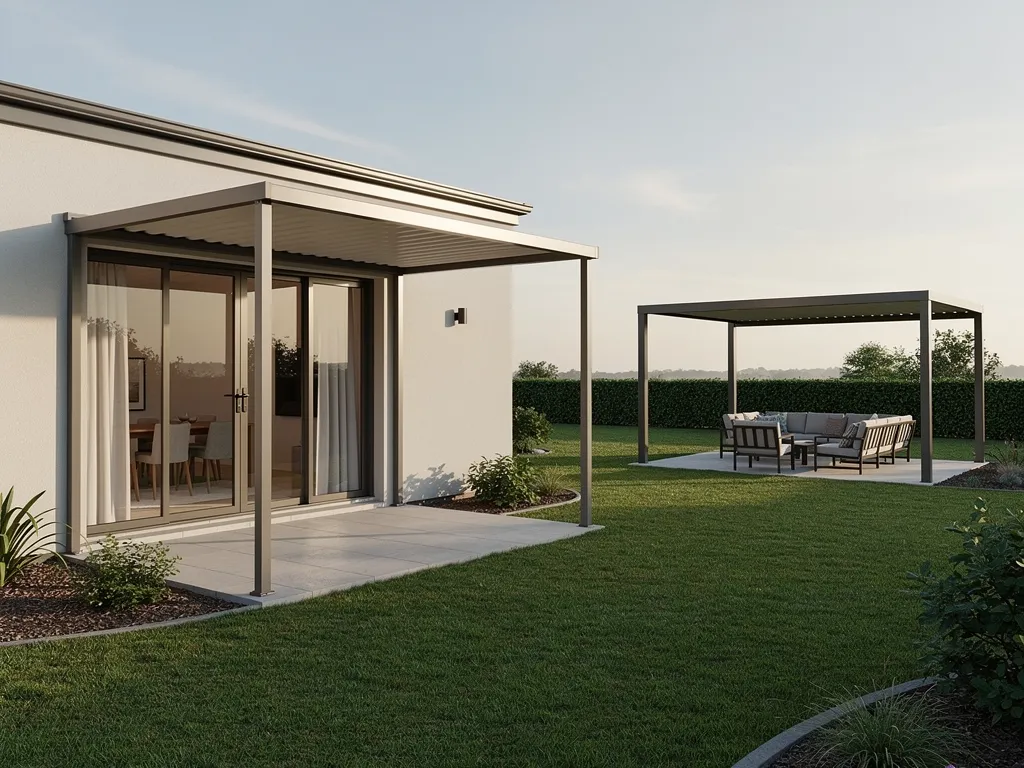
When choosing between a freestanding or attached insulated patio cover, your home’s layout and available space will drive the decision more than any other factor.
Attached covers connect directly to your exterior wall, making them ideal if you want seamless indoor-outdoor flow and structural support from your home. They’re typically easier to install and cost less.
Freestanding covers, however, give you placement flexibility anywhere in your yard, so you’re not limited by wall positioning. If you’ve got an irregular home exterior or want shade away from the house, freestanding structures deliver that freedom without compromising insulation performance.
How to Maximize Shade and Airflow Under Your Insulated Patio Cover
Even with a high-quality insulated patio cover, you’ll lose much of its potential if you don’t position and configure it correctly for shade and airflow.
Smart adjustments make a real difference:
Orient the longer side perpendicular to your region’s prevailing winds
Add ceiling fans to push hot air out and draw cooler air in
Install louvered side panels to control airflow direction
Use shade screens on sun-facing sides to block radiant heat
Extend the overhang beyond your seating area to cut afternoon glare
These steps turn a good cover into a genuinely cool retreat.
Frequently Asked Questions
How Long Does an Insulated Patio Cover Typically Last Before Needing Replacement?
With proper care, you can expect your insulated patio cover to last 20 to 40 years.
It’s built from durable aluminum or steel panels that resist warping, fading, and corrosion.
Inspect it annually for damage, clean it regularly, and address minor repairs quickly.
In extreme climates, you’ll likely see wear sooner, but quality installation can significantly extend its lifespan.
Can Insulated Patio Covers Be Installed Over Existing Deck Structures Safely?
Yes, you can safely install insulated patio covers over existing deck structures in most cases.
Have a structural engineer or contractor assess your deck’s load-bearing capacity first. They’ll check if your existing posts, beams, and footings can handle the additional weight.
You may need to reinforce certain components before installation. Always pull the necessary permits and follow local building codes to guarantee your installation remains safe and compliant.
Do Insulated Patio Covers Require Building Permits in Most Residential Areas?
Yes, you’ll likely need a building permit for an insulated patio cover in most residential areas.
Your local municipality typically requires permits for permanent structures attached to your home. Contact your local building department before starting your project, as requirements vary widely by location.
Don’t skip this step, since unpermitted structures can create problems when you’re selling your home or filing insurance claims.
Always check your HOA rules too.
How Much Does Professional Installation of an Insulated Patio Cover Typically Cost?
You can expect to pay between $3,000 and $15,000 for professional installation of an insulated patio cover, depending on size, materials, and complexity.
Most homeowners spend around $6,000 to $9,000 for a standard project.
Labor typically runs $50 to $100 per hour, and larger or custom designs will push costs higher.
Always get at least three quotes from licensed contractors to guarantee you’re getting a competitive price.
Are Insulated Patio Covers Resistant to Damage From Heavy Rain and Wind?
Yes, insulated patio covers can handle heavy rain and wind quite well when you choose quality materials and proper installation.
They’re typically constructed from durable aluminum panels that won’t rot, warp, or corrode from moisture exposure.
Most systems can withstand winds up to 90-110 mph, and their interlocking panel design prevents water infiltration.
You’ll want to guarantee your installer follows local building codes for maximum weather resistance and structural integrity.
Conclusion
When you’re dealing with extreme heat, you can’t afford to settle for a patio cover that lets the sun win. You’ve now got the knowledge to choose a cover with the right insulation, fit, and airflow to keep your outdoor space genuinely comfortable. Whether you’re going freestanding or attached, foam core or reflective barrier, you’re equipped to make a smart investment that’ll protect you all summer long.