
You’ve probably considered various ways to expand your living space, but a sunroom offers something unique that traditional additions can’t match. It’s the perfect solution when you want more square footage without the expense and disruption of major construction. What makes sunrooms particularly appealing isn’t just their quick installation—it’s how they seamlessly blend indoor comfort with outdoor beauty while delivering impressive returns on your investment. The question is: which benefits matter most to your lifestyle?
Key Takeaways
- Sunrooms provide excellent ROI, allowing homeowners to recoup 70-80% of their investment while adding immediate equity to their property.
- Quick installation within days creates additional functional living space without major construction, demolition, or extensive foundation work.
- Year-round indoor-outdoor connections offer unobstructed views, natural light, and weather protection, while enhancing well-being and reducing stress.
- Versatile design options adapt to any architectural style with customizable materials, roof styles, and window configurations.
- Energy-efficient features reduce electricity costs through natural lighting and thermal buffering while maximizing solar gain in winter.
The Financial Impact: ROI and Property Value Increases
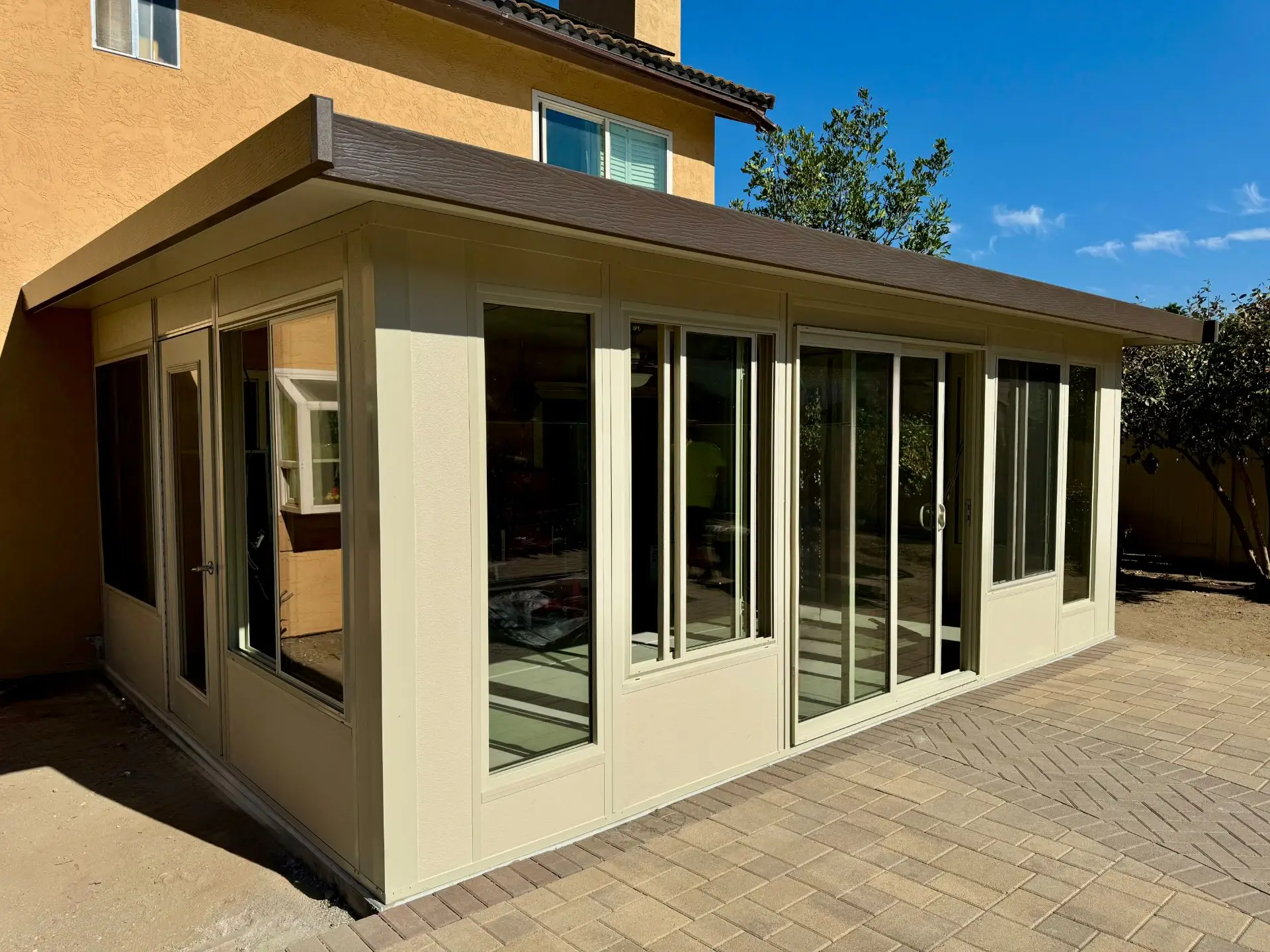
When you’re considering a sunroom addition, the financial returns prove compelling for most homeowners.
You’ll typically recoup 70-80% of your investment at resale, making sunrooms one of the better ROI home improvements. Your property value increases considerably because you’re adding functional square footage that buyers actively seek.
The average sunroom addition costs $20,000 to $50,000, but you’ll see immediate equity gains.
Potential buyers view sunrooms as a luxury feature that expands living space year-round. You’re fundamentally creating additional room without the expense of traditional construction.
This wise investment enhances your daily enjoyment while building long-term wealth through increased home value.
Creating Additional Living Space Without Major Construction
Beyond the financial advantages, sunrooms offer you a practical solution for expanding your living space without the complexity and expense of traditional room additions.
You’ll avoid lengthy permit processes, structural modifications, and months of construction disruption.
Here’s what makes sunrooms uniquely advantageous:
- Quick installation – Most sunrooms install within days, not months
- Minimal foundation work – Often built on existing patios or decks
- No interior demolition – Your existing home remains untouched during construction
- Flexible design options – Three-season or four-season configurations available
- Immediate usability – Ready to enjoy upon completion
You’ll gain valuable square footage while maintaining your home’s functionality throughout the process.
Year-Round Indoor-Outdoor Connection Benefits
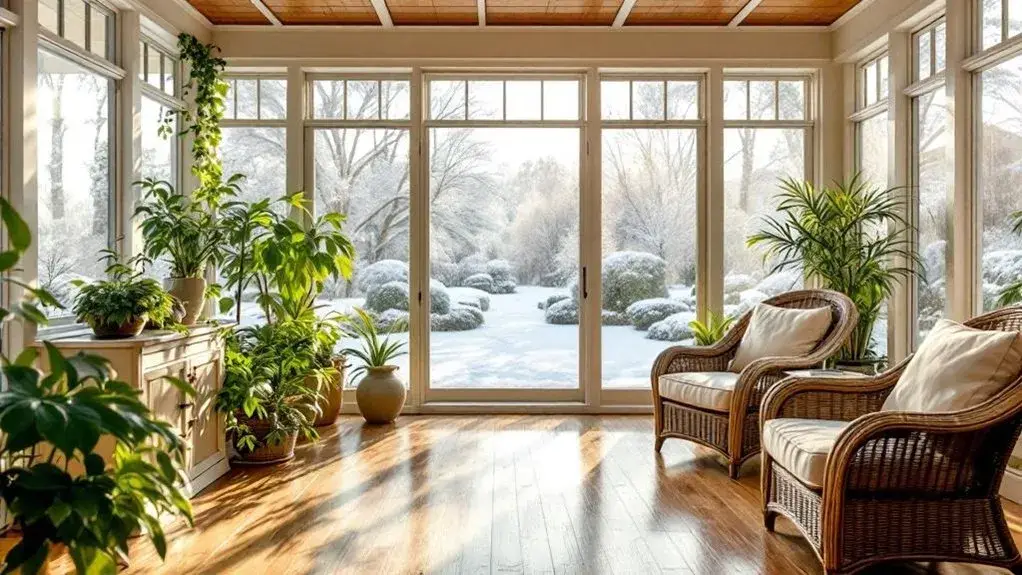
Living in a sunroom transforms your experience of your home’s relationship with the outdoors, offering unobstructed views and natural light, regardless of weather conditions.
You’ll enjoy watching seasonal changes from the comfort of your home while staying protected from rain, wind, or hot afternoons. The space creates a seamless flow between indoor and outdoor living, allowing you to host gatherings that feel connected to nature throughout the year.
You can cultivate plants, read, or work from home surrounded by panoramic views. This constant connection to your landscape enhances well-being, reduces stress, and creates a unique living environment that traditional rooms can’t match.
Versatile Design Options for Every Home Style
Modern sunrooms can be adapted to virtually any architectural style, ranging from sleek contemporary designs with floor-to-ceiling glass panels to traditional Victorian conservatories featuring ornate metalwork and decorative elements.
You can customize your sunroom’s design elements to complement your home’s existing architecture:
- Frame materials: Choose aluminum for modern homes, wood for traditional styles, or vinyl for low-maintenance options.
- Roof styles: Select gabled, hip, or shed configurations that match your roofline.
- Window configurations: Opt for expansive glass walls or smaller, segmented panels.
- Flooring options: Install tile, hardwood, or decorative concrete to suit your aesthetic.
- Color schemes: Match existing trim or create striking contrasts.
Professional designers guarantee seamless integration with your home’s character.
Energy Efficiency and Natural Light Advantages
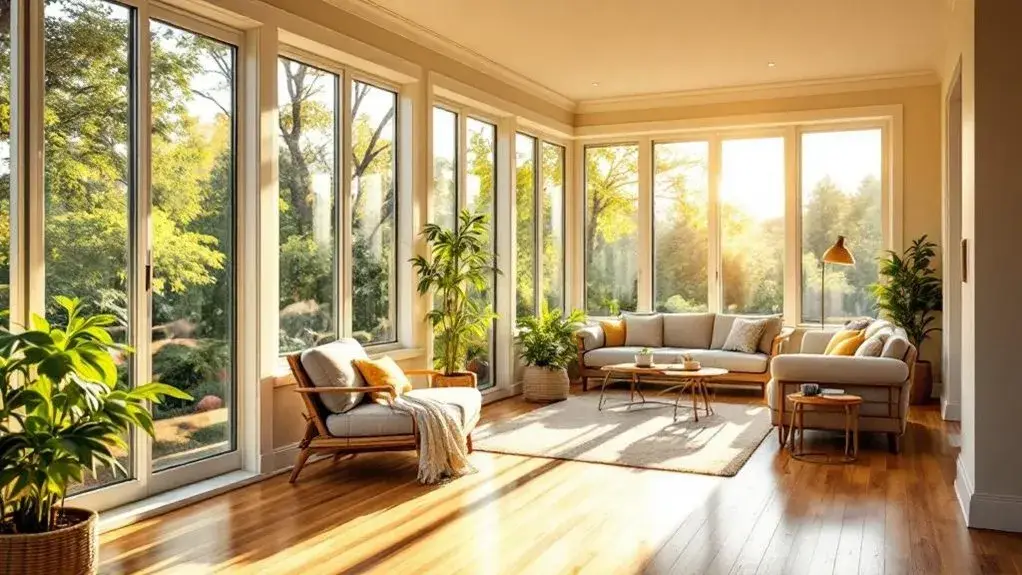
Today’s sunroom designs strike a balance between aesthetic appeal and energy performance, delivering significant benefits that enhance your home’s efficiency and comfort year-round.
You’ll reduce electricity costs through abundant natural light that eliminates daytime artificial lighting needs.
Modern sunrooms often feature energy-efficient windows with low-E coatings and insulated frames, which help maintain comfortable temperatures while minimizing heat transfer.
The space acts as a thermal buffer zone, reducing your home’s heating and cooling demands.
Strategic placement maximizes solar gain during the winter months, while overhangs and proper ventilation prevent overheating in the summer.
You’ll enjoy consistent, glare-free illumination that enhances your daily activities naturally.
Popular Sunroom Uses That Enhance Daily Life
Whether you’re seeking a peaceful retreat or an active gathering space for your family, sunrooms adapt seamlessly to your lifestyle needs and enhance how you use your home daily.
These versatile spaces transform ordinary routines into extraordinary experiences:
- Morning coffee sanctuary – Start your day surrounded by natural light and garden views
- Home office oasis – Work productively in an inspiring, sun-filled environment
- Indoor garden paradise – Cultivate plants year-round in ideal growing conditions
- Entertainment hub – Host dinner parties and gatherings with panoramic outdoor views
- Exercise and yoga studio – Practice wellness routines in energizing natural sunlight
Your sunroom becomes whatever you need it to be, maximizing your home’s functionality.
Key Planning Considerations and Permit Requirements
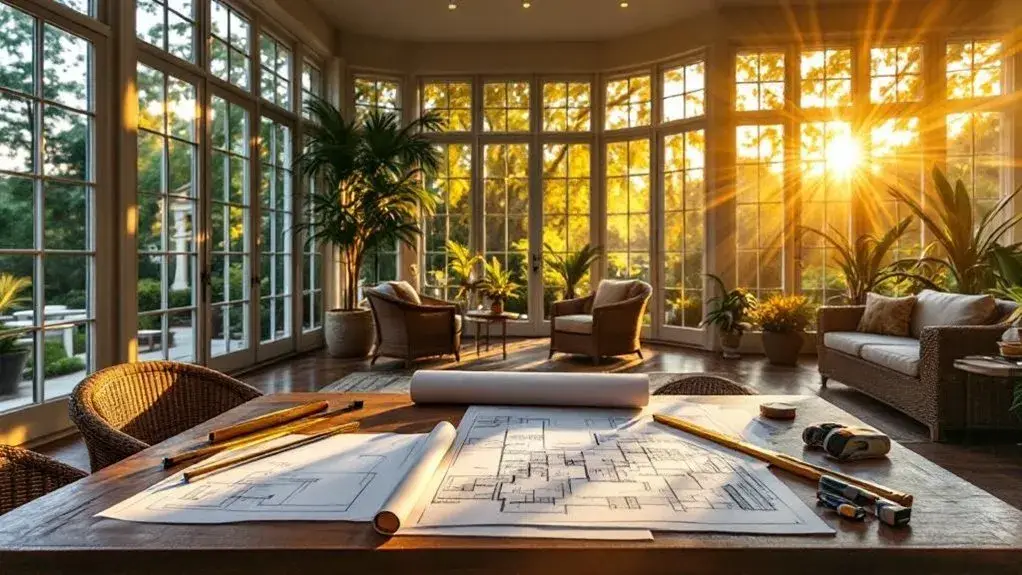
Planning your sunroom project requires careful attention to local building codes, zoning regulations, and structural requirements that vary considerably by location.
You’ll need building permits for most sunroom additions, especially those requiring electrical work or structural modifications.
Check setback requirements from property lines and height restrictions that could affect your design.
Consider your home’s foundation capacity and existing structural support before finalizing plans.
Research homeowner association rules if applicable, as they may restrict exterior modifications.
Consult with contractors familiar with local regulations early in the planning process to avoid costly delays or required design changes during construction.
Maximizing Your Sunroom Investment Through Smart Design Choices
Smart design choices can significantly enhance your sunroom’s return on investment while creating a space that improves your daily living experience.
Strategic decisions about materials, layout, and functionality guarantee your addition serves multiple purposes while maximizing property value.
Consider these key design elements:
- Multi-season flooring like luxury vinyl or tile that withstands temperature fluctuations
- Flexible furniture arrangements that accommodate various activities and gatherings
- Built-in storage solutions to maintain clean, organized aesthetics
- Energy-efficient windows and doors that reduce utility costs long-term
- Neutral color palettes that appeal to future buyers’ tastes
These thoughtful choices create lasting value.
Frequently Asked Questions
What Is the Typical Timeline for Sunroom Construction From Start to Finish?
You can expect to spend 2-4 weeks on sunroom construction from start to finish.
The timeline depends on the complexity, size, and weather conditions of your project.
You’ll spend the first few days on permits and site preparation, followed by 1-2 weeks for foundation work and framing.
The final week involves installing windows, roofing, and finishing touches.
Custom designs or structural modifications can extend your timeline by one to two weeks.
How Do I Maintain and Clean My Sunroom Windows and Structure?
You’ll want to clean your sunroom windows monthly using a squeegee and mild soap solution.
Start from top to bottom, working in overlapping strokes. For the structure, dust aluminum frames regularly and inspect seals for wear.
Remove debris from tracks and drainage systems on a quarterly basis. Don’t use abrasive cleaners on glass or frames.
After winter storms, rinse leaves and debris off the roof so drainage stays clear. Regular maintenance prevents costly repairs later.
Can Sunrooms Be Used Safely During Severe Weather Conditions Like Storms?
You should avoid using your sunroom during severe weather, such as storms, especially if it has large glass panels.
High winds can cause debris to strike windows, and lightning poses risks in glass-enclosed spaces.
Modern sunrooms with tempered glass and proper construction offer better protection, but it’s still safer to move to your home’s interior during severe weather.
Check your sunroom’s specifications and local building codes to understand its storm resistance capabilities before making safety decisions.
What Furniture Materials Work Best in Sunrooms With Temperature Fluctuations?
You’ll want furniture materials that handle temperature swings gracefully.
Teak and aluminum resist warping and cracking from heat exposure, while synthetic wicker won’t deteriorate from humidity changes. You should avoid solid wood pieces that’ll expand and contract, causing splits.
Outdoor-rated cushions with quick-dry foam are ideal, as they’re designed to withstand weather fluctuations.
Metal frames with powder coating resist rust, and glass tables won’t warp like wood surfaces during temperature variations.
Are There HOA Restrictions I Should Consider Before Adding a Sunroom?
You’ll need to check your HOA’s architectural guidelines before adding a sunroom. Most HOAs require pre-approval for exterior modifications, including structural additions.
Review your covenant documents for specific restrictions on room additions, setback requirements, and design standards.
Submit detailed plans showing the sunroom’s size, materials, and placement.
Don’t start construction without written approval, as you’ll likely face fines and potential removal requirements if you proceed without proper HOA authorization.
Current San Diego County Price Ranges (2026)
Real ranges from our published San Diego County pricing guide. Final cost depends on size, glazing options, and structural requirements.
See the full breakdown on our published pricing page, or get a free quote for your exact project.