
A sunroom transforms your San Diego home into a natural light powerhouse by using glass surfaces to distribute illumination throughout adjacent interior spaces, reducing your dependence on artificial lighting and energy costs. With San Diego’s 260+ sunny days annually and Mediterranean climate, you’ll enjoy year-round comfort while boosting your property value by 70-80% of the project cost. Strategically placing your home to the south or east maximizes daylight capture, making it more attractive to buyers and enhancing your daily well-being through improved vitamin D synthesis and better regulation of your circadian rhythm. Continue exploring to discover the specific construction considerations that’ll optimize your investment.
Watch a Real San Diego Build
Full build time-lapse of a San Diego sunroom, from framing through the finished walkthrough and structural review.
Key Takeaways
- Sunrooms maximize natural light through extensive glass surfaces, reducing artificial lighting costs while providing health benefits like improved vitamin D synthesis and better sleep patterns.
- San Diego’s Mediterranean climate, with over 260 sunny days annually, makes sunrooms ideal year-round additions that enhance comfort and usability.
- Strategically placing a south-facing or east-facing sunroom captures optimal daylight while avoiding excessive afternoon heat in San Diego’s climate.
- Sunrooms increase property value by 70-80% of construction costs and help homes sell faster in San Diego’s competitive real estate market.
- Low-E glass and quality framing materials optimize light transmission while protecting against UV rays and coastal salt air damage.
The Science Behind Sunrooms and Natural Light Distribution

When sunlight enters your sunroom through strategically positioned windows and glass panels, it creates a natural distribution system that maximizes illumination throughout the space.
The glass surfaces act as light conductors, bouncing and diffusing rays at multiple angles to eliminate harsh shadows. This diffusion process softens direct sunlight while maintaining brightness levels that significantly exceed traditional rooms.
Your sunroom’s transparent walls capture light from various directions throughout the day, creating consistent illumination that penetrates adjacent interior spaces.
The continuous light flow reduces your dependence on artificial lighting, lowering energy costs while providing the health benefits associated with natural vitamin D exposure.
San Diego's Climate Advantages for Sunroom Construction
San Diego’s Mediterranean climate creates ideal conditions for sunroom construction that most other regions can’t match.
You’ll benefit from year-round mild temperatures, minimal humidity, and over 260 sunny days annually. This consistent weather means you can use your sunroom throughout all seasons without extreme temperature fluctuations that plague other climates.
You won’t face harsh winters that require expensive heating systems or sweltering summers that demand excessive cooling. The gentle ocean breezes naturally regulate temperatures, while low rainfall reduces moisture concerns that can cause structural issues elsewhere.
San Diego’s stable climate lets you maximize your sunroom investment with minimal weatherproofing requirements and superior natural lighting conditions.
Types of Sunrooms That Maximize Light in Southern California Homes
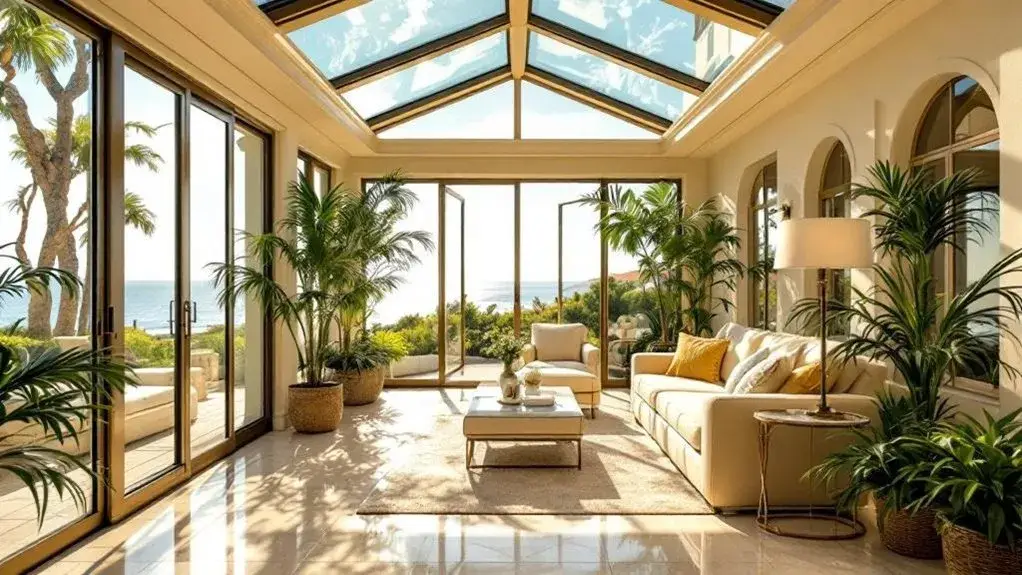
Since Southern California’s abundant sunshine is your sunroom’s greatest asset, you’ll want to choose designs that capture and amplify natural light throughout the day.
Three-season rooms feature large windows and screens, perfect for San Diego’s mild winters. Four-season rooms feature insulation and climate control, providing year-round comfort. Solarium-style sunrooms maximize glass surfaces with minimal structural elements.
| Sunroom Type | Light Exposure |
|---|---|
| Three-Season | 75% Glass Coverage |
| Four-Season | 60% Glass Coverage |
| Solarium | 90% Glass Coverage |
Choose glass positioning strategically. South-facing orientations capture the maximum amount of daylight, while east-facing designs provide gentle morning sun without the afternoon heat intensity.
Year-Round Benefits of Enhanced Natural Light Exposure
Beyond maximizing light capture through smart design choices, your sunroom delivers measurable health and wellness advantages throughout San Diego’s year-round sunshine.
You’ll experience improved vitamin D synthesis, enhanced mood regulation, and better sleep patterns with consistent exposure to natural light. Your circadian rhythms stabilize with daily sunroom time, reducing the risk of seasonal depression even during California’s mild winters.
The increased daylight helps regulate melatonin production, promoting deeper rest. You’ll also notice improved focus and productivity when using your sunroom as a workspace.
These physiological benefits compound over time, making your sunroom investment valuable for maintaining long-term physical and mental health.
Property Value Increases From Sunroom Additions in San Diego County

Adding a professionally designed sunroom to your San Diego County home typically increases property value by 70-80% of the project cost, making it one of the highest-return home improvements available.
You’ll create additional livable square footage that appeals to buyers seeking indoor-outdoor living spaces perfect for San Diego’s climate.
- Premium pricing advantage – Homes with sunrooms command higher asking prices than comparable properties without them.
- Faster sale potential – Sunrooms differentiate your property in competitive real estate markets
- Expanded living space – Buyers value the versatility of sunrooms for entertainment, relaxation, or home offices
- Energy efficiency appeal – Modern sunrooms showcase sustainable living features
Design Elements That Optimize Light Flow Throughout Your Home
When you’re planning a sunroom addition, strategic design choices can transform how natural light flows throughout your entire home, not just the new space itself.
You’ll want to incorporate large glass doors or wide openings between your sunroom and adjacent rooms, creating natural pathways for light penetration.
Consider installing skylights or clerestory windows to capture overhead illumination.
Light-colored flooring and walls reflect brightness deeper into your home’s interior.
Strategic mirror placement amplifies available light, while open floor plans eliminate barriers that block light transmission.
These thoughtful design elements maximize the illuminating impact of your sunroom throughout your San Diego home.
Energy Efficiency and Cost Savings With Strategic Sunroom Placement
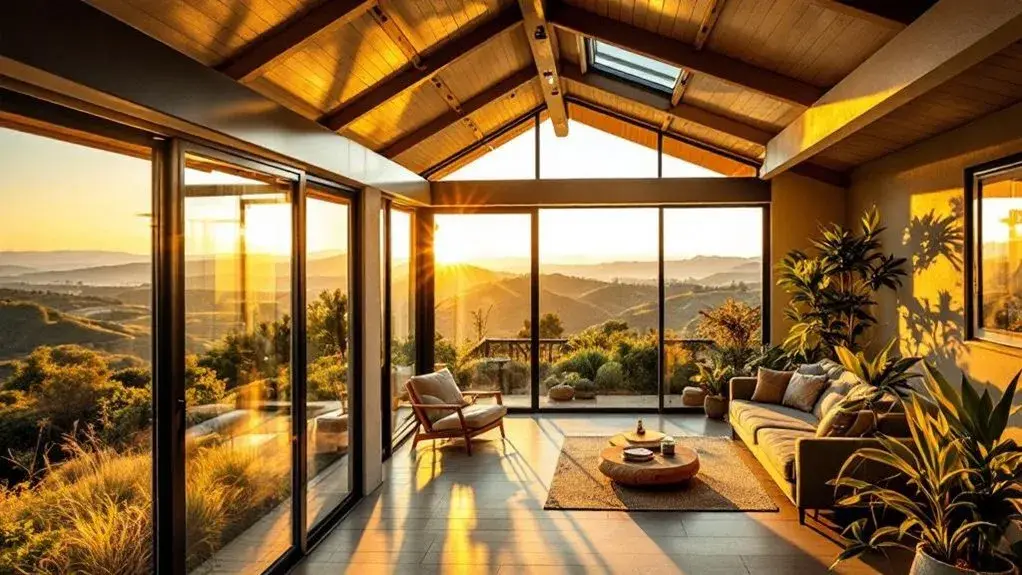
Strategically placing your sunroom can dramatically reduce your home’s energy consumption, resulting in a 30% reduction in monthly utility bills.
When you position your sunroom on the south or southwest side of your San Diego home, you’ll harness maximum solar heat gain during cooler months while minimizing summer overheating. This natural thermal regulation reduces your HVAC system’s workload throughout the year.
Smart sunroom placement delivers significant cost savings through:
- Passive solar heating that warms adjacent rooms naturally
- Reduced artificial lighting needs during daylight hours
- Lower HVAC runtime from improved temperature regulation
- Enhanced home insulation creates an additional thermal barrier
Real Estate Market Trends Favoring Light-Filled Homes
Beyond the immediate energy savings, your sunroom investment aligns perfectly with current real estate market preferences that strongly favor homes with abundant natural light.
San Diego buyers consistently prioritize bright, airy spaces when house hunting. Properties featuring extensive natural light typically sell faster and command higher prices than those with less natural light.
Your sunroom creates an attractive focal point that distinguishes your home from standard listings. Real estate agents report that light-filled rooms photograph beautifully for online listings, generating more showing requests.
This trend reflects buyers’ desire for wellness-oriented living spaces that connect them with San Diego’s year-round sunshine and outdoor lifestyle.
Permits and Building Considerations for San Diego County Sunrooms

Before breaking ground on your sunroom project, you’ll need to navigate San Diego County’s specific permitting requirements and building regulations.
Most sunroom additions require building permits, especially if they involve structural changes or electrical work. You’ll want to guarantee compliance with setback requirements, height restrictions, and architectural guidelines that vary by neighborhood.
Key considerations include:
- Foundation requirements – Permanent structures need proper footings and inspections
- Electrical permits – Adding outlets, lighting, or HVAC systems requires separate permits
- HOA approval – Many communities require architectural review before construction begins
- Coastal zone regulations – Properties near the coast face additional environmental restrictions
Selecting the Right Materials for Maximum Light and Durability
Three primary material categories will determine your sunroom’s performance in San Diego’s unique climate: glazing, framing, and roofing systems.
You’ll want low-E glass that blocks harmful UV rays while maximizing visible light transmission. Aluminum framing offers excellent durability against coastal salt air, though vinyl provides better insulation.
For roofing, polycarbonate panels deliver superior impact resistance during Santa Ana winds, while glass creates an unobstructed view. Consider laminated glass for enhanced security and noise reduction from nearby traffic.
Your material choices directly impact energy efficiency, maintenance requirements, and long-term value in San Diego’s year-round sunshine and occasional weather extremes.
Frequently Asked Questions
How Long Does a Typical Sunroom Installation Take in San Diego?
You can expect to wait 2-4 weeks for your sunroom installation, depending on the project’s complexity and size.
Weather conditions in San Diego are generally favorable year-round, which helps avoid delays.
Your contractor will need permits, which can take 1-2 weeks to process.
Simple three-season sunrooms install faster than four-season rooms with HVAC systems.
You’ll want to factor in custom features like electrical work or specialized glass, as these extend the timeline somewhat.
Can I Use My Sunroom as a Year-Round Primary Living Space?
You can absolutely use your sunroom as a primary living space year-round, but you’ll need proper insulation, heating, and cooling systems.
Consider installing double-paned windows, using weatherstripping, and extending your HVAC system to maintain comfortable temperatures.
You’ll also want to guarantee adequate electrical outlets for lighting and electronics.
With proper climate control and furnishing, your sunroom becomes a versatile space perfect for dining, relaxing, working, or entertaining throughout all seasons.
What Maintenance Is Required to Keep Sunroom Windows Crystal Clear?
You’ll need to clean your sunroom windows regularly to maintain crystal clarity.
Use a squeegee with distilled water and mild soap for streak-free results. Clean both interior and exterior surfaces monthly, or bi-weekly during dusty seasons.
Don’t forget to wipe down window frames and tracks to prevent dirt buildup. For hard-to-reach exterior panels, consider hiring professionals on an annual basis.
Regular maintenance prevents mineral deposits and guarantees you’re getting maximum natural light through pristine glass surfaces.
Do Sunrooms Require Special Insurance Coverage or Policy Updates?
You’ll typically need to update your homeowner’s insurance policy when adding a sunroom.
Contact your insurance agent to report the home improvement and update your dwelling coverage to reflect the value of the sunroom.
Most standard policies will cover sunrooms without requiring additional coverage, but it’s best to verify this with your provider.
The added square footage and increased home value mean you’ll likely see a modest increase in your premium.
Can I Install Heating and Cooling Systems in My New Sunroom?
You can absolutely install heating and cooling systems in your new sunroom.
You’ll want to consider extending your home’s existing HVAC system or adding a separate mini-split unit for optimal temperature control. Proper insulation and energy-efficient windows are crucial for the system’s effectiveness.
Consider ceiling fans for improved air circulation and radiant floor heating for enhanced winter comfort. Consult with an HVAC professional to determine the best solution, taking into account your sunroom’s size, orientation, and usage patterns.
Current San Diego County Price Ranges (2026)
Real ranges from our published San Diego County pricing guide. Final cost depends on size, glazing options, and structural requirements.
See the full breakdown on our published pricing page, or get a free quote for your exact project.