
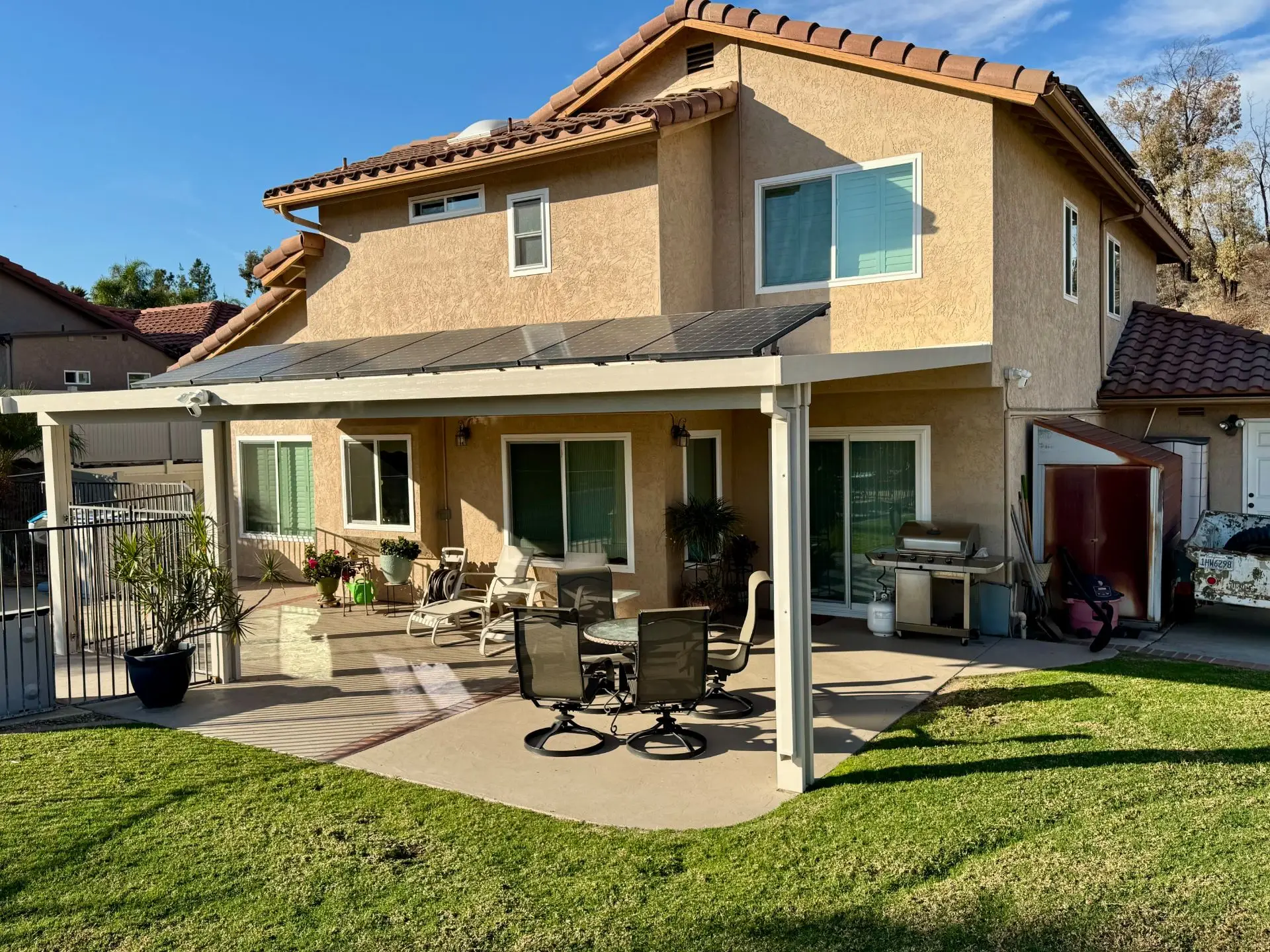
You’ll need to match your aluminum patio cover to your home’s architectural style, whether modern or traditional, while considering your local climate’s rainfall, wind, and UV exposure. Measure your coverage area carefully and set a realistic budget of $8- $ 40 per square foot, factoring in installation costs. Choose between attached covers for seamless integration or freestanding options for design flexibility. Select premium .080″ gauge aluminum with powder coating for durability. Our extensive guide below covers every essential detail you’ll need.
Key Takeaways
- Match your patio cover style and color to your home’s architectural design and existing trim for seamless visual integration.
- Measure the coverage area dimensions and ceiling height, and identify obstacles such as electrical fixtures or downspouts before purchasing.
- Choose premium .080″ gauge aluminum with welded corners and powder coating for superior durability and weather resistance.
- Budget $8-40 per square foot, depending on quality, plus additional costs for permits, installation, and electrical work.
- Inspect regularly for loose hardware, surface damage, and wear to maintain structural integrity and aesthetic appeal.
Watch a Real San Diego Build
Watch our crew install a double insulated Elitewood patio cover in San Diego County, with reinforced beams, insulated roof panels, recessed LED lighting, and integrated gutters.
Assess Your Home’s Architectural Style and Design Compatibility
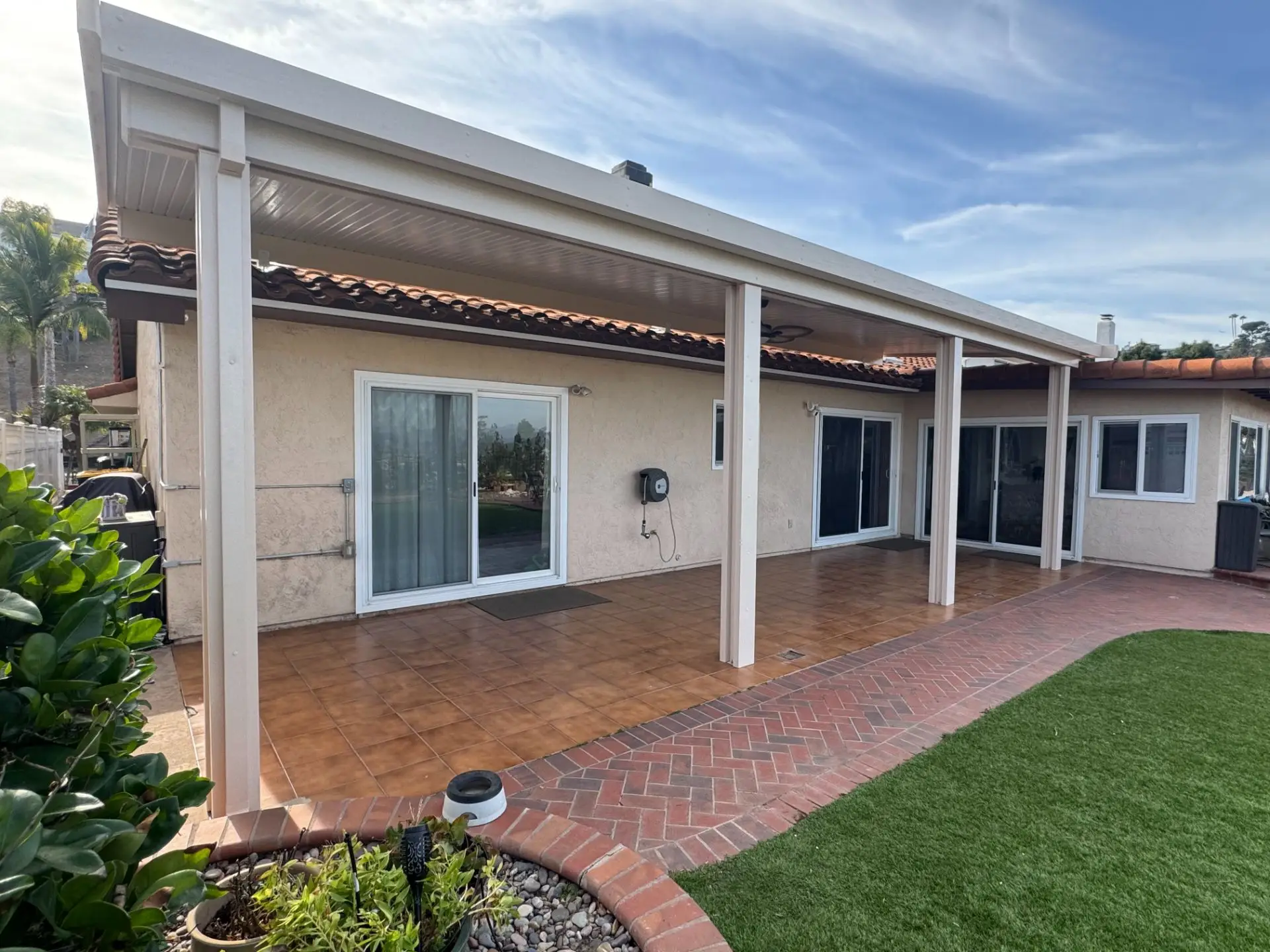
When selecting an aluminum patio cover, you’ll want to ensure it complements your home’s existing architectural features rather than clashing with them.
Start by identifying your home’s style—whether it’s modern, traditional, Mediterranean, or craftsman. Each style demands specific design elements that’ll enhance rather than detract from your property’s aesthetic appeal.
Consider your home’s roofline, siding materials, and color palette when choosing your cover’s profile and finish.
A sleek, flat-panel design suits contemporary homes, while pitched or gabled covers complement traditional architecture.
Match or coordinate colors with existing trim, and ascertain the cover’s proportions align with your home’s scale for ideal visual harmony.
Evaluate Your Local Climate and Weather Patterns
Since your aluminum patio cover must withstand your region’s specific weather challenges, you’ll need to analyze local climate patterns before making your selection.
Consider your area’s rainfall intensity and frequency, as proper drainage becomes essential in wet climates. Evaluate wind speeds and storm patterns that could affect structural requirements.
Coastal wind exposure can demand stronger support systems near the shore. High temperatures and UV exposure influence material thickness and protective coatings needed.
Salt air near coastal areas requires corrosion-resistant finishes. Document seasonal temperature fluctuations, as extreme changes cause expansion and contraction.
Understanding these factors guarantees you’ll choose a cover engineered for your specific environmental conditions.
Determine Your Budget and Financing Options
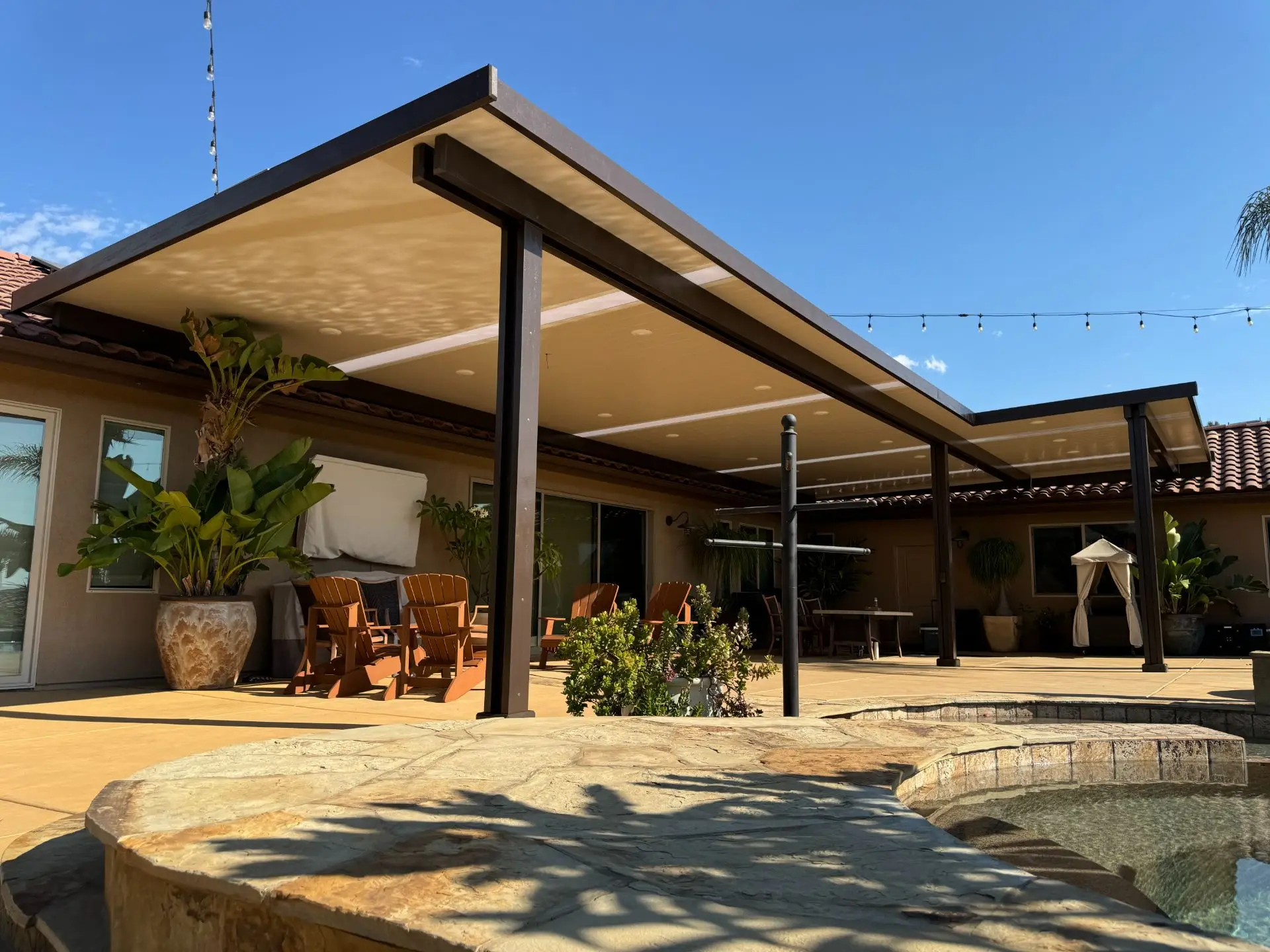
After determining your climate requirements, you’ll need to establish a realistic budget for your aluminum patio cover project.
Basic covers start around $8-15 per square foot, while premium designs can reach $25-40 per square foot. Factor in additional costs like permits, electrical work, and professional installation.
Consider financing options if upfront costs exceed your budget. Many contractors offer payment plans, and home improvement loans provide competitive rates. Some homeowners use home equity lines of credit for larger projects.
Don’t forget to account for long-term savings—aluminum covers reduce cooling costs and increase property value, making them worthwhile investments.
Measure Your Patio Space and Coverage Requirements
Before finalizing your budget, you’ll need accurate measurements to determine the exact size and scope of your aluminum patio cover. Proper measuring guarantees you order the right materials and avoid costly mistakes.
Follow these essential steps:
- Measure the length and width of your desired coverage area using a steel tape measure.
- Check the ceiling height from the patio floor to the attachment points on your home’s exterior wall.
- Note obstacles like electrical fixtures, downspouts, or architectural features that affect installation.
- Document slope requirements for proper water drainage away from your house.
These measurements directly impact material costs and installation complexity.
Choose Between Attached and Freestanding Patio Cover Options
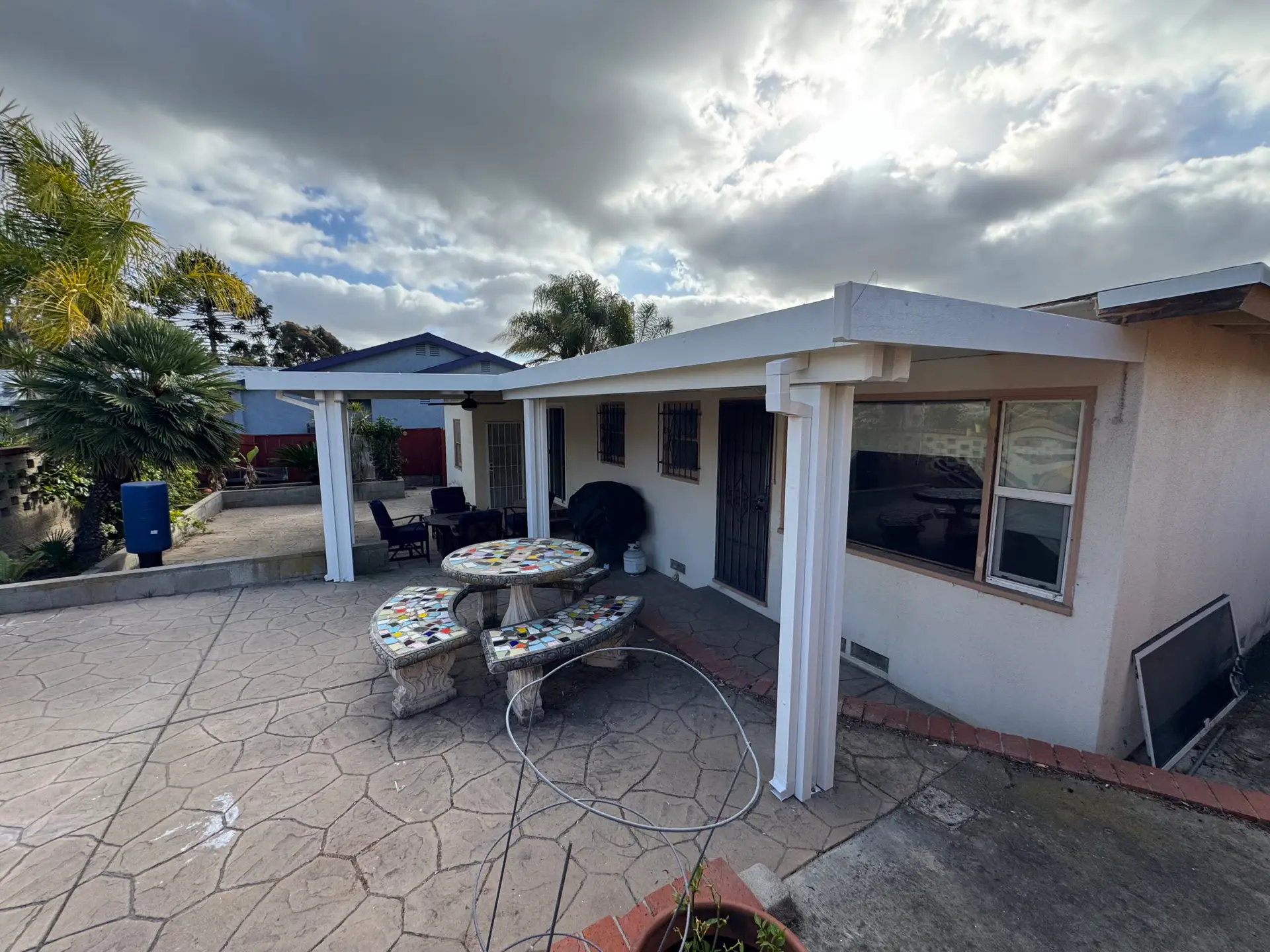
Once you have your measurements in hand, you’ll face a fundamental design decision that affects both cost and functionality.
Attached patio covers connect directly to your home’s exterior wall, creating seamless integration and typically costing less since they require fewer support posts. They’re ideal for entertaining spaces that extend your indoor living area.
Freestanding covers offer complete design freedom and can be positioned anywhere in your yard without being structurally attached to your house. They’re perfect for poolside areas, gardens, or when you can’t modify your home’s exterior due to HOA restrictions or structural limitations.
Select the Right Aluminum Grade and Construction Quality
While the attached versus freestanding design determines your cover’s placement, the aluminum grade and construction quality you select will dictate its longevity and performance.
You’ll encounter different aluminum grades, with 6063-T5 being the standard for residential applications.
Here’s what separates quality construction from budget options:
- Thickness matters – Premium covers use .080″ gauge aluminum versus .050″ in cheaper alternatives
- Welded corners – Look for welded joints rather than screwed connections for superior strength
- Powder coating – Factory-applied powder coating outlasts paint and resists fading, chalking, and corrosion
- Structural integrity – Quality manufacturers include proper cross-bracing and reinforcement for wind resistance
Compare Solid Roof vs. Lattice Design Benefits
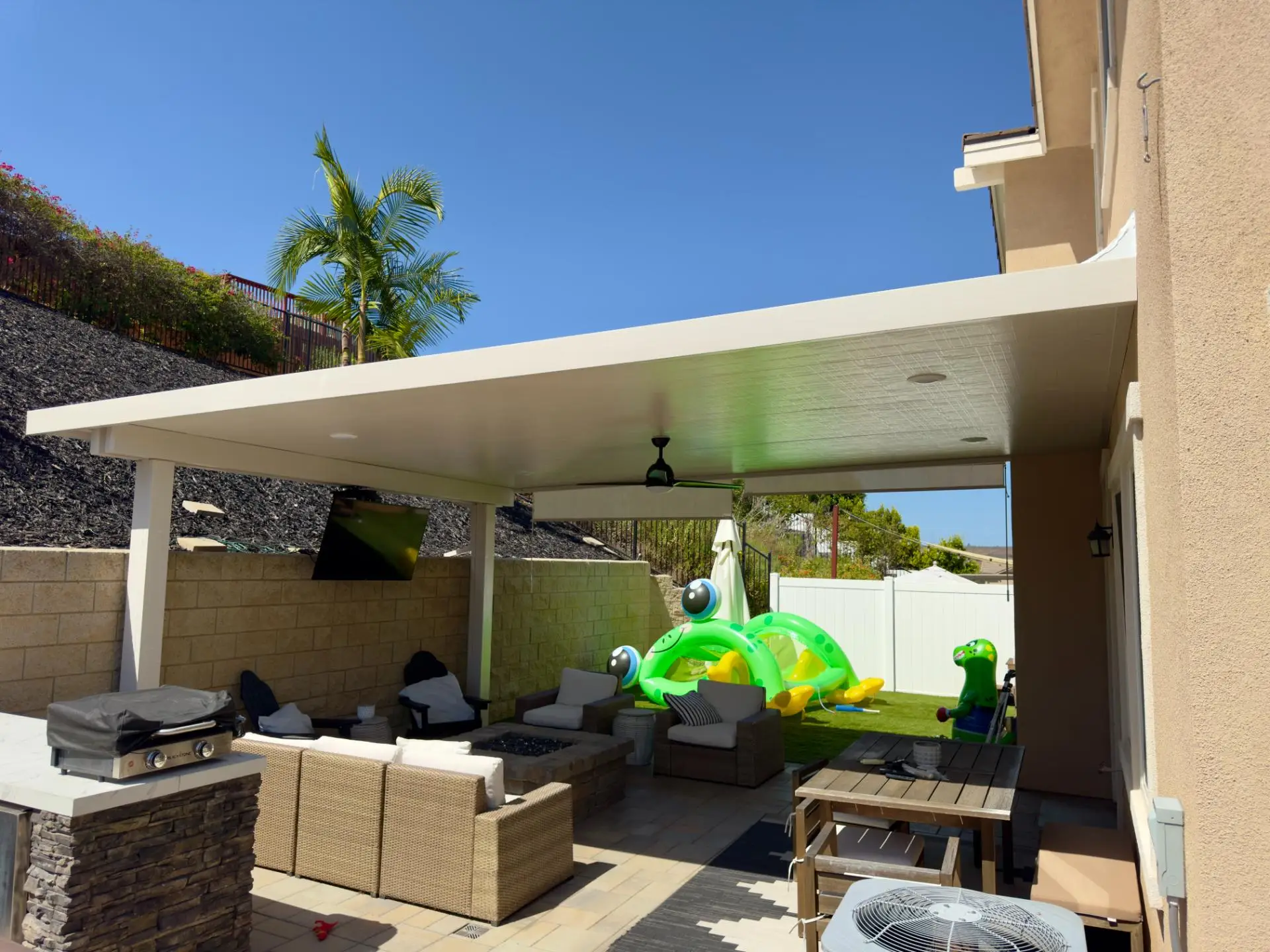
After selecting your aluminum grade and construction quality, you’ll need to decide between a solid roof or a lattice design, as this choice dramatically affects both the functionality and aesthetics of your patio cover.
Solid roofs provide complete weather protection and maximum shade, making them ideal for harsh climates or areas requiring full coverage. They’re also better for privacy and blocking wind.
Lattice designs offer partial shade with filtered sunlight, creating attractive shadow patterns while maintaining an open feel. They’re lighter, more affordable, and allow better air circulation, but provide less weather protection than solid alternatives.
Review Local Building Codes and Permit Requirements
Before finalizing your solid roof or lattice design, you’ll need to research your local building codes and permit requirements, as these regulations can significantly affect your project’s scope, timeline, and budget.
Start by checking these essential requirements:
- Setback distances from property lines and existing structures
- Height restrictions that may limit your cover’s maximum dimensions
- Foundation requirements for footings and concrete specifications
- Structural engineering documentation needed for permit approval
Contact your city’s building department early in the planning process.
Many municipalities require permits for permanent patio covers, and approval can take several weeks.
Some areas also mandate professional installation or inspection.
Research Professional Installation vs. DIY Considerations
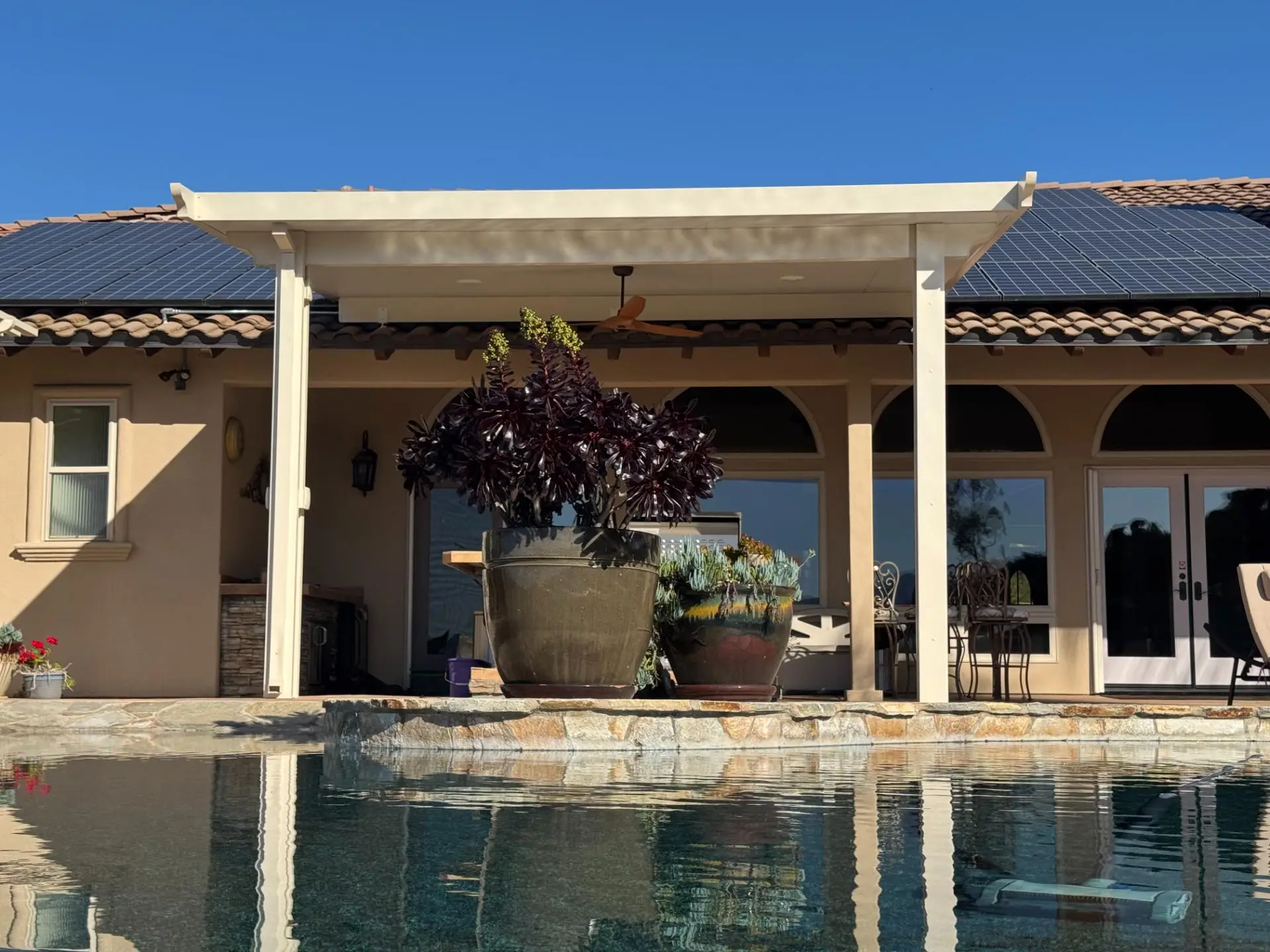
Once you’ve confirmed the permit requirements, you’ll face a critical decision: either hire professionals or tackle the installation yourself.
Professional installation guarantees proper structural integrity, code compliance, and warranty protection. Contractors have specialized tools, experience with challenging installations, and insurance coverage for potential damages.
However, DIY installation offers significant cost savings—typically 50-70% less than professional services. You’ll need advanced carpentry skills, proper tools, and adequate time.
Consider your roof’s complexity, local weather conditions, and safety concerns. Complex rooflines or multi-story installations strongly favor professional expertise. Simple, single-story installations with standard dimensions might suit experienced DIYers.
Plan for Long-Term Maintenance and Care Requirements
While aluminum patio covers require minimal upkeep compared to wood or fabric alternatives, you’ll still need to establish a regular maintenance routine to preserve their appearance and functionality.
Your maintenance schedule should include these essential tasks:
- Quarterly cleaning – Rinse with water and mild detergent to remove dirt, pollen, and debris.
- Annual gutter inspection – Clear drainage systems and check for proper water flow.
- Hardware tightening – Examine and secure loose bolts, screws, and connection points.
- Surface examination – Look for scratches, dents, or coating damage that needs touch-up paint.
This proactive approach prevents costly repairs and considerably extends the lifespan of your cover.
Frequently Asked Questions
Can Aluminum Patio Covers Be Painted or Customized With Different Colors?
Yes, you can paint aluminum patio covers and customize them with different colors.
You’ll want to use high-quality exterior paint specifically designed for metal surfaces. First, clean the aluminum thoroughly and apply a metal primer for better adhesion.
Many manufacturers also offer powder-coated finishes in various colors during installation, which typically last longer than paint.
You can choose from neutral tones, bold colors, or finishes that complement your home’s exterior.
How Long Do Aluminum Patio Covers Typically Last Before Needing Replacement?
You’ll typically get 20-30 years from a quality aluminum patio cover before needing to replace it.
High-grade aluminum with proper powder coating can last even longer in moderate climates.
However, you’ll see shorter lifespans in coastal areas due to salt-air corrosion or in regions with extreme weather conditions.
Regular maintenance, like cleaning and occasional touch-ups, will help maximize your cover’s lifespan and keep it looking great throughout its decades of service.
Do Aluminum Patio Covers Affect Home Insurance Rates or Coverage?
Aluminum patio covers don’t typically increase your home insurance rates, but they can positively affect your coverage.
You’ll want to notify your insurance company about the addition since it increases your home’s value and replacement cost. Most insurers view aluminum covers favorably because they’re durable and low-maintenance.
However, you should verify that your policy covers the structure against wind, storms, and other potential damages before installation.
Can You Install Ceiling Fans or Lights Underneath Aluminum Patio Covers?
Yes, you can install ceiling fans and lights underneath aluminum patio covers.
You’ll need to guarantee the cover is strong enough to support the weight and that proper electrical wiring is in place.
Most aluminum covers can handle standard ceiling fans and light fixtures when properly reinforced.
However, you’ll want to consult with a contractor to verify your cover’s load capacity and ensure all electrical work complies with local building codes for safe installation.
Will an Aluminum Patio Cover Increase My Property’s Resale Value?
Yes, you’ll likely see an increase in property value with an aluminum patio cover.
You’re adding a functional outdoor living space that appeals to buyers, especially in warmer climates.
You’ll typically recoup 60-80% of your investment, depending on your local market and the quality of the cover.
You’re creating an attractive feature that extends usable space and provides weather protection, making your home more desirable than comparable properties without covered outdoor areas.
Current San Diego County Price Ranges (2026)
Real ranges from our published San Diego County pricing guide. Final cost depends on size, materials, and structural requirements.
See the full breakdown on our published pricing page, or get a free quote for your exact project.