
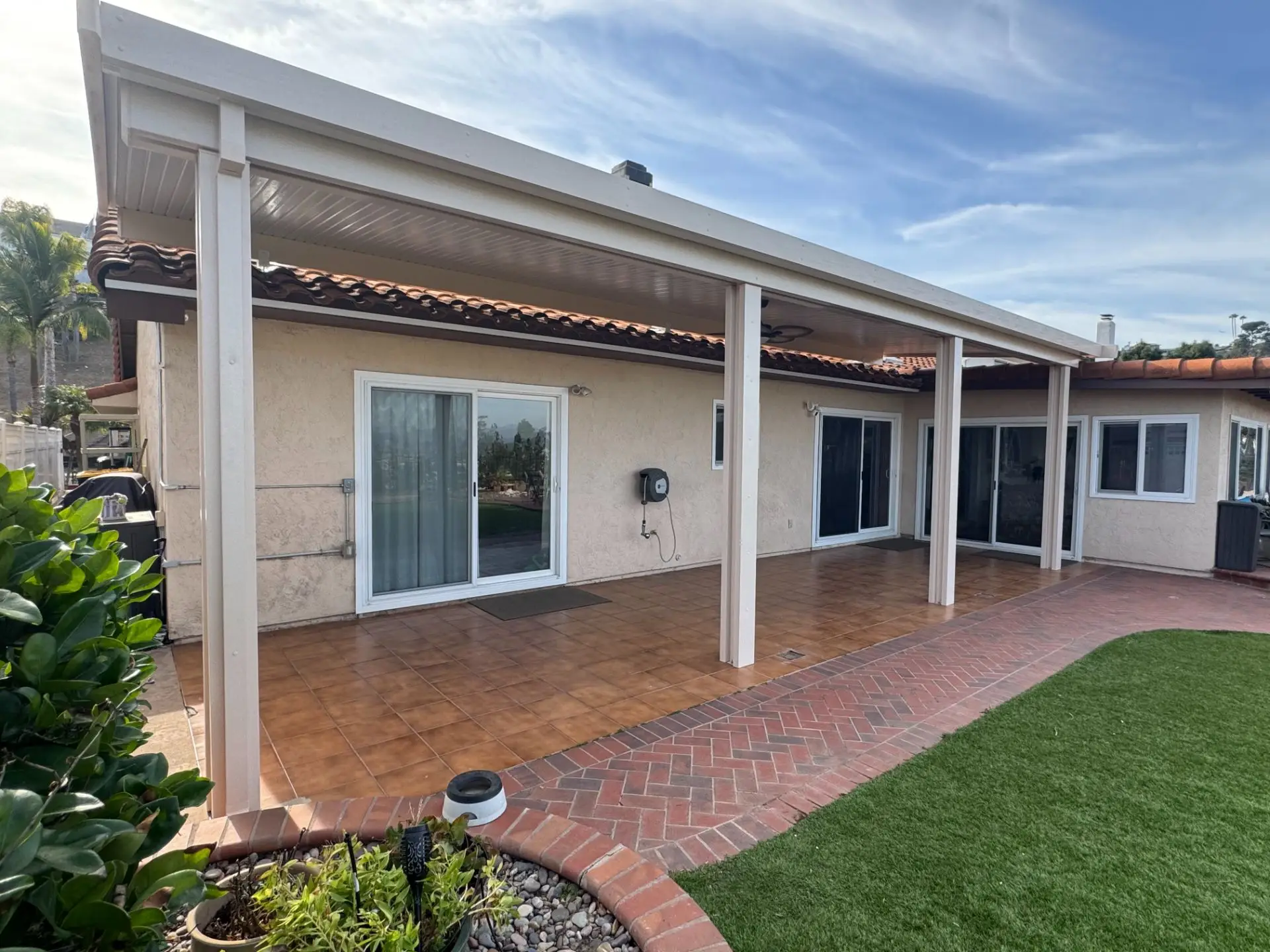
Wall-mounted aluminum patio covers with cantilever designs are your best bet for maximizing shade in compact spaces. You’ll want sleek, minimalist styles with flat roofs and light colors like white or cream to maintain an open feel. Louvered panels and perforated designs provide weather protection while ensuring proper airflow, preventing your small area from feeling enclosed. These cost-effective solutions require precise installation but offer long-term value. Discover how strategic positioning transforms your limited outdoor space.
Key Takeaways
- Wall-mounted cantilever designs extend shade beyond patio boundaries while maximizing floor space in compact areas.
- Lightweight aluminum construction with minimal support posts preserves visual openness and structural integrity in tight spaces.
- Light-colored finishes like white or cream reflect sunlight and maintain an airy atmosphere without overwhelming small areas.
- Louvered or perforated panels provide weather protection while ensuring proper airflow and preventing heat buildup in confined spaces.
- Pre-fabricated aluminum covers offer cost-effective installation and lower maintenance requirements than wood or vinyl alternatives.
Maximizing Coverage in Minimal Square Footage
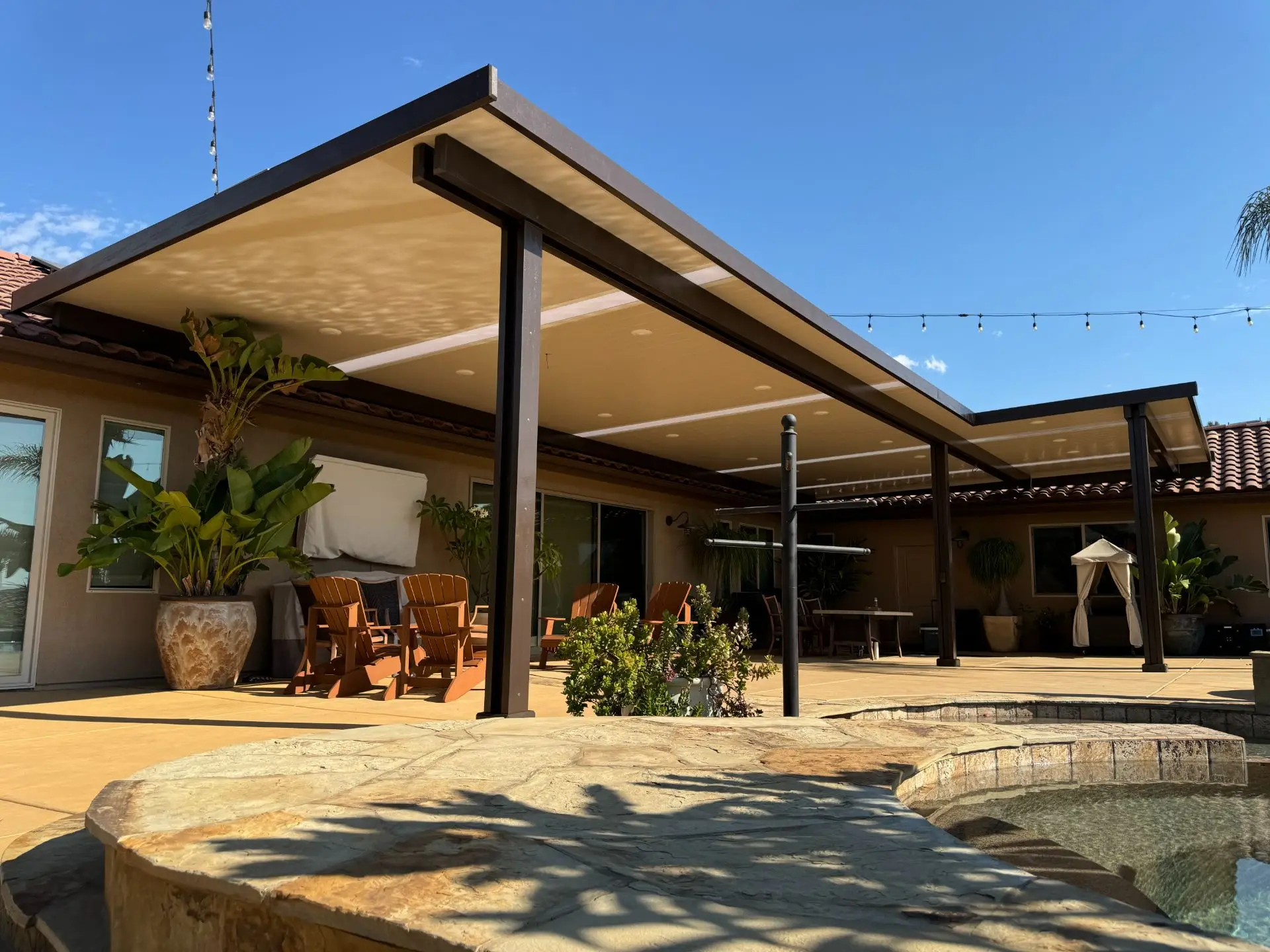
When dealing with a compact outdoor space, you’ll want to choose an aluminum patio cover that extends your usable area without overwhelming the space’s proportions.
Wall-mounted designs work best since they don’t require posts that consume precious floor space. Consider cantilever-style covers that project outward from your home’s exterior wall, creating shade beyond your patio’s actual boundaries.
Opt for lighter aluminum colors, such as white or cream, to maintain an open, airy feel. Position your cover strategically to shade seating areas during peak sun hours.
You’ll maximize functionality while preserving your small patio’s visual spaciousness and comfortable atmosphere.
Design Options That Won’t Overwhelm Your Space
Since small patios demand careful design choices, you’ll need aluminum covers that complement rather than dominate your space.
Choose sleek, minimalist designs with clean lines that create visual flow rather than interruption. Flat or low-pitched roofs work better than steep angles, maintaining proportional balance.
Select lighter aluminum finishes, such as white or cream, to reflect light and create airiness, and avoid dark colors that can make spaces feel cramped.
Consider louvered designs that allow filtered light through, preventing your patio from feeling enclosed. Integrated gutters eliminate bulky additions, while narrow support posts maximize floor space without sacrificing structural integrity.
Installation Considerations for Compact Areas
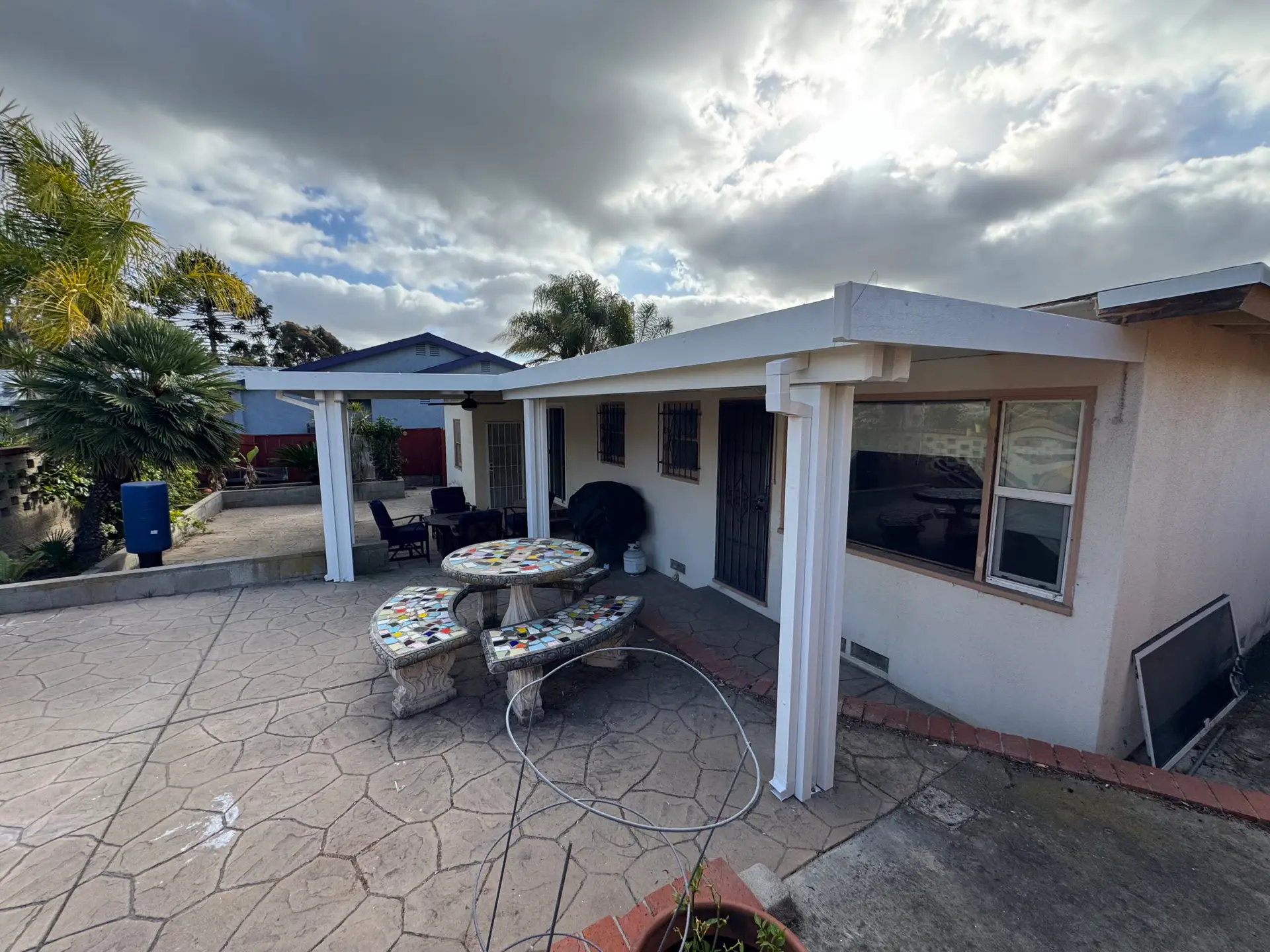
Installing aluminum patio covers in tight spaces requires strategic planning to avoid costly mistakes and guarantee proper functionality. You’ll need precise measurements since there’s no room for error in compact areas. Consider overhead clearances, utility lines, and structural support requirements before beginning.
You should also verify local permits and HOA requirements, as small spaces often have stricter regulations. Professional installation becomes more valuable in confined areas where precision matters most.
Weather Protection Without Compromising Airflow
Although aluminum patio covers excel at blocking rain and harsh sunlight, you’ll want to make sure they don’t create a stuffy, enclosed feeling in your compact outdoor space.
Choose designs with built-in ventilation gaps or louvered panels that allow air circulation while maintaining protection. Perforated aluminum panels offer excellent airflow without sacrificing weather resistance.
Consider partial coverage designs that shield seating areas while leaving open sections for natural ventilation. Slanted rooflines help hot air escape naturally, preventing heat buildup.
Strategic placement of your cover guarantees cross-ventilation by positioning it to work with prevailing winds rather than blocking them completely.
Cost-Effective Shade Solutions for Budget-Conscious Homeowners
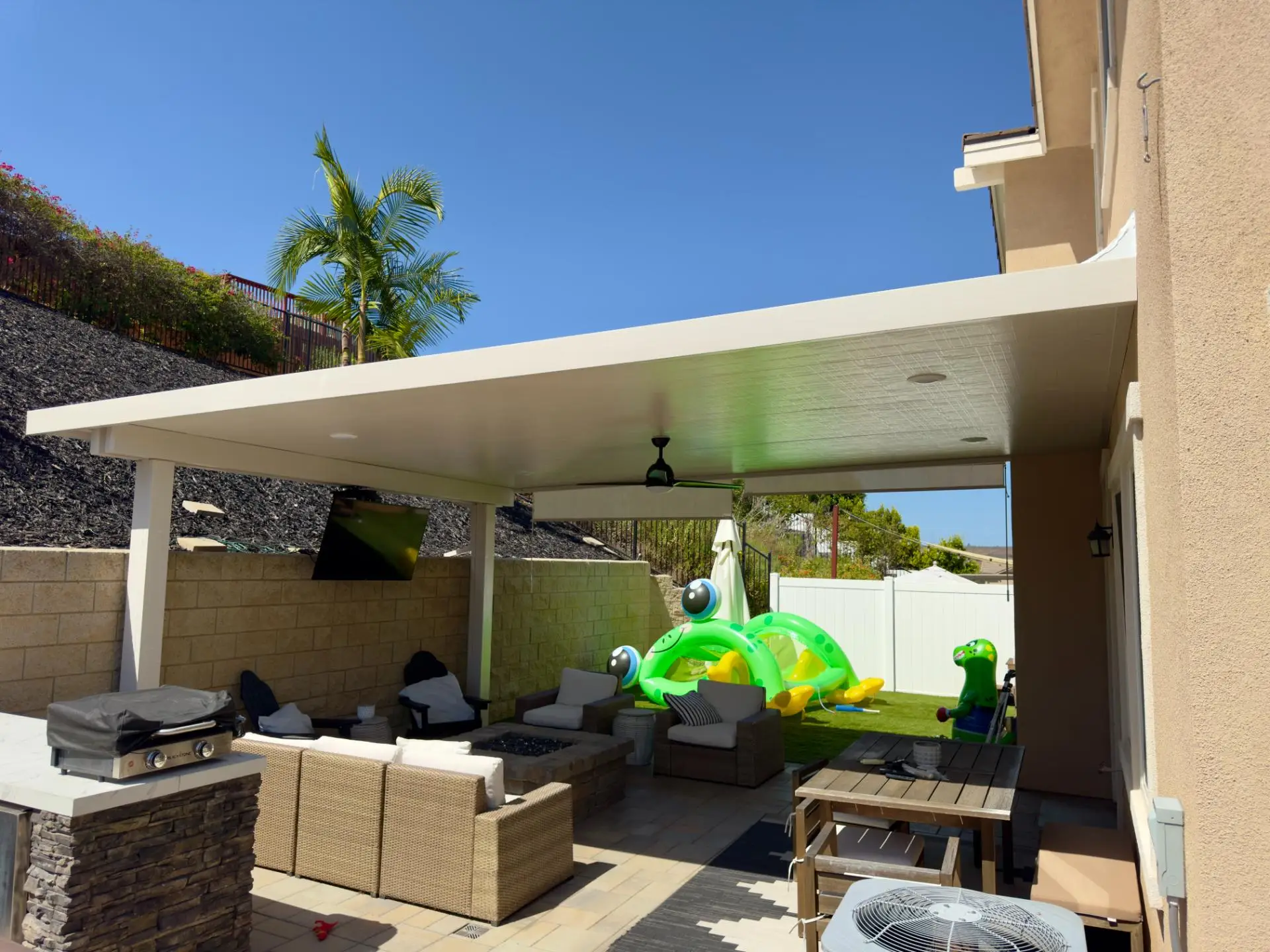
Budget constraints don’t have to limit your shade options when it comes to aluminum patio covers for small spaces.
You’ll find aluminum covers cost considerably less than wood or vinyl alternatives while delivering superior durability. Their lightweight construction reduces installation expenses, and you can often handle simple mounting yourself with basic tools.
Pre-fabricated panels eliminate custom fabrication costs, making them perfect for standard small patio dimensions. You won’t face ongoing maintenance expenses like staining, sealing, or replacing rotted materials.
The long-term value proposition becomes even more attractive when you consider aluminum’s resistance to rust, fading, and weather damage over decades.
Frequently Asked Questions
Do Aluminum Patio Covers Require Permits for Installation on Balconies?
You’ll likely need permits for aluminum patio covers on balconies, but requirements vary by location.
Most cities require permits for permanent structures attached to buildings, especially in condos or apartments, where you’ll need HOA approval, too.
Check with your local building department before installation.
Temporary or freestanding covers mightn’t need permits, but permanent attachments typically do.
Don’t skip this step – unpermitted work can cause problems when selling.
How Long Do Aluminum Patio Covers Typically Last in Different Climates?
You’ll typically get 20-30 years from aluminum patio covers in most climates.
In coastal areas with salt air, expect 15-20 years due to corrosion potential.
Desert climates with intense UV exposure may reduce lifespan to 18-25 years.
However, in moderate climates, covers often last decades or more.
You’ll extend longevity by choosing powder-coated aluminum and performing regular cleaning and maintenance, regardless of your climate conditions.
Can Aluminum Patio Covers Be Painted or Customized After Installation?
Yes, you can paint aluminum patio covers after installation, though it requires proper preparation.
You’ll need to clean the surface thoroughly, apply a primer designed for aluminum, then use high-quality exterior paint.
However, many manufacturers offer factory powder coating in various colors during production, which provides better durability and adhesion.
You can also add decorative elements like trim, lighting, or fabric panels to customize your cover’s appearance.
What Maintenance Is Required to Keep Aluminum Patio Covers Looking New?
You’ll need minimal maintenance to keep your aluminum patio cover looking pristine.
Simply rinse it with a garden hose monthly to remove dirt and debris. For deeper cleaning, use mild soap and water with a soft brush, then rinse thoroughly.
Inspect fasteners and connections annually and tighten any loose screws. Check for scratches or chips in the finish and touch up paint if necessary.
Avoid abrasive cleaners that can damage the aluminum’s protective coating.
Are Aluminum Patio Covers Safe During Lightning Storms and High Winds?
Yes, aluminum patio covers are generally safe during storms when properly installed.
You’ll want to guarantee your cover has adequate structural support and proper grounding to handle lightning safely. For high winds, choose covers with reinforced frames and secure mounting systems.
You should have a professional assess your installation’s wind rating and local building codes.
Don’t use your covered patio during severe storms, and regularly inspect fasteners and connections for safety.
Current San Diego County Price Ranges (2026)
Real ranges from our published San Diego County pricing guide. Final cost depends on size, materials, and structural requirements.
See the full breakdown on our published pricing page, or get a free quote for your exact project.