
To maximize your small deck, focus on strategic layout planning with clear traffic zones and multi-functional furniture like storage benches and nesting tables. Incorporate vertical elements—pergolas, trellises, and hanging planters—to draw the eye upward and create visual space. Divide your area into dedicated zones for dining, lounging, and meditation using furniture or rugs. Built-in storage solutions eliminate clutter while preserving precious floor space. These smart design approaches transform even the tiniest outdoor areas into versatile retreats.
Key Takeaways
- Strategic layout planning maximizes usable space by defining functional zones while maintaining 36-inch walkways.
- Multi-functional furniture like benches with storage and folding tables provides flexibility without consuming valuable deck space.
- Vertical design elements, including pergolas and wall trellises, draw eyes upward, creating visual spaciousness.
- Built-in storage solutions eliminate clutter while doubling as seating or display areas.
- Creating dedicated zones for dining, lounging, and cooking enhances functionality in limited square footage.
Strategic Layout Planning for Compact Decks
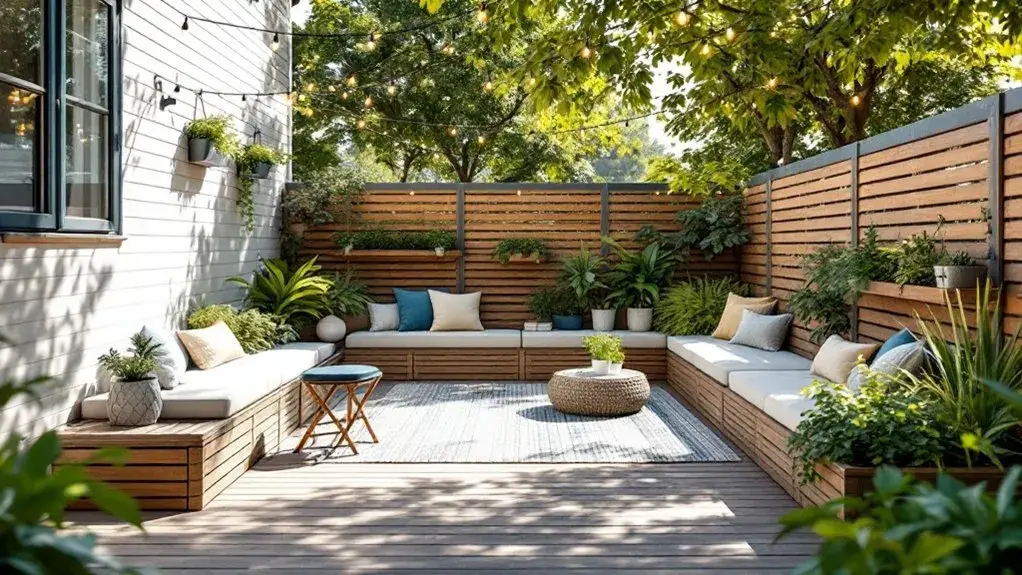
When designing a compact deck, strategic layout planning becomes the foundation for maximizing every square inch of available space.
Start by measuring your area precisely and creating a scaled drawing of your constraints. Consider traffic flow patterns—walkways need at least 36 inches.
Think vertically by incorporating built-in benches with storage underneath or wall-mounted foldable tables.
Define functional zones for dining, lounging, and plants, but don’t overcrowd. Instead of large furniture, choose modular pieces that can reconfigure as needed.
Finally, align your deck layout with nearby indoor spaces to create a seamless connection.
Multi-Functional Furniture Solutions
Because space is a premium on small decks, multi-functional furniture becomes your greatest ally in maximizing utility without sacrificing comfort.
Opt for benches with hidden storage compartments to stow cushions and gardening tools. Consider nesting tables that can expand for entertaining or collapse when not needed.
Look for convertible pieces like ottomans that transform into extra seating or side tables. Wall-mounted folding tables provide dining space that disappears when unused.
Stackable chairs offer flexibility for gatherings without permanent footprint concerns.
Remember to choose weather-resistant materials that won’t require extensive storage during off-seasons, allowing your deck to remain functional year-round.
Vertical Design Elements to Expand Visual Space

While horizontal square footage may be limited, your small deck’s vertical space offers untapped functionality and visual expansion potential. Consider incorporating these vertical elements to create the illusion of a larger area while adding practical value.
| Element | Visual Impact | Functional Benefit |
|---|---|---|
| Pergolas | Draws eyes upward | Supports climbing plants |
| Wall trellises | Creates depth | Grows herbs vertically |
| Hanging planters | Adds layers | Free floor space |
| Tall, thin plants | Establishes height | Provides privacy |
| Wall-mounted lighting | Extends usable hours | Highlights vertical features |
You’ll find that utilizing vertical space makes your deck feel larger and creates distinct zones without sacrificing precious floor area.
Built-In Storage to Eliminate Clutter
Since even the most beautifully designed deck can quickly become cramped when accessories pile up, incorporating built-in storage solutions remains essential for small outdoor spaces.
Consider multi-functional furniture like benches with lift-up seats or hollow ottomans that hide cushions and throws.
Install railing planters to move potted plants off the floor, freeing up valuable square footage.
Under-deck drawers utilize otherwise wasted space for gardening tools and seasonal items.
Build slim cabinets against walls for dining areas to store tableware and barbecue supplies.
Weather-resistant storage boxes can double as side tables while protecting items from the elements.
Creating Zones in Limited Square Footage
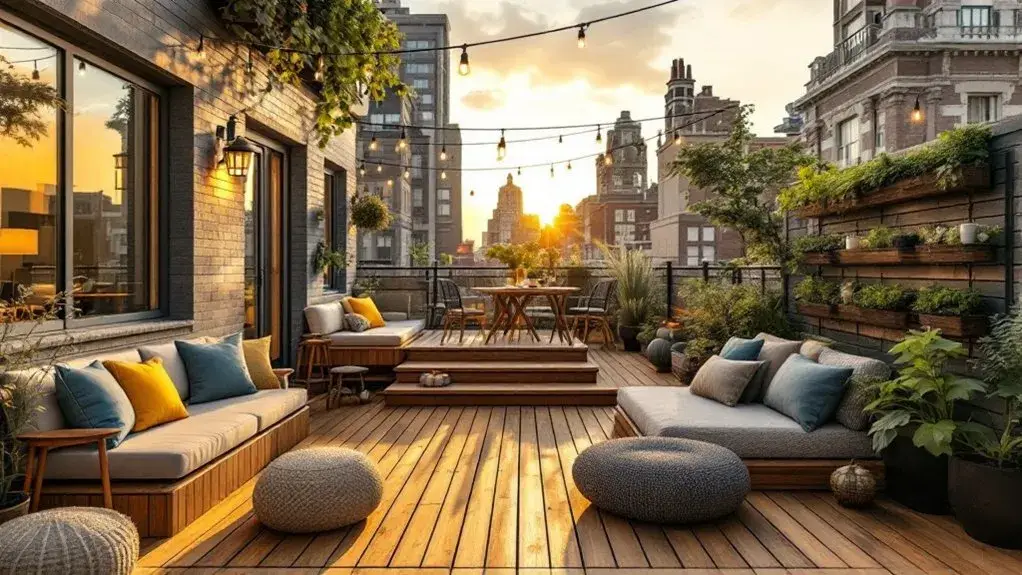
As built-in storage maximizes vertical space, strategic zoning transforms even the tiniest deck into a fully functional outdoor retreat.
You’ll want to divide your deck into dedicated areas for specific activities, using furniture arrangement, rugs, or planters as natural dividers.
- Cozy dining nook where sunset conversations stretch late into the evening
- A lounging area where weekend novels finally get finished
- Meditation corner where morning coffee meets birdsong
- Grilling station that turns weeknight dinners into events
- A passageway that welcomes guests from indoors to your outdoor oasis
Don’t let square footage limitations dictate function—thoughtful zoning creates multiple experiences in one compact space.
Optical Illusions and Design Tricks for Spaciousness
Beyond physical organization, visual perception is essential to how spacious your deck feels.
Create diagonal patterns with decking boards to draw the eye outward, making narrow spaces appear wider. Use lighter-colored stains to reflect more light and open up the area visually.
Install mirrors strategically to double perceived space, especially in enclosed sections.
Consider built-in seating along perimeters instead of bulky furniture. Vertical gardens draw eyes upward, emphasizing height over width.
Choose cable or glass panels that maintain sightlines rather than solid barriers for railings.
Weather-Resistant Materials for Year-Round Enjoyment
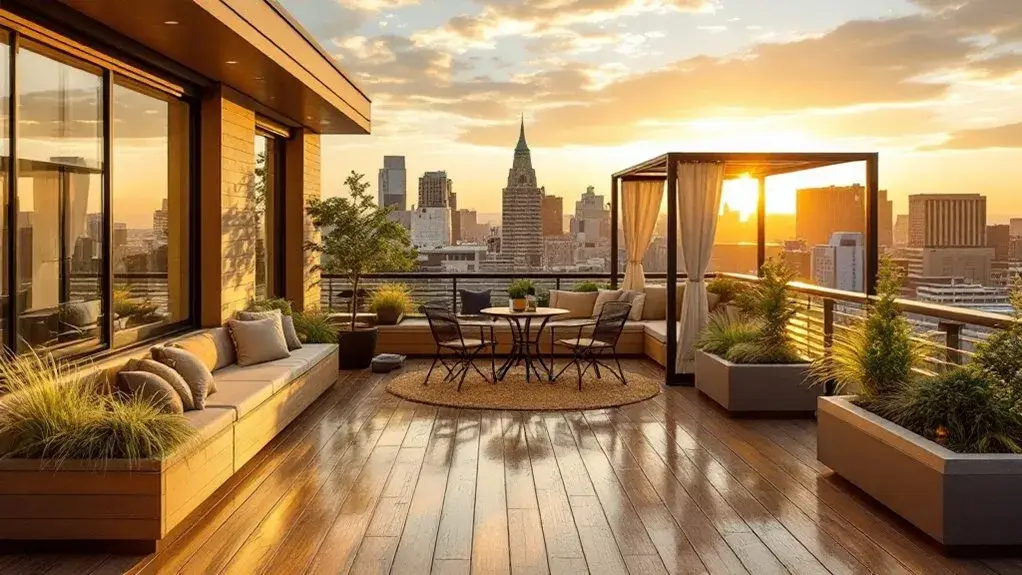
While visual design creates the impression of space, your deck’s materials determine its longevity and functionality throughout changing seasons. Choose composite decking for its impressive durability and minimal maintenance requirements.
Cedar and redwood offer natural beauty with built-in resistance to decay, while tropical hardwoods like ipe provide unmatched longevity in harsh conditions.
- Breathe easy knowing your investment withstands winter’s brutal assault
- Feel pride as your deck maintains its beauty without constant upkeep
- Experience peace watching rain beads harmlessly off protected surfaces
- Enjoy confidence hosting gatherings regardless of weather forecasts
- Savor the freedom from seasonal repairs eating into your relaxation time
Lighting Techniques to Enhance Small Deck Ambiance
Strategic lighting transforms even the smallest deck into an enchanting nocturnal retreat while extending your usable outdoor hours into the evening.
Layer your lighting with overhead string lights, step lights, and tabletop lanterns to create depth and dimension.
Install LED strip lighting under railings or bench seating for subtle illumination that doesn’t consume precious floor space.
Solar-powered options eliminate the need for complex wiring, while smart lighting systems let you control brightness and color from your phone.
Remember: good lighting isn’t about brightness alone—it’s about creating zones that define your deck’s purpose and highlight its best features.
Frequently Asked Questions
What Permits Do I Need for a Small Deck Installation?
You’ll typically need a building permit for any deck installation, even small ones.
Check with your local building department, as requirements vary by location. You may need to submit detailed plans showing dimensions, materials, and structural elements.
Some areas also require zoning permits or HOA approval.
Don’t skip this step – unpermitted decks can lead to fines, removal orders, or problems when selling your home.
How Much Weight Can a Small Elevated Deck Safely Support?
A small elevated deck should safely support at least 50 pounds per square foot for residential use.
You’ll need to guarantee your deck can handle dead loads (the structure itself) and live loads (people and furniture).
Factors like joist spacing, beam size, and foundation strength all impact capacity.
For peace of mind, you might want to consult a structural engineer who can verify that your design meets local building codes’ load requirements.
Can I Install a Hot Tub on My Compact Deck?
Installing a hot tub on your compact deck requires careful consideration.
You’ll need to verify that your deck can support 150-200 pounds per square foot, which is far more than the weight of standard residential decks (50-60 psf).
Consult a structural engineer to evaluate your existing structure and potentially reinforce it with additional footings, beams, and joists.
Consider the hot tub’s weight when filled with water and people, plus access for maintenance.
Local permits may also be required before installation.
What’s the Average Cost per Square Foot for Small Deck Construction?
The average cost per square foot for small deck construction typically ranges from $30 to $60, depending on your location and the materials chosen.
You’ll pay less for pressure-treated wood than composite or exotic hardwoods.
Don’t forget to factor in additional costs like railings, stairs, and permits.
Labor usually accounts for about two-thirds of your total budget, so getting multiple quotes from contractors can help you find the best price.
How Do I Prevent Mold and Mildew on My Deck in Shaded Areas?
You’ll need regular maintenance to prevent mold and mildew on your deck in shaded areas.
Clean your deck quarterly with a pressure washer or specialized deck cleaner.
Apply a quality water-repellent sealant annually to create a protective barrier.
Verify proper drainage by clearing debris between boards.
Trim nearby vegetation to improve airflow and sunlight exposure.
Consider installing deck tiles with ventilation gaps in persistently damp areas.
Don’t let standing water remain after rain.