
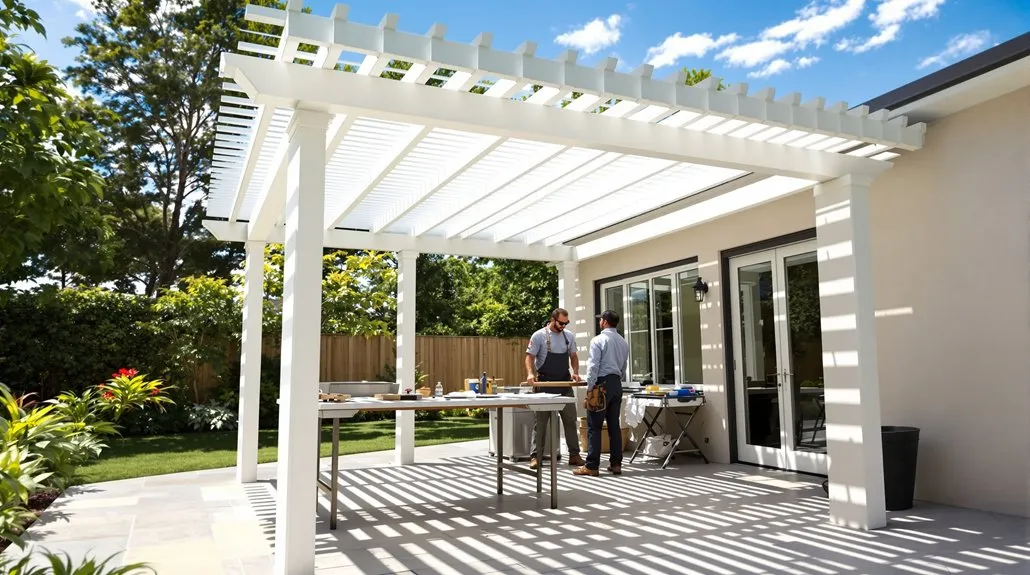
Hiring a licensed builder for your louvered pergola protects you from costly code violations, voided warranties, and resale complications that most homeowners don’t discover until it’s too late. Licensed contractors understand local permit requirements, use approved materials, and guarantee your structure passes mandatory inspections. They also carry liability insurance, keeping you financially protected if something goes wrong. There’s a lot more at stake than most people realize, and the details ahead might surprise you.
Licensed Builders Know Your Local Louvered Pergola Permit Requirements

When installing a louvered pergola, you’ll need to navigate a maze of local permit requirements that vary considerably by city, county, and state.
Licensed builders already know these regulations inside out, saving you countless hours of research and potential costly mistakes. They understand which structures require permits, what load-bearing specifications apply, and how zoning restrictions affect your project.
Without this knowledge, you risk failed inspections, fines, or even forced removal of your pergola.
A licensed builder handles the permit application process efficiently, ensuring your structure meets every local code requirement before construction begins, protecting your investment from the start.
What Happens When an Unlicensed Contractor Builds Your Louvered Pergola?
Hiring an unlicensed contractor to build your louvered pergola might seem like a cost-saving move, but it can quickly become an expensive mistake.
Without proper licensing, your contractor likely skips permits, leaving you liable for code violations. You’ll face fines, forced demolition, or costly retrofits to meet local standards.
Your homeowner’s insurance may also deny claims tied to unpermitted structures. If you sell your home, unpermitted work can derail the transaction entirely.
Licensed builders carry insurance and stand behind their work legally. Cutting corners on credentials today puts your property, finances, and safety at serious risk tomorrow.
Will an Unlicensed Louvered Pergola Hurt Your Home’s Resale Value?
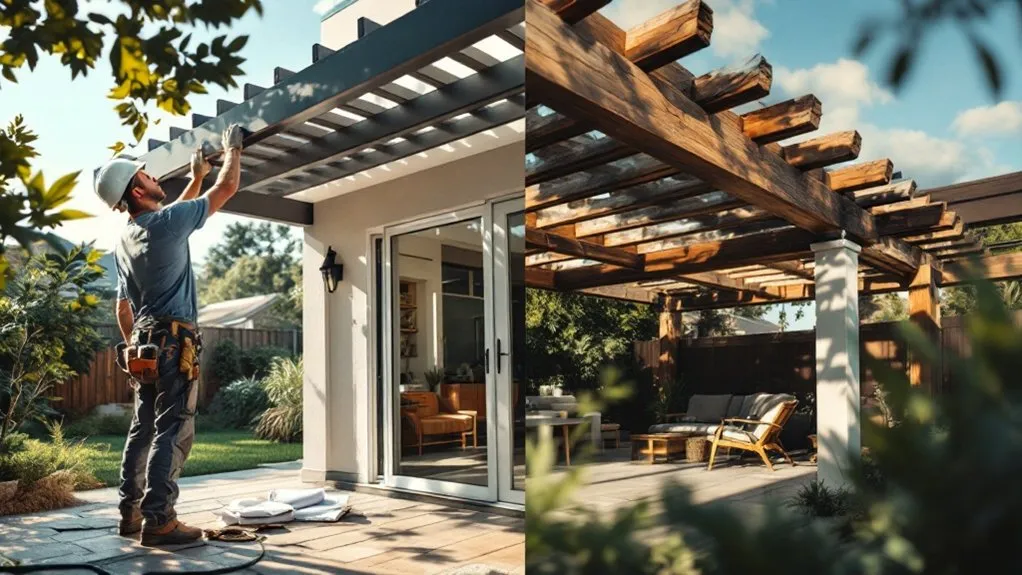
Selling your home with an unlicensed louvered pergola can seriously undermine your asking price. Buyers’ inspectors flag unpermitted structures, forcing you to either demolish it or renegotiate at a lower price.
Don’t let an unlicensed structure cost you thousands during negotiations. Licensed builds protect your investment long-term.
Safety Standards Every Licensed Louvered Pergola Builder Must Follow
Licensed louvered pergola builders don’t just show up with tools—they follow strict safety standards that protect your home and everyone in it.
They must follow local building codes to ensure proper load-bearing capacity for wind, snow, and rain. Licensed builders use approved materials, secure correct permits, and pass mandatory inspections.
From load-bearing calculations to mandatory inspections, licensed pergola builders ensure every structure meets local code requirements.
They’re trained to assess electrical integration safely if your pergola includes lighting or motorized louvers. They also follow OSHA workplace safety guidelines during construction.
When you hire licensed professionals, you’re not just paying for skill—you’re paying for accountability, verified compliance, and a structure built to last without cutting corners.
Why Motorized Louvered Pergolas Need a Licensed Electrician
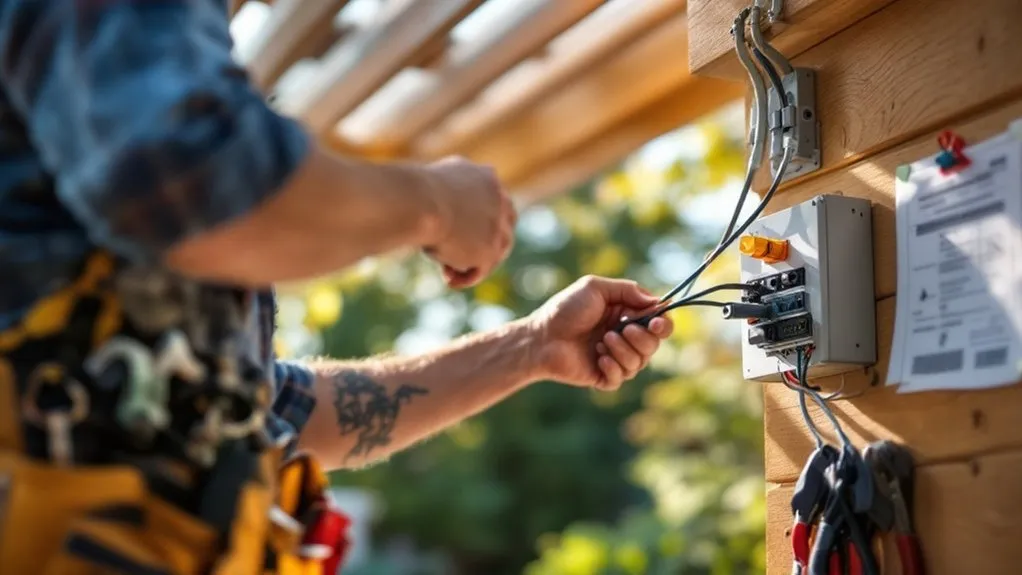
When your louvered pergola includes motorized louvers or built-in lighting, a general contractor shouldn’t handle the electrical work alone.
Licensed electricians understand local codes, load requirements, and weatherproofing standards specific to outdoor structures. They’ll install proper GFCI protection, run conduit correctly, and guarantee your system handles rain, heat, and humidity without becoming a hazard.
Skipping a licensed electrician risks faulty wiring, voided warranties, and failed inspections. If something goes wrong, your homeowner’s insurance may deny your claim entirely.
Protect your investment by requiring a licensed electrician on every motorized louvered pergola project from the start.
Licensed Louvered Pergola Contractors Carry Liability Insurance: Unlicensed Ones Don’t
Hiring an unlicensed pergola contractor might save you money upfront, but if a worker gets injured on your property or the structure damages your home, you’re the one holding the bill.
Licensed louvered pergola contractors carry liability insurance and workers’ compensation, so you’re protected when something goes wrong. Unlicensed contractors carry neither, meaning their medical bills and property repair costs fall on you.
Your homeowner’s insurance may also deny claims tied to unlicensed work. Choosing a licensed contractor isn’t just about quality—it’s about protecting your finances, your property, and yourself from preventable legal and financial consequences.
How Licensing Protects Your Louvered Pergola Warranty and Manufacturer Guarantees

Beyond protecting you from liability, licensing also safeguards something many homeowners overlook—your warranty.
Most louvered pergola manufacturers require licensed contractors to install them. If an unlicensed builder installs your system, the manufacturer can void your warranty entirely. That means any defects, motor failures, or structural issues become your financial responsibility.
Licensed contractors understand installation specifications and follow them precisely, keeping your coverage intact. They’re also familiar with documentation requirements manufacturers expect.
When you hire licensed contractors, you’re not just protecting today’s investment—you’re ensuring that if something fails next year, your warranty works when you need it most.
How to Verify a Builder’s License Before Signing Anything
Verifying a builder’s license takes only minutes and can save you from costly mistakes down the road.
Start by visiting your state’s contractor licensing board website, where you can search by name, company, or license number. Confirm the license is active, covers the right trade category, and shows no disciplinary actions.
Check your state’s contractor licensing board website to confirm an active license, correct trade category, and clean disciplinary record.
Ask the builder directly for their license number before any contract discussions begin. Cross-check their insurance certificates too.
If a builder hesitates or dodges these requests, that’s a red flag. A legitimate, qualified builder won’t mind the verification—they’ll expect it.
Frequently Asked Questions
How Long Does It Typically Take to Install a Louvered Pergola?
Most louvered pergola installations take 1 to 3 days, depending on your project’s size and complexity.
If you’re adding electrical components like lighting or motorized louvers, it might take a bit longer.
A licensed builder will assess your space, prepare the foundation, and assemble the structure efficiently.
Hiring professionals helps ensure the job’s done right the first time, saving you from costly delays or mistakes.
What Materials Are Commonly Used in Louvered Pergola Construction?
When choosing a louvered pergola, you’ll typically find it constructed from aluminum, wood, or vinyl. Aluminum’s the most popular option because it’s lightweight, durable, and rust-resistant.
If you prefer a natural aesthetic, you’d likely choose cedar or redwood, as they handle outdoor conditions well. Vinyl’s another low-maintenance alternative that won’t rot or warp.
Each material affects your pergola’s longevity, maintenance needs, and overall cost, so choose wisely.
Can a Louvered Pergola Be Customized to Match My Home’s Style?
Yes, you can absolutely customize a louvered pergola to match your home’s style!
You’ll find endless options, including various colors, finishes, and frame materials that complement your existing architecture.
You can choose from different sizes, shapes, and configurations that suit your outdoor space.
Licensed builders will help you select decorative elements, integrated lighting, and motorized controls that blend seamlessly with your home’s aesthetic, creating a cohesive and visually appealing outdoor living area.
How Much Does a Professionally Installed Louvered Pergola Typically Cost?
You can expect to pay anywhere from $5,000 to $30,000+ for a professionally installed louvered pergola, depending on size, materials, and features.
Basic aluminum structures start around $5,000–$10,000, while larger, motorized systems with integrated lighting or heating can reach $20,000–$30,000 or more.
Your location also affects labor costs.
Getting multiple quotes from licensed builders helps you compare pricing and guarantees you’re getting the best value for your investment.
What Maintenance Does a Louvered Pergola Require After Installation?
Your louvered pergola needs regular but simple upkeep to stay in top shape.
Clean the aluminum louvers and frame with mild soap and water every few months to remove dirt and debris.
Lubricate the motorized components annually to keep them operating smoothly.
Inspect the drainage channels and clear any blockages seasonally.
If your unit has automated controls, check the electrical connections and tighten any loose hardware you notice during routine inspections.
Conclusion
Hiring a licensed builder for your louvered pergola isn’t just a smart move—it’s the right one. You’re protecting your investment, your home’s value, and your family’s safety all at once. Don’t risk permits, warranties, or liability issues by cutting corners with an unlicensed contractor. Take the time to verify credentials before signing anything, and you’ll enjoy your louvered pergola with complete confidence for years to come.