
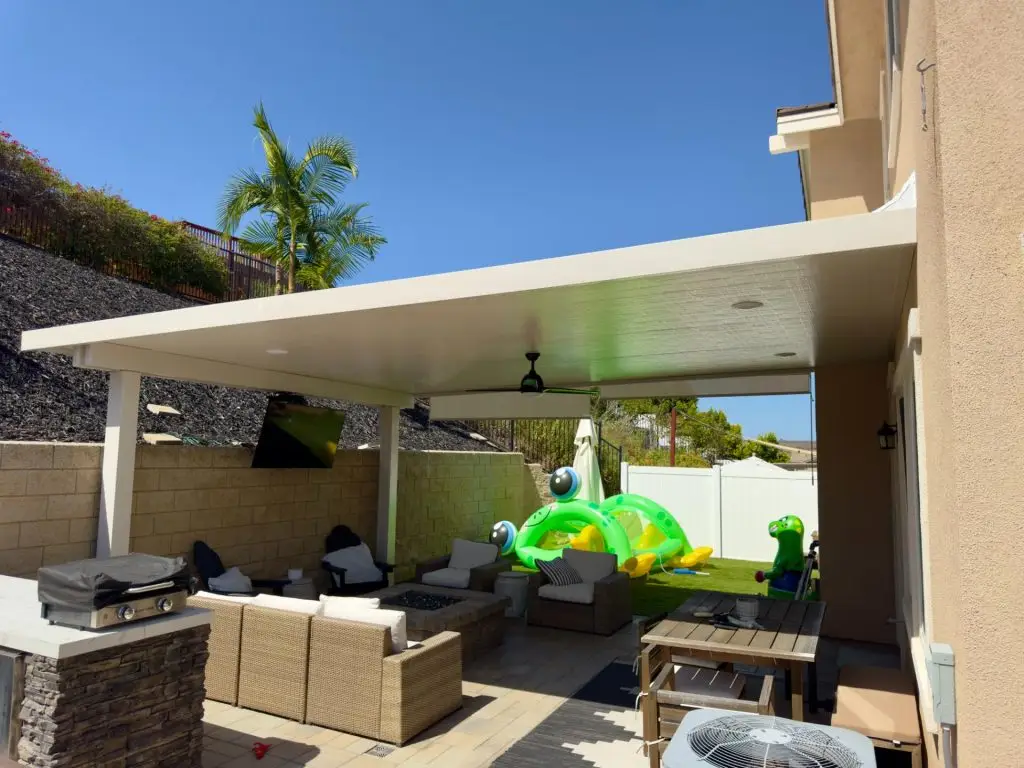
Aluminum patio covers provide year-round weather protection for your outdoor kitchen, shielding cooking surfaces from rain and intense sun while maintaining consistent conditions. You’ll find versatile designs that complement traditional, contemporary, or Mediterranean architectural styles through customizable finishes and profiles. These covers integrate essential features like ventilation systems, electrical rough-ins, and reinforced mounting points for lighting and appliances. With minimal maintenance requirements and proper planning for cooking, dining, and lounging zones, you’ll discover how to maximize your outdoor entertainment investment.
Watch a Real San Diego Build
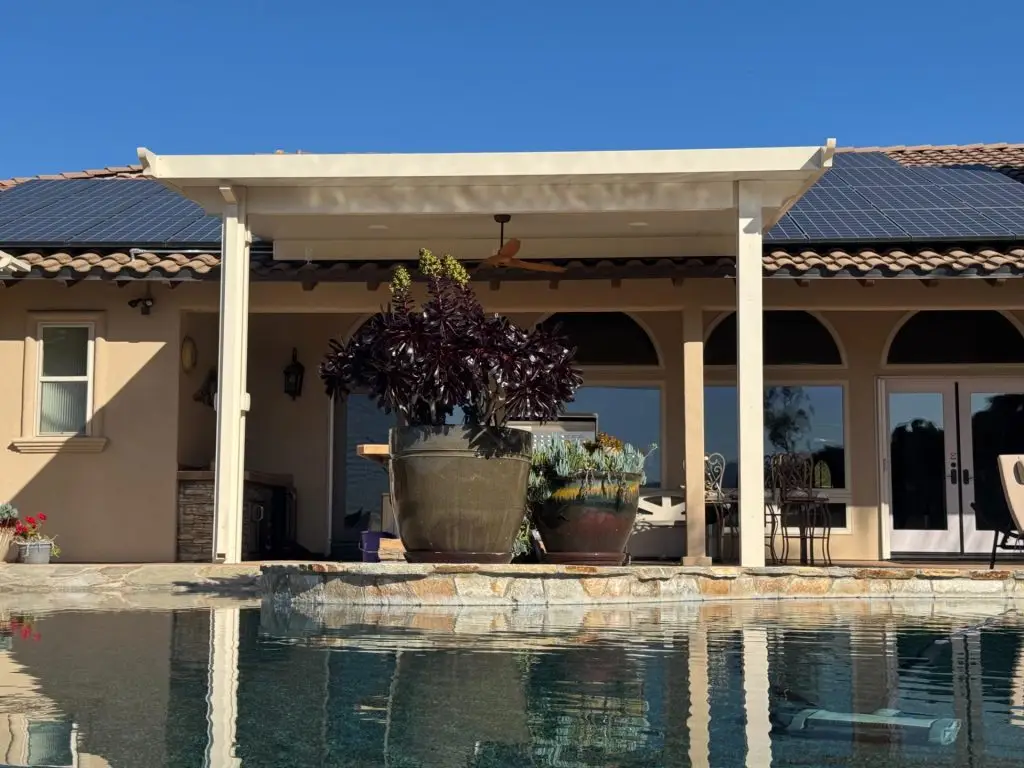
A custom Alumawood BBQ arbor in Poway, giving this outdoor kitchen engineered shade and a clean architectural finish.
Key Takeaways
- Aluminum patio covers provide year-round weather protection, maintaining consistent cooking conditions and preventing rain from disrupting outdoor dining experiences.
- Versatile design options complement a range of architectural styles, from traditional decorative beams to sleek contemporary profiles with customizable finishes.
- Essential integration features include proper ventilation systems, electrical rough-ins, ceiling fans, plumbing access, and reinforced mounting points for appliances.
- Low-maintenance aluminum construction resists rust and corrosion, requiring only monthly cleaning and quarterly inspections of hardware and connections.
- Proper space planning determines the optimal size, ranging from 12×12 to 20×30 feet, and maps cooking, dining, and storage zones for safe, functional use.
Weather Protection Benefits for Year-Round Outdoor Cooking
When unpredictable weather threatens to derail your outdoor cooking plans, an aluminum patio cover transforms your backyard into a reliable culinary sanctuary.
You’ll grill through sudden downpours without scrambling for shelter or worrying about equipment damage. Rain won’t collect on your cooking surfaces, and intense summer sun won’t overheat your workspace or fade your outdoor furniture.
Your aluminum cover maintains consistent cooking conditions year-round, protecting both you and your investment.
Rain can’t extinguish gas flames or create dangerous conditions around electrical appliances. You’ll host gatherings confidently, knowing whether you won’t force guests indoors or cancel your carefully planned outdoor dining experiences.
Design Options That Complement Your Home's Architecture
Beyond the practical advantages of weather protection, aluminum patio covers offer remarkable versatility in matching your home’s unique style.
You’ll find countless design possibilities that seamlessly integrate with your existing architecture.
Modern aluminum covers can be customized to complement any aesthetic:
- Traditional homes: Choose covers with decorative beam details and warm finishes that echo classic design elements.
- Contemporary properties: Select sleek, minimalist profiles with clean lines and neutral colors for a sophisticated appeal.
- Mediterranean styles: Opt for covers with curved elements and earth-tone finishes that enhance stucco exteriors.
You’re investing in both functionality and architectural harmony.
Essential Features for Outdoor Kitchen Integration
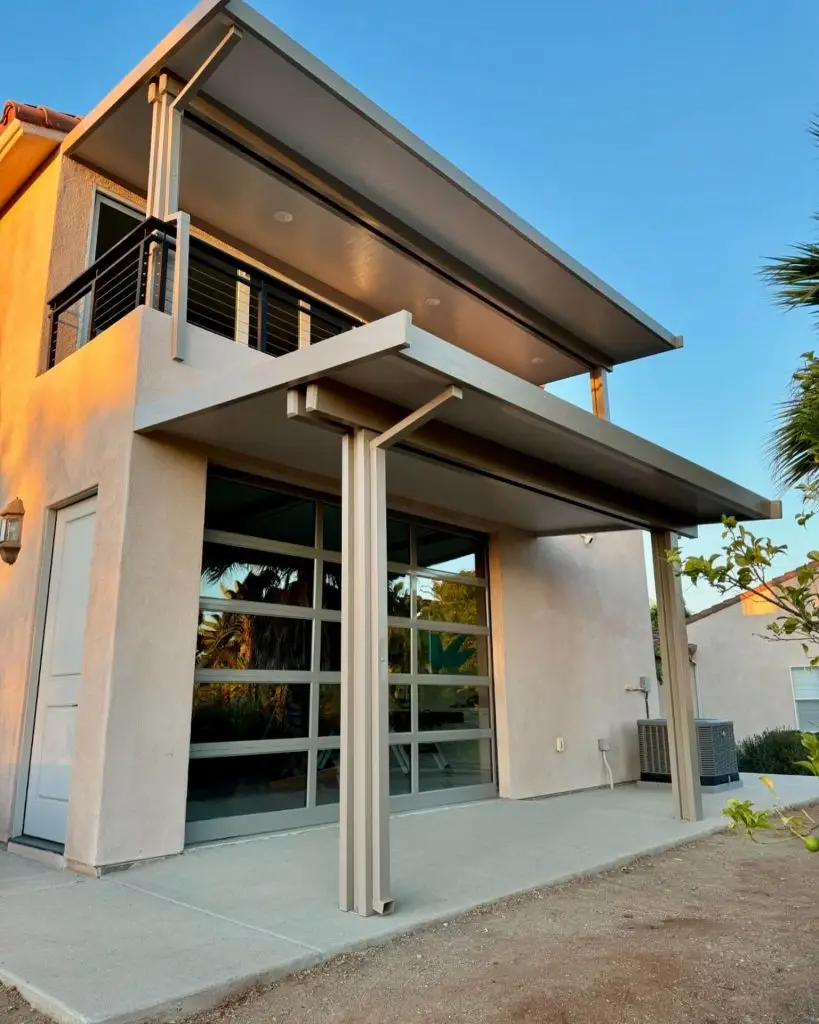
Although aluminum patio covers enhance any outdoor space, they become truly transformative when designed specifically for outdoor kitchen integration.
You’ll need proper ventilation systems to effectively manage smoke and cooking odors. Install electrical rough-ins for lighting, outlets, and appliance connections before construction begins.
Consider installing integrated ceiling fans to improve airflow and comfort during cooking. Plan for plumbing access if you’re adding sinks or ice makers.
Include reinforced mounting points for hanging pot racks, televisions, or pendant lighting. Design adequate clearance heights above grills and cooking surfaces.
These features guarantee your covered outdoor kitchen functions seamlessly year-round.
Maintenance Requirements and Long-Term Durability
Since aluminum naturally resists rust and corrosion, your patio cover requires minimal maintenance compared to other materials.
You’ll enjoy decades of reliable performance with basic care routines that won’t consume your weekends or budget.
Your maintenance schedule should include:
- Monthly cleaning: Rinse with water and a mild detergent to remove dirt, grease, and debris from cooking activities.
- Quarterly inspections: Check fasteners, joints, and mounting hardware for looseness or wear.
- Annual assessments: Examine gutters, drainage systems, and structural connections to ensure optimal performance.
With proper installation and these simple practices, you’ll maximize your investment’s lifespan while maintaining its appearance and structural integrity.
Planning Your Entertainment Space Layout and Size
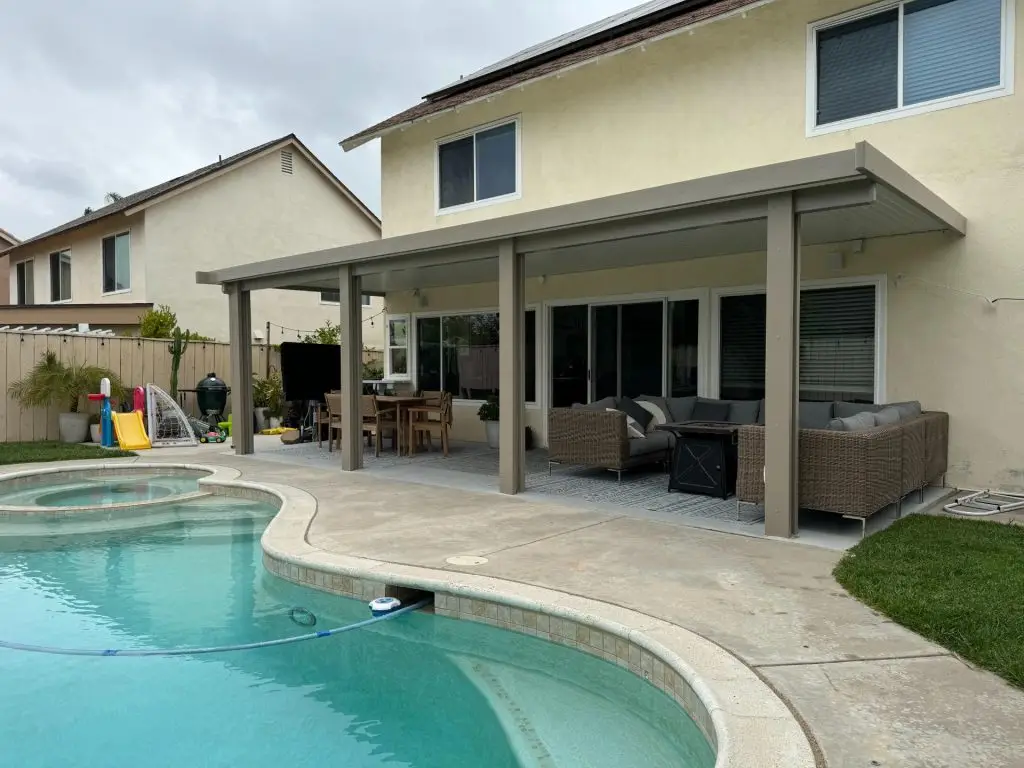
When designing your covered patio, you’ll need to determine the ideal size and layout that accommodate your specific entertainment needs and property constraints.
Consider your typical guest count and activities you’ll host. Map out the zones for cooking, dining, and lounging. Account for traffic flow between spaces and guarantee adequate clearance around grills and prep areas.
Measure your yard’s dimensions and note obstacles like trees or utilities. Standard patio covers range from 12×12 feet for intimate gatherings to 20×30 feet for larger parties.
Don’t forget to include storage space for outdoor furniture and equipment.
Frequently Asked Questions
What Is the Average Cost of Installing an Aluminum Patio Cover?
You’ll typically pay between $8 – $25 per square foot for aluminum patio cover installation.
For a standard 200-square-foot area, you’re looking at a total cost of $1,600 to $5,000. Your final cost depends on factors such as design complexity, local labor rates, and any additional features you select.
Basic flat-roof designs cost less, while intricate styles with decorative elements increase costs. You’ll save money with simpler installations but pay more for custom work.
Do I Need Building Permits for Aluminum Patio Cover Installation?
You’ll likely need building permits for installing an aluminum patio cover, but requirements vary by location.
Most municipalities require permits for permanent structures, especially those attached to your home or exceeding certain size limits.
Contact your local building department to confirm specific requirements in your area. They’ll outline the necessary permits, inspections, and codes you must follow.
Don’t skip this step – unpermitted work can cause issues when selling your home or filing insurance claims.
How Long Does a Typical Aluminum Patio Cover Installation Take?
You’ll typically need 1-3 days for aluminum patio cover installation, depending on your project’s size and complexity.
Simple attached covers can be completed in one day, while larger freestanding structures or custom designs may take longer.
Weather conditions, site preparation requirements, and permit inspections can extend the timeline.
Your contractor should provide a specific schedule after evaluating your space, but most residential installations are finished within a long weekend.
Can Aluminum Patio Covers Support Ceiling Fans and Lighting Fixtures?
Yes, you can install ceiling fans and lighting fixtures on aluminum patio covers when they’re properly engineered for additional loads.
You’ll need adequate structural support, including reinforced beams and proper mounting hardware rated for outdoor use.
It’s crucial that you consult a structural engineer or an experienced contractor who can calculate load requirements and ensure your cover can safely support the extra weight without compromising its integrity or warranty coverage.
What Warranty Coverage Is Provided With Aluminum Patio Covers?
You’ll typically receive a 10-20-year warranty on aluminum patio covers, depending on the manufacturer and product quality.
Most warranties cover structural integrity, paint finish, and manufacturing defects. Higher-end covers often include lifetime warranties on the frame structure.
You should verify exactly what is covered, as some warranties exclude wind damage or improper installation.
Always read the fine print and keep your documentation for warranty claims.
Current San Diego County Price Ranges (2026)
Real ranges from our published San Diego County pricing guide. Final cost depends on size, materials, and structural requirements.
See the full breakdown on our published pricing page, or get a free quote for your exact project.