
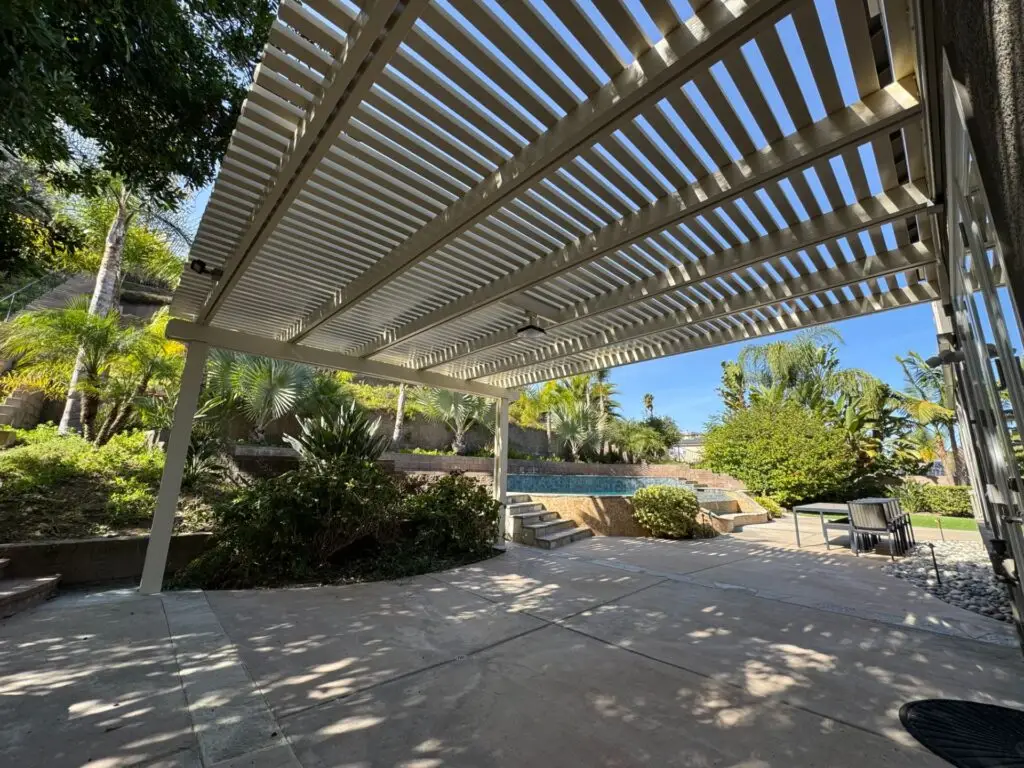
Extruded aluminum stands as the gold standard for louvered pergolas because it offers unmatched weather resistance, resisting decades of harsh conditions without warping or corroding. You’ll benefit from its lightweight yet robust construction that requires minimal maintenance while providing unlimited design flexibility. The material’s natural protective oxide layer eliminates the need for rust protection, and its 100% recyclability makes it environmentally responsible. These advantages explain why professionals consistently choose aluminum for premium outdoor living solutions.
Key Takeaways
- Extruded aluminum withstands decades of harsh weather without warping, cracking, or corroding like traditional materials.
- Lightweight yet strong construction enables easier installation and larger spans without compromising structural integrity.
- Minimal maintenance requirements and 50+ year lifespan provide significant long-term cost savings over alternatives.
- Unlimited customization options include custom profiles, colors, louver angles, and integrated features like LED lighting.
- 100% recyclable material with 95% less energy consumption for recycled production supports environmental sustainability goals.
Superior Weather Resistance and Corrosion Protection
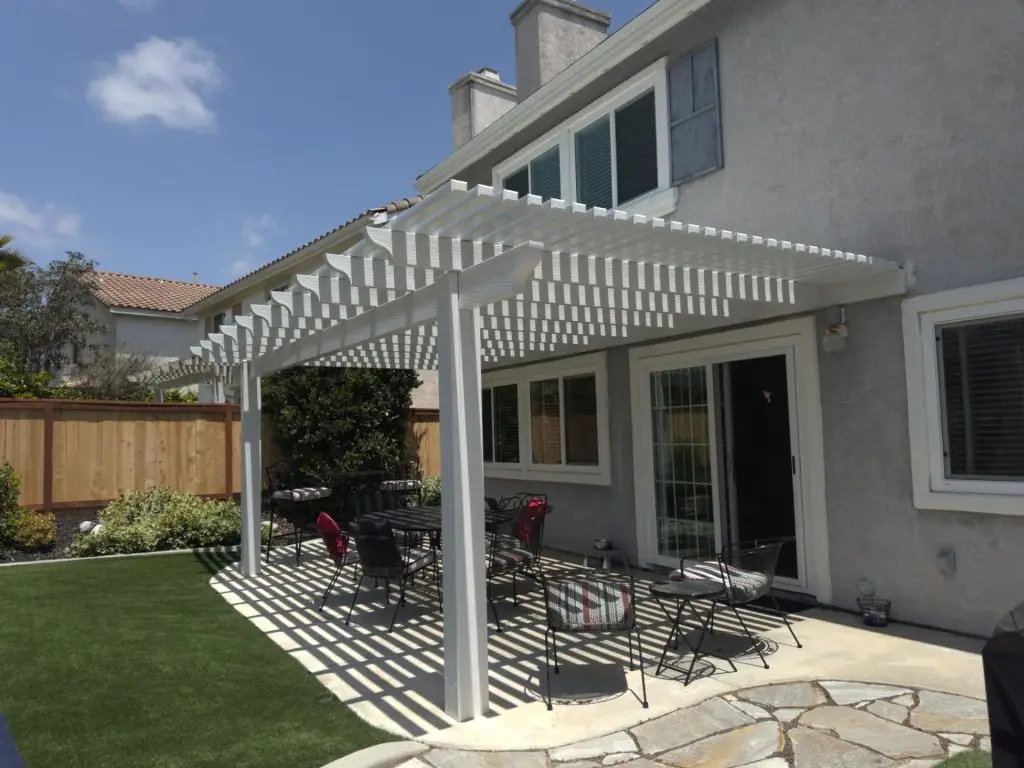
When you’re investing in a louvered pergola system, you’ll want materials that can withstand decades of exposure to rain, UV rays, and temperature fluctuations.
Extruded aluminum delivers exceptional durability through its natural oxide layer that forms when exposed to air. This protective barrier prevents rust and corrosion, unlike steel alternatives that require constant maintenance.
You won’t need to worry about warping, cracking, or deteriorating like wood-based systems. The material’s thermal stability ensures your louvers operate smoothly regardless of weather conditions, while its non-porous surface resists moisture absorption, which can cause structural damage over time.
Lightweight Construction With Exceptional Structural Strength
Despite its remarkable strength, extruded aluminum weighs considerably less than steel or concrete alternatives, making it the ideal choice for louvered pergola systems.
You’ll benefit from easier installation since lighter materials reduce labor costs and equipment requirements. The aluminum’s excellent strength-to-weight ratio means you won’t sacrifice structural integrity for convenience.
Your pergola can span larger distances without requiring additional support posts, creating more open spaces beneath. This lightweight nature also reduces stress on existing structures when mounting to homes or decks.
You’ll enjoy long-term stability without the foundation requirements that heavier materials typically demand for safe installation.
Low Maintenance Requirements and Long-Term Cost Savings
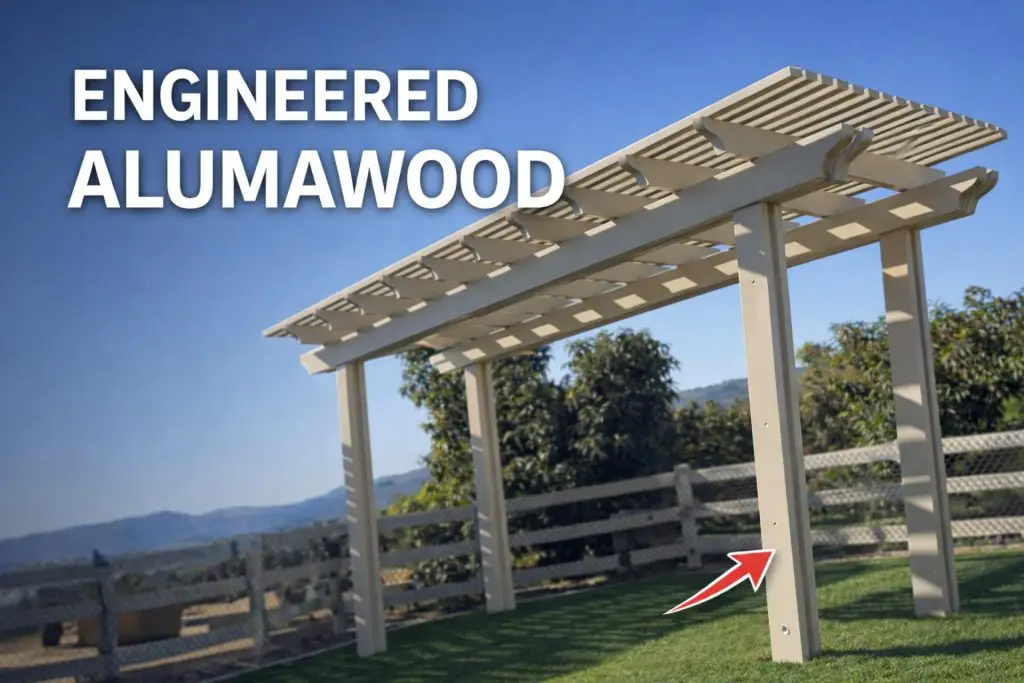
Since extruded aluminum naturally resists corrosion and weathering, you’ll spend minimal time and money on pergola maintenance throughout its lifespan.
Unlike wood that requires regular staining, sealing, and rot repairs, aluminum pergolas need only occasional cleaning with soap and water.
You won’t face expensive replacements due to warping, cracking, or insect damage that plagues other materials.
The powder-coated finish maintains its appearance for decades without touch-ups.
While your initial investment might exceed that of wood or vinyl alternatives, you’ll recover costs through reduced maintenance expenses, making aluminum the most economical long-term choice for discerning homeowners.
Design Flexibility and Customization Options
Countless design possibilities open up when you choose extruded aluminum for your louvered pergola system.
You’re not limited to standard configurations—aluminum’s moldability lets you create custom profiles, angles, and dimensions that match your exact vision.
Whether you want sleek, modern lines or intricate architectural details, extruded aluminum can be tailored to your specifications.
- Custom powder coating options in hundreds of colors and finishes, including wood-grain textures that mimic natural materials
- Flexible louver angles and spacing allow you to control light filtration and privacy levels precisely
- Integrated features like LED lighting channels, drainage systems, and motorized components built directly into profiles
Energy Efficiency and Temperature Management Benefits
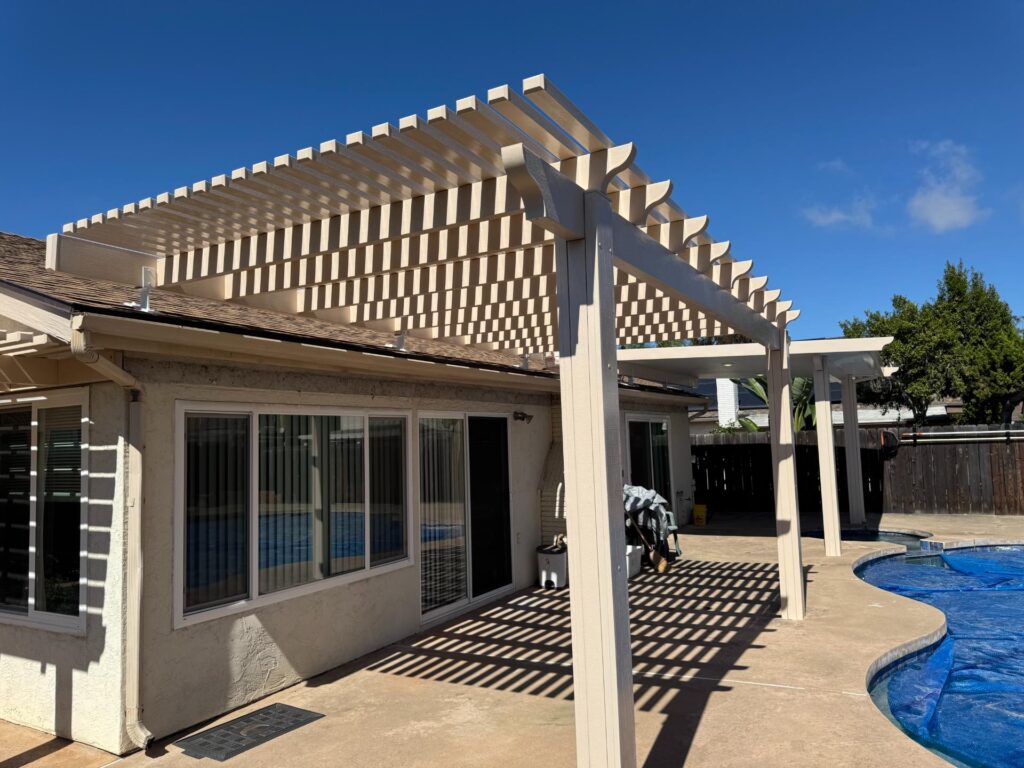
When aluminum’s exceptional thermal properties combine with intelligent louver design, your pergola becomes a powerful tool for managing outdoor temperatures and reducing energy costs.
You’ll control solar heat gain by adjusting louvers throughout the day, blocking harsh afternoon sun while allowing gentle morning light.
Aluminum’s natural reflectivity redirects heat away from covered areas, creating cooler microclimates that reduce your home’s cooling load.
During winter, you can optimize louver angles to capture warming sunlight.
This precise temperature control extends your outdoor living season while potentially lowering your HVAC bills by reducing indoor cooling demands near pergola-adjacent windows and doors.
Environmental Sustainability and Recyclability Advantages
Beyond its performance advantages, aluminum stands as one of the construction industry’s most environmentally responsible material choices for your louvered pergola system.
When you invest in extruded aluminum, you’re choosing an infinitely recyclable material that maintains its structural integrity and quality. This means your pergola won’t contribute to landfill waste at the end of its lifecycle.
- 100% recyclable content: Aluminum can be recycled repeatedly while maintaining its original properties and strength
- Low carbon footprint: Recycled aluminum requires 95% less energy to produce than new aluminum from raw materials
- Sustainable longevity: Your pergola’s 50+ year lifespan reduces replacement needs and material consumption
Precision Engineering and Manufacturing Quality
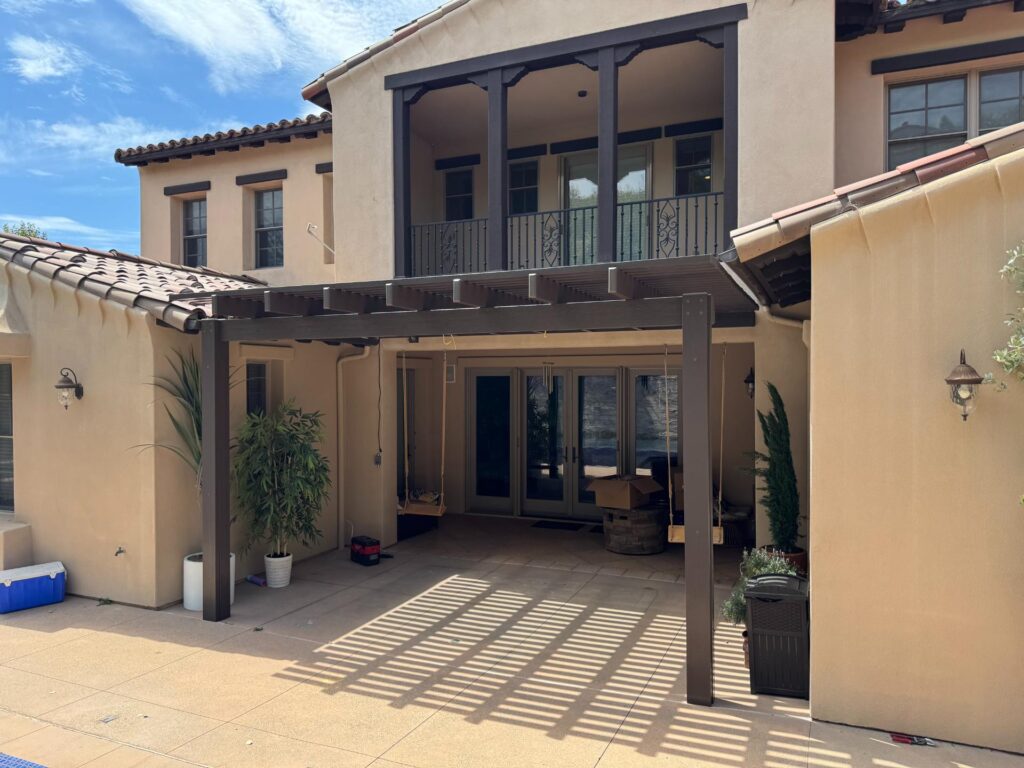
The extrusion process transforms raw aluminum into precisely engineered components that meet the exacting tolerances required for your louvered pergola system.
You’ll benefit from consistent cross-sectional profiles that guarantee perfect alignment and smooth operation of rotating louvers.
Advanced die technology creates complex geometries with tight dimensional accuracy, eliminating gaps and operational issues.
The controlled manufacturing environment maintains quality standards throughout production, giving you components that fit together seamlessly.
This precision engineering translates into reliable mechanical systems where every pivot point, track, and connection performs exactly as designed, delivering the smooth functionality you expect from premium pergola systems.
Installation Advantages and Professional Integration
Professional installers consistently choose extruded aluminum pergola systems because they’re designed with installation efficiency in mind.
You’ll find that pre-engineered components reduce field modifications and eliminate guesswork during assembly. The lightweight nature of aluminum makes handling safer while maintaining structural integrity.
Installation benefits include:
- Modular Design: Pre-fabricated components snap together seamlessly, reducing installation time by up to 40%
- Integrated Wiring Channels: Built-in pathways for electrical and motor connections eliminate exposed wiring
- Universal Mounting Systems: Standardized brackets accommodate various foundation types without custom fabrication
You’ll appreciate how these systems integrate with existing structures while providing contractors with predictable installation timelines and reduced labor costs.
Frequently Asked Questions
What Is the Typical Cost Difference Between Aluminum and Wood Pergolas?
You’ll typically pay 20-40% more upfront for aluminum pergolas than for wood, but you’ll save considerably in the long term.
While wood pergolas might cost $15-25 per square foot initially, aluminum runs $20-35 per square foot.
However, you’ll avoid the ongoing costs of wood, such as staining, sealing, repairs, and eventual replacement.
Aluminum’s durability means you invest once rather than repeatedly maintain wood, making it more cost-effective over time.
How Long Does Warranty Coverage Last for Extruded Aluminum Pergola Systems?
You’ll typically find warranty coverage for extruded aluminum pergola systems lasting 10-25 years, depending on the manufacturer.
Most reputable companies offer 15-20-year warranties on structural components, while some premium brands extend coverage to 25 years.
You’re getting protection against defects in materials, workmanship, and corrosion resistance.
However, you’ll want to check the specific terms, as coverage varies between manufacturers and may exclude components like motors or electronics.
Can Extruded Aluminum Pergolas Be Installed on Existing Concrete Patios or Decks?
Yes, you can absolutely install extruded aluminum pergolas on existing concrete patios or decks.
You’ll need proper mounting hardware and anchoring systems designed for your specific surface type. Most manufacturers provide concrete anchors for patio installations and appropriate brackets for deck mounting.
You must verify that your existing structure can support the pergola’s weight and wind loads.
Professional installation guarantees proper anchoring and structural integrity for long-term performance.
What Tools Are Required for DIY Installation of Aluminum Louvered Pergolas?
You’ll need basic power tools, including a drill with bits, a level, measuring tape, and a socket wrench set.
Most installations require concrete anchors or lag bolts, depending on your surface.
You’ll also want a ladder, a pencil for marking, and safety glasses.
Many aluminum pergola kits include specialized hardware and detailed instructions.
While you can handle most assembly yourself, you might need help positioning larger sections due to their size, not weight.
Are Building Permits Typically Required for Installing Aluminum Pergola Systems?
You’ll typically need building permits for aluminum pergola installations, especially for permanent structures or those exceeding certain size thresholds.
Requirements vary by municipality, with some areas requiring permits for any attached structure, while others exempt freestanding pergolas within specific dimensions.
You should check with your local building department before starting your project, as unpermitted installations can result in fines and complicate future property sales or insurance claims.
Current San Diego County Price Ranges (2026)
Real ranges from our published San Diego County pricing guide for motorized louvered systems.
See the full breakdown on our published pricing page, or get a free quote for your exact project.