
Aluminum’s natural oxide layer makes your fixed pergola virtually indestructible against harsh weather conditions. You’ll enjoy decades of structural integrity as aluminum maintains its strength from -40°F to over 150°F without warping or cracking. Rain can’t penetrate its non-porous surface, while freeze-thaw cycles won’t cause cumulative damage as they do with wood. Quality powder coating protects against UV fading and requires only occasional soap-and-water cleaning. Discover why aluminum outperforms traditional materials in every climate challenge.
Key Takeaways
- Aluminum forms a self-healing protective oxide layer that prevents rust, rot, and warping in extreme weather conditions.
- Maintains structural integrity from -40°F to above 150°F with predictable expansion and contraction without cracking.
- Non-porous surface and powder coating provide superior moisture resistance, efficiently shedding rainwater while preventing corrosion.
- Withstands repeated freeze-thaw cycles without cumulative damage, returning to its original dimensions after temperature fluctuations.
- Quality powder coating reflects UV rays, preventing fading and discoloration, and requires minimal maintenance compared to alternatives.
Aluminum's Superior Weather Resistance Properties

While many materials deteriorate under constant exposure to the elements, aluminum is among the most resilient materials for fixed pergola construction.
You’ll discover that aluminum naturally forms a protective oxide layer when exposed to oxygen, creating an impenetrable barrier against corrosion. This self-healing property means your pergola won’t rust, rot, or warp like wood alternatives.
You’re investing in a structure that maintains its strength through damp coastal winters and scorching summers. Unlike steel, which requires constant maintenance, aluminum’s inherent resistance to moisture, UV rays, and temperature fluctuations ensures your pergola remains structurally sound for decades without degradation.
Heat Performance: How Aluminum Pergolas Handle Extreme Temperatures
Aluminum’s natural resilience extends beyond corrosion resistance to include exceptional thermal performance, setting it apart from other pergola materials. You’ll find aluminum pergolas maintain structural integrity across temperature extremes, expanding and contracting predictably without warping or cracking. Unlike wood, which splits, or vinyl, which becomes brittle, aluminum’s coefficient of thermal expansion remains consistent.
| Temperature Range | Aluminum Performance |
|---|---|
| -40°F to 32°F | Maintains flexibility |
| 32°F to 100°F | Ideal structural stability |
| 100°F to 150°F | Predictable expansion |
| Above 150°F | Retains strength |
Your pergola won’t suffer heat damage, making aluminum ideal for desert heat and coastal weather alike.
Rain and Moisture Defense: Preventing Corrosion and Water Damage

When moisture threatens outdoor structures, aluminum pergolas stand as your most reliable defense against water-related deterioration.
Unlike wood that rots or steel that rusts, aluminum naturally resists corrosion through oxidation, forming a protective barrier that prevents water penetration.
You’ll find that powder-coated aluminum pergolas offer enhanced protection, creating an additional moisture shield that maintains structural integrity for decades.
The material’s non-porous surface prevents water absorption, eliminating warping, swelling, or decay common in other materials.
Your investment remains secure as aluminum pergolas shed rainwater efficiently while maintaining their strength and appearance through countless storms.
Freeze-Thaw Cycle Durability and Structural Integrity
Beyond water resistance, aluminum pergolas demonstrate exceptional resilience against the destructive forces of freeze-thaw cycles that can devastate other outdoor structures. You’ll appreciate how aluminum’s thermal expansion coefficient allows controlled movement without cracking or warping during temperature fluctuations.
| Temperature Challenge | Aluminum Response |
|---|---|
| Rapid freezing | Contracts uniformly |
| Ice formation | Maintains structural bonds |
| Thaw expansion | Returns to original dimensions |
| Repeated cycles | No cumulative damage |
Unlike wood, which splits, or concrete, which cracks, your aluminum pergola flexes with seasonal changes. The material’s crystalline structure remains stable through countless freeze-thaw events, ensuring your investment maintains its structural integrity year after year.
Wind Load Capacity and Storm Resistance
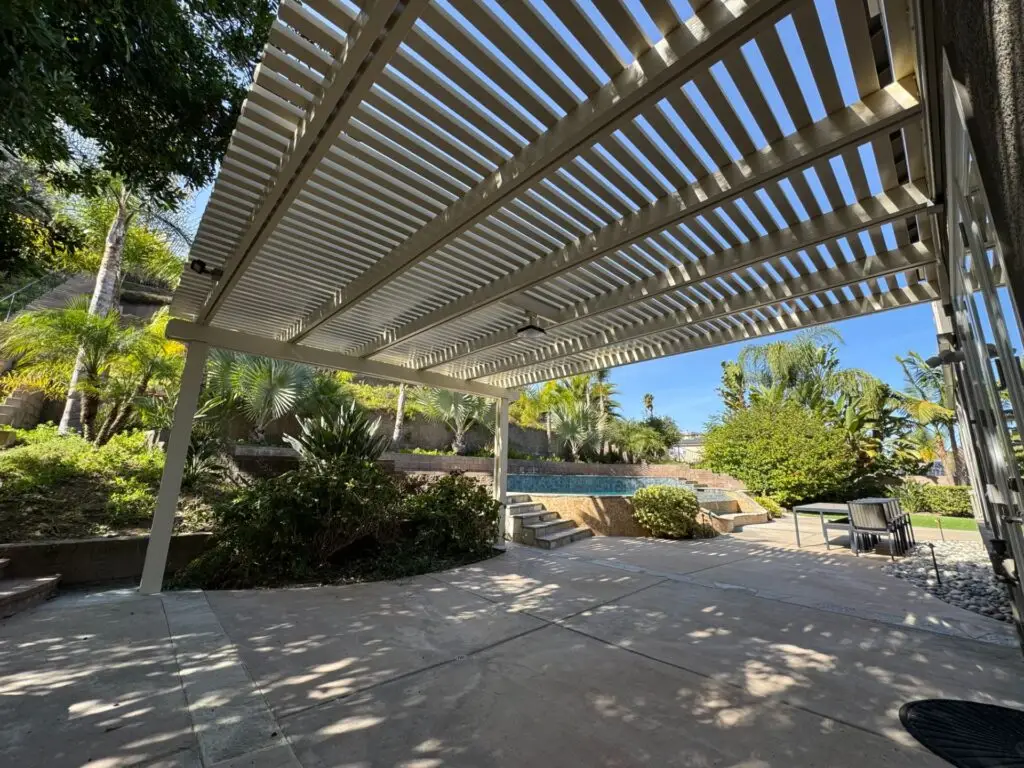
While freeze-thaw cycles test a pergola’s material integrity, high winds present an entirely different engineering challenge that demands superior structural design.
You’ll find aluminum pergolas excel in storm resistance through strategic engineering that distributes wind loads effectively across the entire framework.
Wind resistance depends on three critical design elements:
- Reinforced connection points – Heavy-duty brackets and fasteners prevent structural failure at joints
- Aerodynamic post spacing – Ideal beam placement reduces wind pressure accumulation
- Foundation anchoring systems – Deep concrete footings transfer lateral forces safely into the ground
This all-encompassing approach guarantees your pergola remains standing when storms strike.
UV Protection and Color Retention Over Time
The relentless sun poses a different threat to outdoor structures than wind or weather—one that slowly degrades materials through constant ultraviolet bombardment.
You’ll find aluminum pergolas excel here because they don’t fade, crack, or become brittle like wood or vinyl alternatives. Quality powder coating creates a protective barrier that reflects UV rays while maintaining vibrant colors for decades.
You won’t see the chalking, peeling, or discoloration that plagues other materials. Even in desert climates with intense solar exposure, your aluminum pergola retains its appearance and structural integrity, requiring minimal maintenance while delivering consistent protection and aesthetic appeal.
Maintenance Requirements Compared to Wood and Steel Alternatives
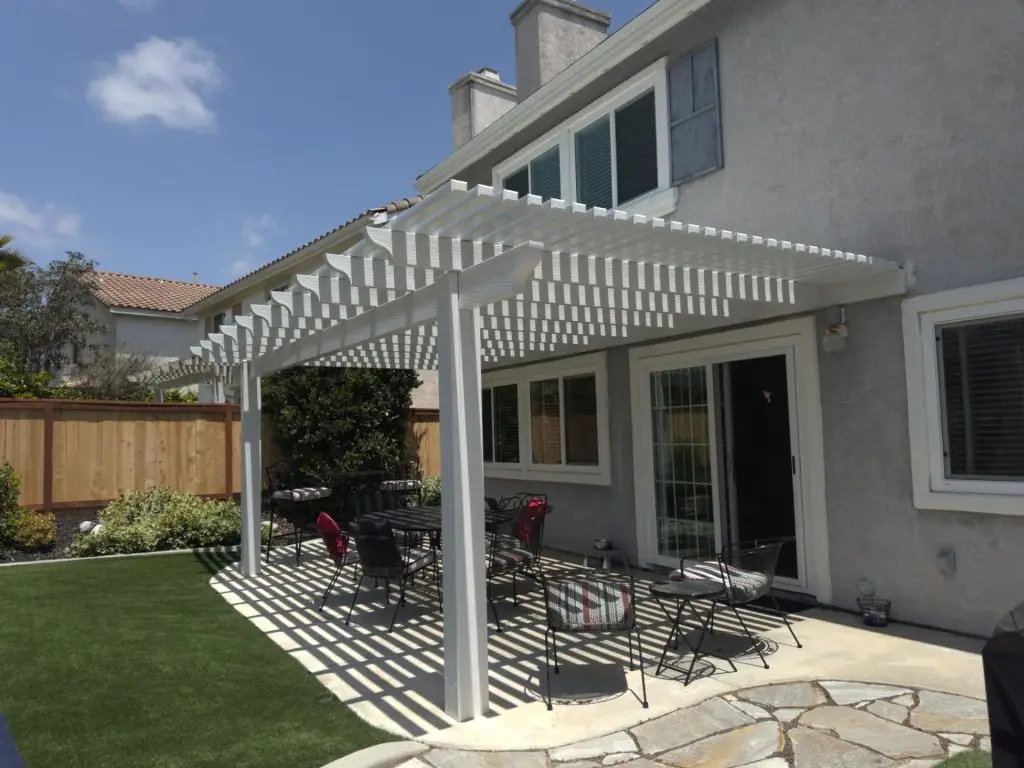
Aluminum’s inherent resistance to UV damage translates directly into dramatically reduced maintenance demands when compared to wood and steel pergola options.
You’ll find yourself spending considerably less time and money on upkeep.
- Wood pergolas require annual staining, sealing, and regular inspection for rot, warping, and insect damage.
- Steel pergolas require frequent rust-prevention treatments, sandblasting, and repainting every few years.
- Aluminum pergolas only need occasional cleaning with soap and water—no refinishing, rust treatment, or structural repairs required.
This maintenance advantage means you’ll enjoy your outdoor space more while spending less on long-term care.
Frequently Asked Questions
How Much Do Aluminum Pergolas Cost Compared to Wood or Steel Options?
You’ll typically pay $15-25 per square foot for aluminum pergolas, $20-35 for wood, and $25-40 for steel.
Initially, aluminum’s mid-range pricing makes it competitive, but you’ll save considerably in the long term since it doesn’t require regular staining, sealing, or rust treatments like wood and steel do.
When you factor in maintenance costs over 10-15 years, aluminum becomes the most economical choice.
What Are the Typical Installation Timeframes for Fixed Aluminum Pergola Structures?
You’ll typically see installation timeframes of 1-3 days for most fixed aluminum pergolas.
If you’re installing a basic 10×12 structure, expect it to take 1 day. Larger or more complex designs with electrical work can take 2-3 days.
You’ll save time since aluminum pergolas come pre-fabricated with precise measurements.
Weather delays might extend your timeline, but the lightweight material and bolt-together assembly make installation much faster than traditional wood construction.
Do Aluminum Pergolas Require Building Permits or HOA Approval Before Installation?
You’ll typically need building permits to install an aluminum pergola, especially for structures over specific sizes or those attached to your home.
Most municipalities require permits for permanent outdoor structures.
Additionally, if you’re in an HOA community, you’ll need approval before installation since pergolas affect your property’s exterior appearance.
Check with your local building department for specific permit requirements and review your HOA’s architectural guidelines early in your planning process.
Can Aluminum Pergolas Support Additional Features Like Lighting, Fans, or Climbing Plants?
Yes, you can absolutely add lighting, fans, and climbing plants to your aluminum pergola.
You’ll find that aluminum’s strength easily supports ceiling fans and light fixtures when properly mounted to the frame’s structural beams.
For climbing plants, you can attach wire guides or trellises directly to the posts.
The material won’t rust or deteriorate from plant moisture, and it handles the weight of mature vines beautifully while maintaining its structural integrity.
What Warranty Coverage Is Typically Offered on Aluminum Pergola Materials and Construction?
You’ll typically find aluminum pergola warranties ranging from 10-25 years for materials and 1-5 years for construction workmanship.
Premium manufacturers often offer lifetime warranties against rust, corrosion, and structural defects, while powder-coating finishes usually carry 10-15-year guarantees against fading and peeling.
You should expect coverage for manufacturing defects, but most warranties won’t cover damage from extreme weather events, improper installation, or normal wear from use.
Current San Diego County Price Ranges (2026)
Real ranges from our published San Diego County pricing guide. Final cost depends on size, post configuration, finish, and site engineering.
See the full breakdown on our published pricing page, or get a free quote for your exact project.