In San Diego’s fire-prone Mediterranean climate, you’ll benefit significantly from aluminum shade structures that won’t ignite during dangerous Santa Ana winds. Unlike fabric canopies and wooden structures, which can become fuel sources, aluminum’s 1,221°F melting point and non-combustible properties provide superior fire resistance. You’ll meet California’s Title 24 building codes while creating defensible space around your property. These structures don’t release toxic fumes, resist ember penetration, and often qualify for better insurance rates in high-risk zones. Exploring these advantages reveals a range of extensive fire safety solutions.
Key Takeaways
- Aluminum shade structures are non-combustible, with a melting point of 1,221°F, preventing ignition during San Diego’s frequent wildfire conditions.
- Unlike fabric or wood alternatives, aluminum doesn’t release toxic fumes when exposed to flames, ensuring safer evacuation routes.
- These structures meet California’s Title 24 fire codes and defensible space requirements, simplifying compliance for property owners.
- Aluminum resists Santa Ana wind damage and ember penetration, maintaining structural integrity during extreme fire weather events.
- Insurance carriers pre-approve aluminum shade structures for high-risk areas, which can potentially reduce premiums and coverage restrictions.
Understanding San Diego's Unique Fire Risk Environment
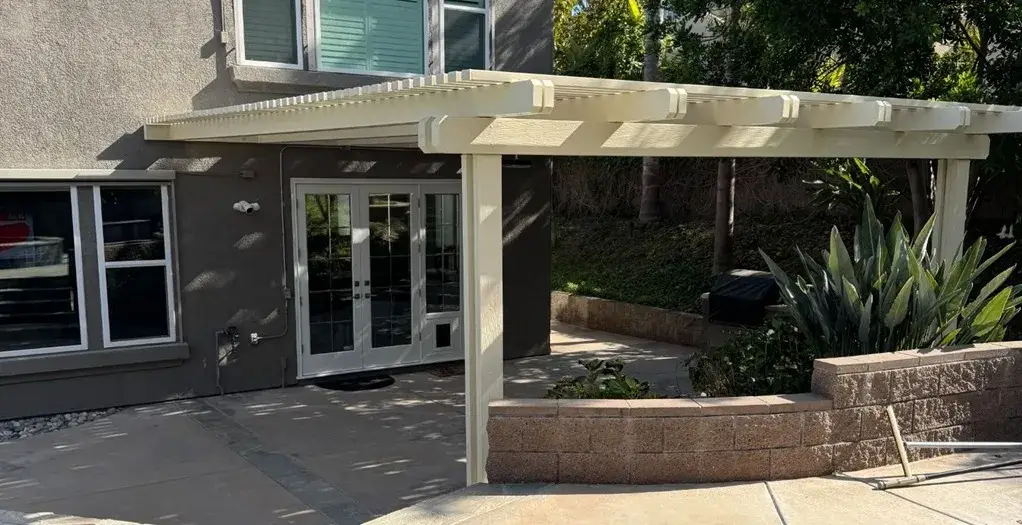
While San Diego’s Mediterranean climate creates an idyllic coastal lifestyle, it also establishes some of California’s most challenging fire conditions.
You’ll face prolonged dry seasons stretching from May through October, with humidity levels dropping below 15%. Santa Ana winds can reach 80+ mph, transforming small sparks into devastating infernos within minutes.
Your property sits within or adjacent to wildland-urban interface zones where natural vegetation meets developed areas. These chaparral-covered canyons and hillsides contain highly flammable native plants that haven’t seen significant rainfall for months.
You’re living in a tinderbox where ember showers can travel miles, igniting structures unexpectedly.
Why Traditional Shade Materials Pose Fire Hazards
Given these extreme fire conditions, most popular shade materials become dangerous liabilities on your property.
Traditional fabric canopies, wooden pergolas, and vinyl covers create serious fire hazards that can rapidly spread flames across your outdoor space.
These materials pose significant risks:
- Fabric canopies ignite quickly and produce toxic smoke while melting
- Wooden structures act as fuel sources, feeding fires directly
- Vinyl covers release dangerous chemicals when burning
- Composite materials often contain flammable resins that accelerate fire spread
You’re fundamentally installing fire accelerants above your family’s gathering spaces.
When embers land on these surfaces, they don’t just burn—they become launching points for larger fires.
Fire-Resistant Properties of Aluminum Construction
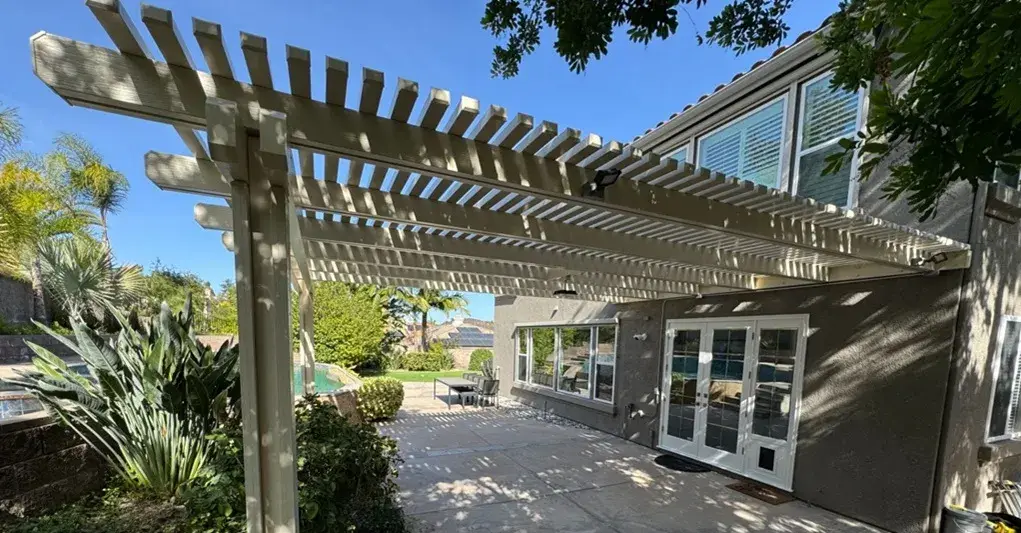
Unlike these hazardous materials, aluminum construction provides exceptional fire resistance, transforming your shade structure into a protective barrier rather than a combustible threat.
You’ll benefit from aluminum’s naturally high melting point of 1,221°F, which far exceeds typical fire temperatures. The material won’t ignite, support combustion, or release toxic fumes when exposed to flames.
Aluminum’s thermal conductivity actually works in your favor during fires, rapidly dispersing heat away from ignition sources.
You’re also protected by aluminum’s non-porous surface that resists ember penetration. This inherent fire resistance means you won’t need chemical treatments that degrade over time, ensuring consistent protection.
Compliance With California Fire Safety Regulations
California’s stringent fire safety regulations demand structures that meet or exceed WUI (Wildland-Urban Interface) standards, and aluminum pergola structures consistently satisfy these requirements without additional modifications.
You’ll find compliance straightforward with aluminum’s inherent properties:
- Class A fire rating – Aluminum naturally achieves the highest fire-resistance classification
- Non-combustible material designation – Meets Title 24 building code requirements without treatment
- Defensible space compatibility – Won’t contribute to fire spread within mandatory clearance zones
- Insurance approval – Pre-approved by most carriers for high-risk fire areas
You won’t need costly upgrades or special permits since aluminum structures automatically comply with California’s fire safety mandates.
Protection for Educational and Public Facilities
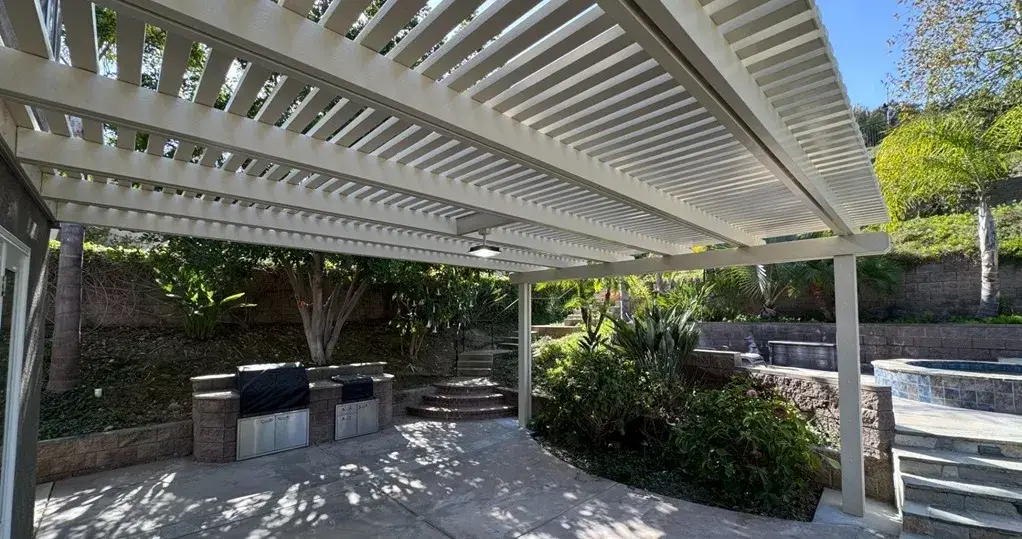
Schools, libraries, and community centers face heightened fire safety responsibilities due to their role in protecting vulnerable populations during emergencies.
You’ll find that aluminum shade structures offer critical advantages for these facilities. They won’t contribute to fire spread, providing safer evacuation routes and outdoor gathering spaces.
When you install aluminum structures, you’re creating fire-resistant zones where staff can direct students and visitors during emergencies. These structures maintain their integrity under extreme heat, unlike fabric or wood alternatives that’ll collapse or ignite.
You’re also investing in long-term safety, as aluminum doesn’t degrade or become more flammable over time, unlike other materials.
Residential Applications in High-Risk Fire Zones
When living in wildfire-prone areas like California’s Wildland-Urban Interface (WUI) zones, selecting fire-resistant materials for your outdoor structures becomes a crucial matter of property protection and family safety.
Aluminum shade structures offer several advantages over wooden pergolas or fabric awnings, which can ignite easily.
Key residential benefits include:
- Ember resistance – Won’t catch fire from windborne sparks
- Zero fuel contribution – Doesn’t feed advancing flames
- Structural integrity – Maintains stability during fire events
- Insurance advantages – May reduce premiums in high-risk zones
You’ll protect your investment while creating safe outdoor spaces that won’t compromise your home’s defensible space requirements.
Commercial Property Fire Safety Enhancement
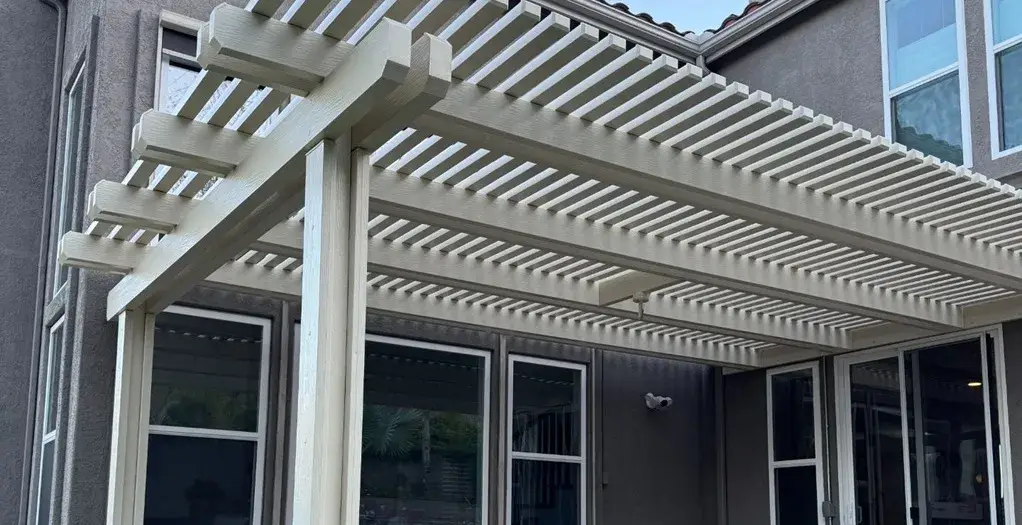
Since commercial properties face heightened liability concerns and stricter fire codes, aluminum shade structures provide building owners with a strategic advantage in meeting safety requirements while protecting their assets.
| Property Type | Fire Risk Reduction | Insurance Benefits |
|---|---|---|
| Retail Centers | Non-combustible coverage | Lower premiums |
| Office Buildings | Ember-resistant barriers | Reduced deductibles |
| Warehouses | Heat-deflecting surfaces | Faster claim processing |
| Restaurants | Self-extinguishing materials | Coverage incentives |
You’ll meet building codes more easily while reducing insurance costs. Aluminum’s inherent fire resistance creates defensible spaces around structures, protecting inventory and equipment. Your property becomes more attractive to tenants who prioritize safety, increasing occupancy rates and rental values in fire-prone areas.
Long-Term Cost Benefits of Fire-Safe Shade Solutions
Investment in aluminum shade structures pays dividends through decades of reduced maintenance, eliminated replacement costs, and sustained fire protection.
You’ll avoid the recurring expenses associated with replacing combustible materials that deteriorate or burn.
Consider these long-term financial advantages:
- Insurance premium reductions from installing fire-resistant structures
- Zero replacement costs due to aluminum’s non-combustible properties
- Minimal maintenance expenses compared to wood or fabric alternatives
- Enhanced property value through permanent fire safety improvements
Your initial investment protects against catastrophic losses while delivering consistent savings.
Unlike temporary solutions that require frequent updates, aluminum structures maintain their fire-resistant qualities indefinitely, ensuring your safety investment continues to pay returns year after year.
Installation Considerations for Maximum Fire Protection
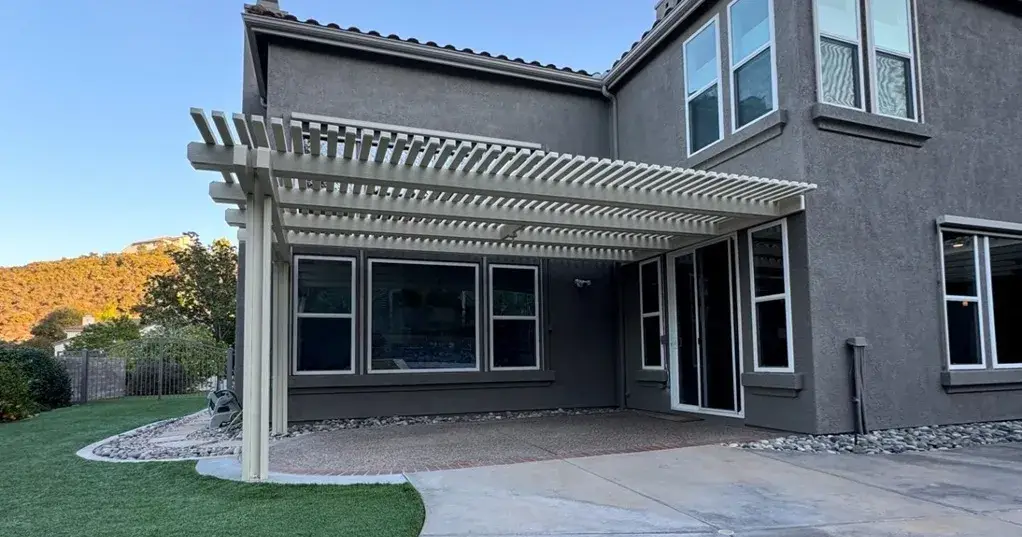
Although aluminum shade structures offer inherent fire resistance, you’ll maximize their protective benefits through strategic installation practices.
Position structures away from vegetation and combustible materials, maintaining defensible space around the perimeter. Select locations with sufficient clearance from buildings, fences, and storage areas that could potentially fuel fires.
Install structures on non-combustible foundations, such as concrete pads, rather than wooden decking. Orient shade sails and canopies to minimize wind-driven ember accumulation in corners or pockets.
Consider prevailing wind patterns that could carry flames or debris toward the structure. Proper anchoring systems prevent fire-damaged structures from becoming projectiles during extreme weather events.
Frequently Asked Questions
How Do Aluminum Shade Structures Perform During Earthquake Conditions in San Diego?
You’ll find aluminum shade structures perform exceptionally well during earthquakes in San Diego due to their lightweight yet durable construction.
They’re designed to flex rather than break under seismic stress, reducing the risk of catastrophic failure.
Their engineered connections and framework allow for natural movement during ground motion.
You can trust that properly installed aluminum structures will maintain their integrity better than heavier materials, such as steel or wood, during seismic events.
What Maintenance Schedule Is Recommended for Aluminum Shade Structures in Fire Zones?
You’ll need to inspect your aluminum shade structure monthly during fire season, checking for debris accumulation and loose connections.
Clean the framework bi-monthly to remove flammable materials, such as leaves or pine needles.
Schedule professional inspections twice yearly to assess structural integrity and hardware tightness.
You should immediately clear vegetation within a 30-foot perimeter of defensible space.
Replace any damaged components promptly, as compromised structures can become fire hazards rather than protective barriers.
Can Aluminum Shade Structures Be Customized With Logos or School District Branding?
You can absolutely customize aluminum shade structures with logos and school district branding.
Most manufacturers offer various customization options, including printed graphics, vinyl lettering, embossed logos, and colored panels that match your district’s identity.
You’ll find that these branding elements are durable and weather-resistant, maintaining their appearance over time.
Whether you want a simple logo or have full school colors incorporated into the design, manufacturers can effectively accommodate your specific branding requirements.
Do Aluminum Shade Structures Require Special Insurance Considerations for Fire Coverage?
You’ll typically find that aluminum shade structures don’t require special fire insurance considerations since they’re naturally fire-resistant.
Most standard property insurance policies cover these structures without additional premiums or riders.
However, it is essential to verify coverage details with your insurance provider, especially when installing large structures or multiple units.
Some insurers may even offer discounts for fire-resistant materials, so you’ll want to ask about potential savings when discussing your coverage options.
How Long Does a Typical Installation Take for Aluminum Shade Structures?
You can typically expect installation to be completed within 1-3 days for most aluminum shade structures, depending on the size and complexity.
Simple carports or pergolas typically take just one day, while larger commercial installations may require 2-3 days.
You’ll find the process moves quickly since aluminum components are pre-fabricated and lightweight.
Weather conditions can affect timing, but most installers work efficiently to minimize disruption to your property and daily routine.
Conclusion
You’ll find that aluminum shade structures offer unmatched fire safety benefits for your San Diego property. They won’t ignite like traditional materials, meet California’s strict fire codes, and protect your investment in the long term. Whether you’re securing a school, home in a high-risk zone, or commercial facility, you’re choosing proven fire resistance. Don’t compromise on safety—aluminum structures provide the peace of mind you need in San Diego’s fire-prone environment.