
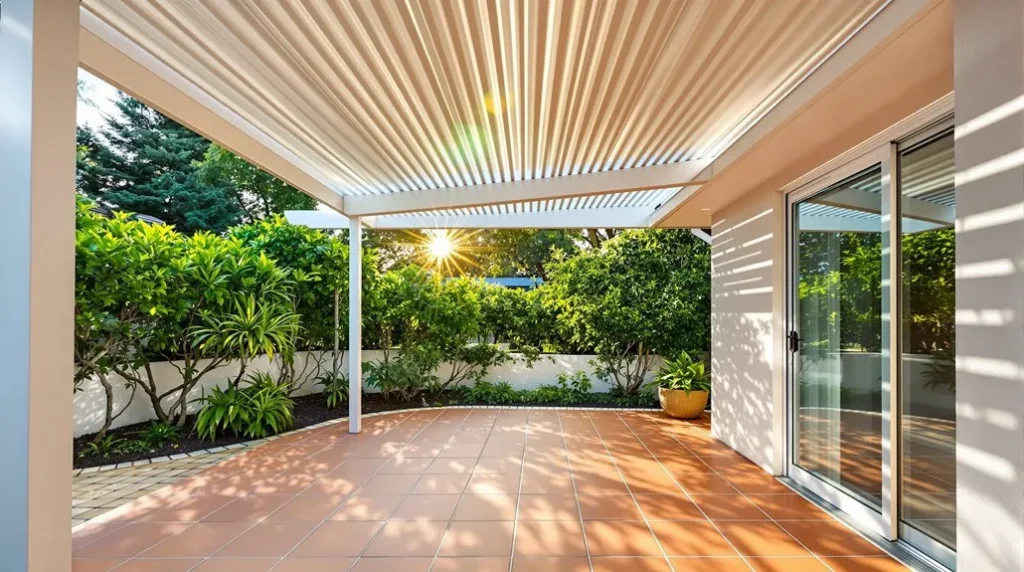
Aluminum patio covers keep your spaces cooler by reflecting up to 95% of radiant heat away from your home and outdoor areas. You’ll experience temperature drops of 10-15 degrees in covered spaces compared to uncovered areas, while your indoor cooling costs decrease by 15-25% due to reduced air conditioning workload. Unlike wood or vinyl alternatives, aluminum maintains its heat-reflecting properties without warping or requiring maintenance, providing consistent year-round cooling performance that transforms how you enjoy your outdoor living spaces.
Key Takeaways
- Aluminum reflects up to 95% of radiant heat, redirecting solar energy away from your patio and home.
- Patio covers can reduce outdoor temperatures by 10-15 degrees compared to uncovered spaces during peak sunlight.
- Blocking intense sunlight reduces air conditioning workload, potentially cutting monthly cooling costs by 15-25%.
- Proper installation with 8-10 feet clearance promotes airflow while maintaining adequate shade coverage throughout the day.
- Unlike wood or vinyl alternatives, aluminum maintains cooling performance without warping or requiring maintenance in extreme temperatures.
The Science Behind Aluminum's Heat Reflection Properties
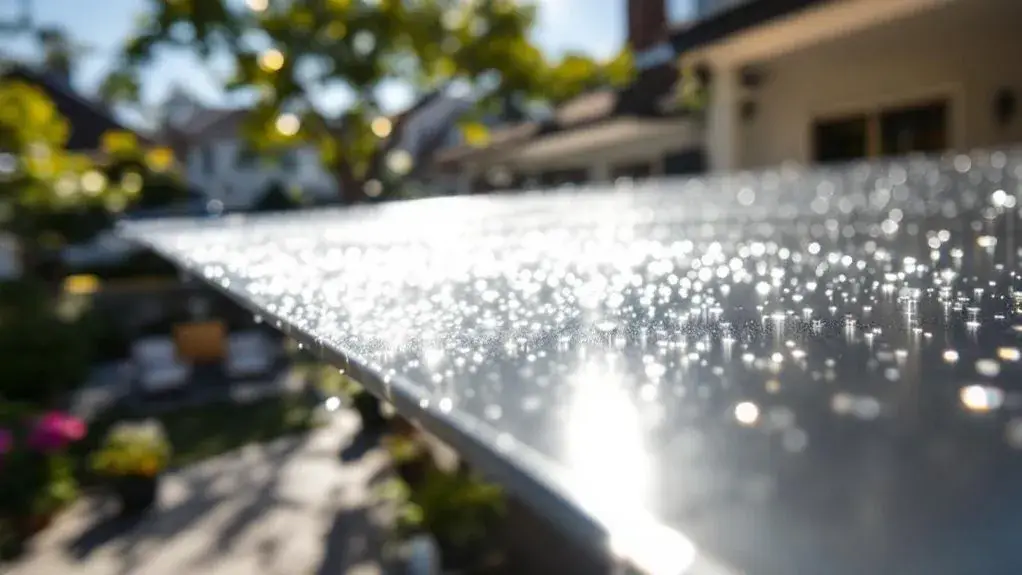
When sunlight hits an aluminum patio cover, the metal’s unique molecular structure immediately begins reflecting heat away from your outdoor space.
Aluminum’s surface contains free electrons that vibrate when exposed to infrared radiation, creating an effective barrier against thermal energy. This natural property allows aluminum to reflect up to 95% of radiant heat, preventing it from penetrating through to your patio below.
Unlike darker materials that absorb heat, aluminum’s reflective capabilities actively redirect solar energy upward and outward. You’ll notice markedly cooler temperatures beneath your aluminum cover compared to uncovered areas during peak sunlight hours.
Temperature Reduction Benefits for Indoor and Outdoor Spaces
Since aluminum patio covers create this impressive heat barrier, you’ll experience substantial temperature drops that benefit both your covered outdoor areas and adjacent indoor spaces.
The reflective properties translate into measurable cooling effects that enhance comfort and reduce energy costs.
Your patio becomes a comfortable retreat where temperatures can drop 10-15 degrees compared to uncovered areas.
Additionally, your home’s interior stays cooler as the aluminum cover prevents solar heat from penetrating through windows and walls.
- Outdoor comfort: Enjoy your patio even during peak afternoon hours
- Energy savings: Reduce air conditioning costs by up to 25%
- Extended usability: Use outdoor spaces throughout the hot summer months
Energy Cost Savings Through Reduced Air Conditioning Usage
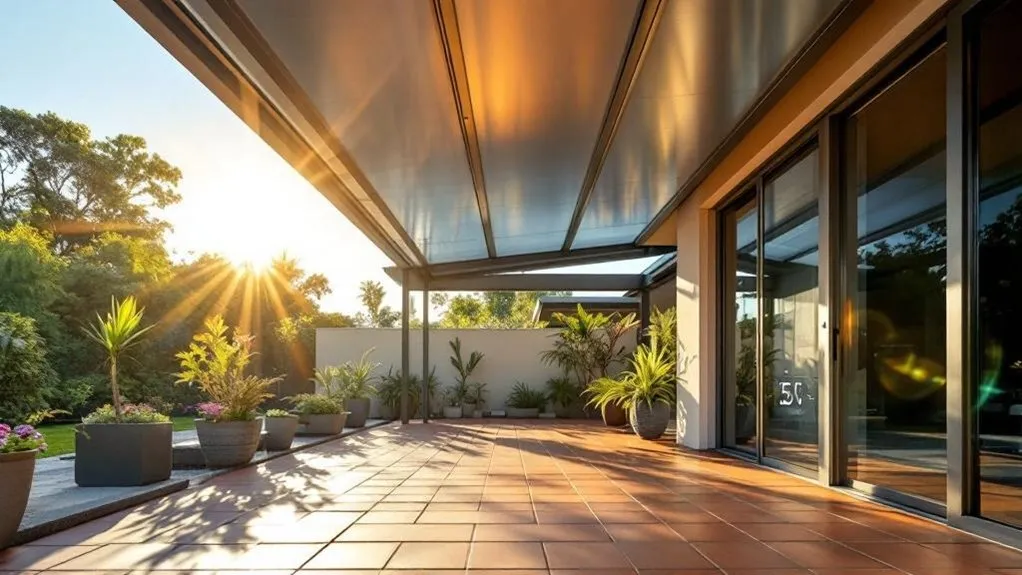
As aluminum patio covers block intense sunlight from heating your home’s exterior walls and windows, your air conditioning system doesn’t have to work as hard to maintain comfortable indoor temperatures.
You’ll notice lower monthly electricity bills during peak summer months when cooling costs typically spike. The reduced workload on your HVAC system also extends its lifespan, saving you money on repairs and premature replacement.
Studies show homeowners can reduce cooling costs by 15-25% with proper shade coverage. Your investment in aluminum patio covers pays for itself through consistent energy savings while maintaining year-round comfort in your home.
Aluminum vs. Other Patio Cover Materials for Cooling Performance
While aluminum patio covers deliver impressive cooling benefits, you’ll find significant performance differences compared to other materials.
Wood retains heat and requires frequent maintenance, reducing its cooling efficiency over time. Vinyl can warp under intense sun exposure, compromising its structural integrity and shade coverage.
Fabric awnings provide temporary relief but don’t offer the consistent, long-term cooling performance you need.
Key advantages of aluminum for cooling:
- Reflects up to 95% of solar radiation away from your space
- Maintains structural integrity in extreme temperatures without warping
- Requires zero maintenance while delivering consistent cooling performance year-round
Installation Considerations for Maximum Cooling Effectiveness
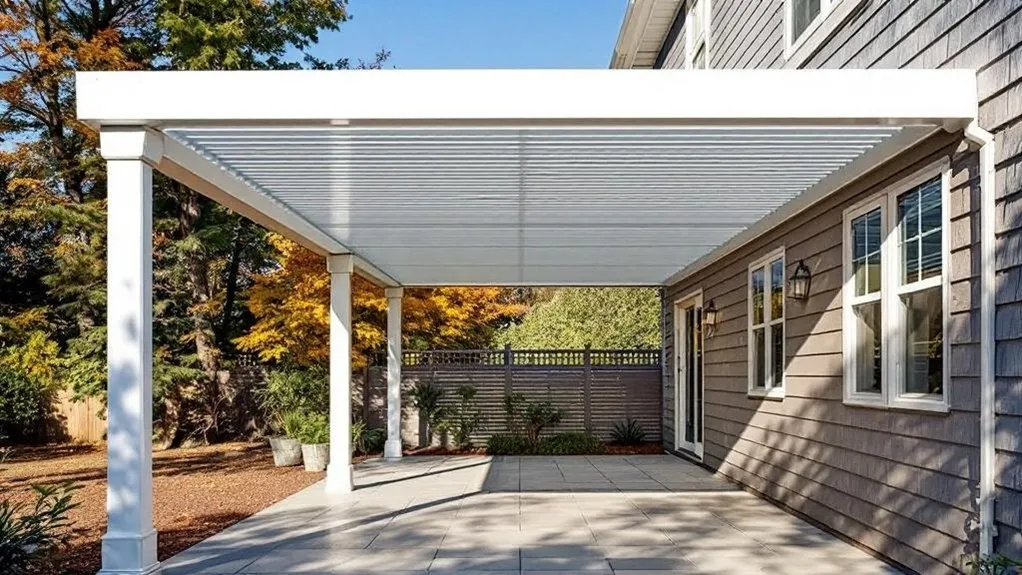
When you’re installing aluminum patio covers for ideal cooling performance, proper positioning and structural considerations determine whether you’ll achieve maximum temperature reduction.
Install your cover with adequate height clearance—typically 8-10 feet—to promote airflow underneath. Angle the structure slightly to provide water drainage while maintaining optimal shade coverage.
Position the cover to block the afternoon sun when temperatures are at their peak. Guarantee proper ventilation gaps between the cover and any walls to prevent heat buildup.
Consider your home’s orientation and prevailing wind patterns during installation. Professional installation assures structural integrity and enhances cooling benefits through precise measurements and positioning.
Frequently Asked Questions
How Much Do Aluminum Patio Covers Typically Cost?
You’ll typically pay between $8 $25 per square foot for aluminum patio covers, depending on style and complexity.
Basic flat covers cost less, while decorative or insulated options run higher. For an average 200-square-foot patio, you’re looking at a total of $1,600 to $5,000.
Installation adds $3 to $8 per square foot. You’ll find DIY kits cheaper, but professional installation guarantees proper permits and structural integrity for your investment.
Do Aluminum Patio Covers Require Regular Maintenance or Cleaning?
Aluminum patio covers require minimal maintenance, making them a low-effort choice for your outdoor space.
You’ll need to clean them occasionally with soap and water to remove dirt, debris, and bird droppings. Hose them down and scrub gently with a soft brush when needed.
You should also inspect the fasteners and connections annually to verify they’re secure.
Unlike wood covers, you won’t need to paint, stain, or seal aluminum covers regularly.
Can Aluminum Patio Covers Withstand Strong Winds and Hail Storms?
Yes, aluminum patio covers can withstand strong winds and hailstorms when properly installed.
You’ll find they’re engineered to meet local building codes and wind load requirements. Most quality aluminum covers resist winds up to 100+ mph and won’t dent from typical hail.
However, you should guarantee your cover is installed with proper structural support and anchoring. If you’re in an area with extreme weather, consider upgrading to heavier-gauge aluminum for additional protection.
What Permits Are Needed to Install an Aluminum Patio Cover?
You’ll typically need a building permit to install an aluminum patio cover, especially if it’s attached to your home’s structure.
Requirements vary by location, so check with your local building department first. They’ll review your plans for compliance with zoning laws, setback requirements, and building codes.
Some areas don’t require permits for certain detached or smaller covers, but it’s always best to verify before starting your installation project.
How Long Do Aluminum Patio Covers Usually Last Before Replacement?
You can expect your aluminum patio cover to last 20-30 years before needing replacement.
The actual lifespan depends on your local weather conditions, maintenance habits, and the quality of materials used.
If you’re in harsh climates with extreme temperatures or frequent storms, you’ll likely see closer to 20 years.
However, with proper care and high-quality aluminum, you’ll often get 25-30 years of reliable protection.