
You’ll need composite decking materials, aluminum railings, and marine-grade stainless steel hardware to combat San Diego’s salt air and UV exposure. Design your deck with a 1/4-inch slope per foot for proper drainage, maintain adequate gaps between boards, and ensure ventilation underneath to prevent moisture buildup. Apply marine-grade polyurethane or penetrating oil stains for protection, and use only 316-grade stainless steel fasteners to prevent corrosion. These strategic choices will help your deck withstand coastal conditions for years to come.
Key Takeaways
When it comes to extracting key insights from any experience or piece of content, I find it crucial to focus on the core messages that truly matter. It’s all about distilling the noise down to the essential points. Whether I’ve just finished a book, attended a workshop, or engaged in a conversation, I like to ask myself: What are the three main things I can apply to my life or work moving forward? This method not only helps me retain information but also encourages me to think critically about how to implement those lessons.
Another thing I’ve learned is the power of reflection. After gathering my key takeaways, I always take a moment to jot down why those insights stood out to me. This not only reinforces the information in my mind but also helps me connect the dots to my own experiences. I’ve noticed that these reflections often lead to new ideas and perspectives I hadn’t considered before. So, whether you’re learning something new or just trying to consolidate your thoughts, I highly recommend pausing to identify those key takeaways and reflect on their impact. It really makes a difference! Select composite decking and aluminum railings with marine-grade stainless steel hardware to resist corrosion from salt air.
- Install proper drainage with a 1/4-inch slope per foot and adequate gaps between boards to allow for moisture escape.
- Apply marine-grade polyurethane or UV-resistant sealers every 2-3 years to protect against sun and salt damage.
- Ensure adequate ventilation beneath the deck to prevent humidity buildup and mold growth in coastal conditions.
- Use 316-grade stainless steel fasteners and galvanized flashing to eliminate rust staining and structural weakening.
Understanding San Diego's Unique Coastal Challenges for Deck Construction
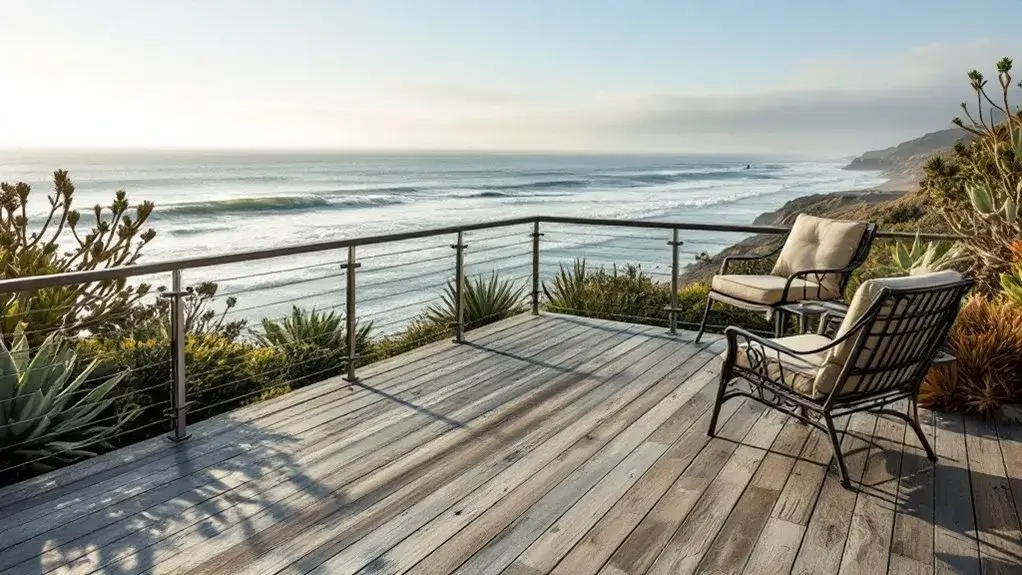
While San Diego’s year-round Mediterranean climate makes it ideal for outdoor living, the coastal environment presents distinct challenges that’ll impact your deck’s longevity and maintenance requirements.
Salt air constantly corrodes metal fasteners and accelerates wood deterioration. High humidity creates conditions for mold and mildew growth. UV rays bleach and weaken materials year-round due to minimal cloud cover. Ocean winds carry abrasive sand particles that sandblast surfaces.
Temperature fluctuations, though moderate, still cause expansion and contraction cycles. A morning marine layer creates moisture buildup, while the afternoon heat rapidly dries materials.
Understanding these factors helps you select appropriate materials and design features for lasting performance.
Material Selection: Salt-Resistant and UV-Stable Options for Coastal Decks
Given San Diego’s harsh coastal conditions, your material choices will significantly impact your deck’s long-term performance.
You’ll need materials that resist salt corrosion, withstand intense UV exposure, and maintain structural integrity despite temperature fluctuations.
Composite decking offers superior durability with minimal maintenance, while aluminum railings are resistant to rust and corrosion.
Marine-grade stainless steel hardware prevents oxidation, and UV-resistant sealers protect exposed wood elements.
- Composite decking: Resists fading, staining, and moisture damage without annual maintenance
- Aluminum components: Naturally corrosion-resistant and lightweight for coastal installations
- 316-grade stainless steel fasteners: Maximum salt-air resistance for critical connections
- Acrylic-based sealers: Superior UV protection with flexible weatherproofing properties
Essential Design Features for Moisture Management and Drainage
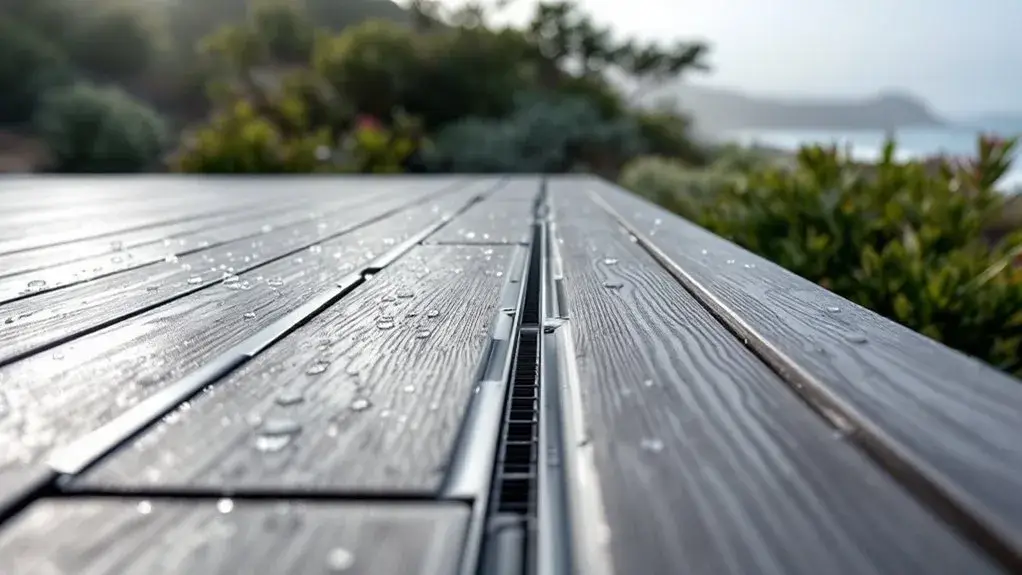
Beyond selecting the right materials, your deck’s longevity depends heavily on how well it sheds water and manages moisture buildup.
Install your deck with a slight slope—approximately 1/4 inch per foot—directing water away from your home. Space deck boards with proper gaps (typically 1/4 inch) to allow moisture to escape and air to circulate underneath.
Don’t forget adequate ventilation beneath the deck structure; blocked airflow traps humidity and accelerates rot. Install flashing around ledger boards and use drip edges on overhanging elements.
Consider installing gutters to divert roof runoff completely away from the deck surface.
Protective Finishes and Coatings That Withstand Ocean Air
Although proper drainage forms your deck’s first line of defense, the harsh realities of ocean air demand an additional protective barrier through carefully selected finishes and coatings.
Salt spray, UV rays, and constant humidity create a triple threat that rapidly deteriorates unprotected surfaces. You’ll need marine-grade sealers or penetrating oil finishes that resist salt corrosion while allowing wood to breathe naturally.
- Marine-grade polyurethane – Creates an impermeable barrier against salt penetration and moisture intrusion.
- Penetrating oil stains – Soak deep into wood fibers while maintaining natural flexibility and breathability.
- Semi-transparent sealers – Balance protection with aesthetic appeal, requiring reapplication every 2-3 years
- Clear UV-resistant topcoats – Prevent sun damage while showcasing natural wood grain patterns
Construction Techniques to Minimize Corrosion and Structural Damage
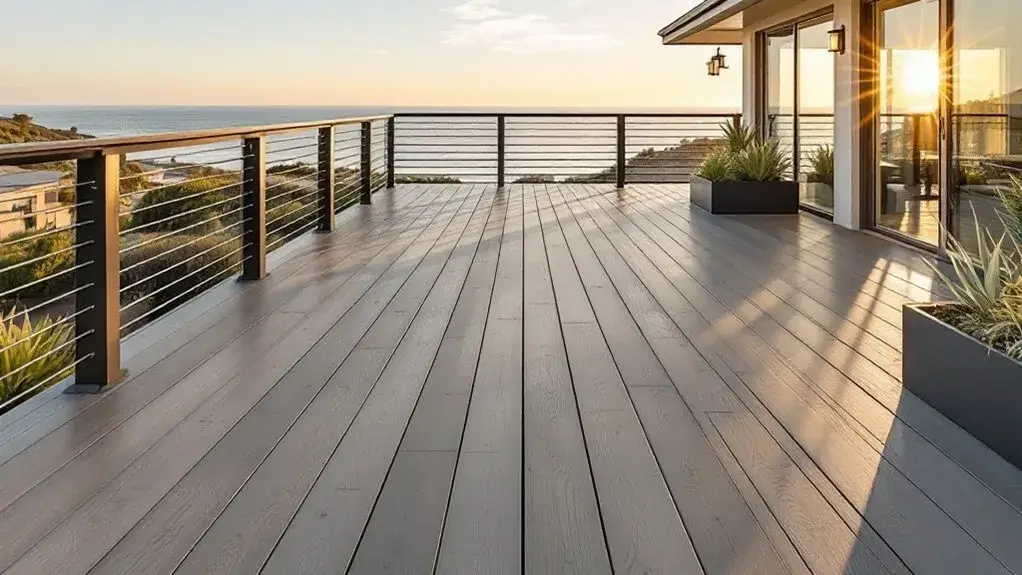
While premium finishes provide surface protection, your deck’s longevity depends equally on construction methods that prevent corrosion from taking hold in the first place. You’ll want to implement strategic techniques that address San Diego’s challenges related to salt-laden air and moisture.
| Construction Technique | Corrosion Prevention Benefit |
|---|---|
| Stainless steel fasteners | Eliminates rust staining and structural weakening |
| Proper joist spacing | Reduces moisture accumulation between boards |
| Adequate ventilation gaps | Allows airflow to prevent trapped humidity |
| Galvanized flashing | Protects vulnerable connection points |
| Sloped drainage design | Prevents water pooling and accelerated deterioration |
These methods create barriers against moisture infiltration while promoting airflow that naturally combats corrosion-causing conditions.
Long-Term Maintenance Strategies for Coastal Deck Preservation
Even with superior construction techniques protecting your deck’s foundation, establishing a proactive maintenance routine will determine whether your coastal investment thrives for decades or succumbs to San Diego’s marine environment within just a few years.
You’ll need to inspect fasteners quarterly for corrosion, checking hidden connections where salt tends to accumulate.
Clean your deck monthly with fresh water to remove salt deposits before they penetrate protective coatings. Reapply marine-grade sealers annually, focusing on high-wear areas and joints where moisture is most likely to infiltrate.
- Schedule power washing during dry seasons to prevent moisture trapped beneath protective finishes
- Document maintenance dates and material specifications for warranty claims and future contractors
- Stock replacement hardware using identical materials to maintain structural integrity
- Monitor drainage systems for clogs that create standing water
Frequently Asked Questions
What Permits Are Required for Building a Deck in San Diego?
You’ll need a building permit from the City of San Diego for most deck construction projects.
If your deck’s over 30 inches high or attached to your house, you definitely need one. You’ll also need permits for electrical work if you’re adding lighting or outlets.
Contact the Development Services Department to submit plans and get approval.
Don’t forget to check HOA requirements and coastal commission rules if you’re near the water.
How Much Does a Coastal-Resistant Deck Typically Cost in San Diego?
You’ll typically spend $35-65 per square foot for a coastal-resistant deck in San Diego.
Premium materials, such as composite decking, stainless steel fasteners, and aluminum railings, drive costs higher than those of standard wood decks.
A 200-square-foot deck runs $7,000-13,000, while larger 400-square-foot projects cost $14,000-26,000.
You’re investing more upfront, but you’ll save substantially on maintenance and replacements over time since these materials withstand salt air and moisture better.
Can I Install a Deck Myself, or Do I Need Professionals?
You can install a basic deck yourself if you’re experienced with construction and have the right tools.
However, you’ll need permits, proper foundation work, and knowledge of local building codes.
For coastal areas, professional installations are often worthwhile, as improper weatherproofing or structural issues can be costly later.
Professionals guarantee proper drainage, corrosion-resistant fasteners, and code compliance.
If you’re not confident with structural work, hiring experts will save you headaches and potential safety issues in the long run.
How Long Does Deck Construction Usually Take in Coastal Areas?
You’ll typically need 3-7 days for deck construction in coastal areas, depending on size and complexity.
Weather delays are common due to marine layer moisture and occasional storms.
Professional crews work more efficiently than DIY projects, which can take several weekends over several months.
Permit approval is typically added 2-4 weeks beforehand.
Coastal conditions require extra prep time for proper drainage and corrosion-resistant hardware installation, so don’t rush the process.
What's the Best Time of Year to Build a Deck?
You’ll want to build your deck during dry seasons when there’s minimal rainfall and moderate temperatures.
Spring and fall typically offer the best conditions, as you’ll avoid extreme heat that can affect material handling and worker comfort.
Summer can be effective, but you’ll likely face higher material costs and increased contractor demand.
Winter often brings unpredictable weather that can delay construction.
Plan and book contractors early, as good weather windows fill up quickly in most regions.
Conclusion
You’ve learned the key strategies for building a deck that’ll thrive in San Diego’s coastal environment. By choosing salt-resistant materials, incorporating proper drainage, applying marine-grade finishes, and using corrosion-resistant fasteners, you can create a structure that withstands the effects of ocean air and UV exposure. Don’t forget regular inspections and proactive maintenance – they’re your best defense against coastal wear. With these techniques, you’ll enjoy your deck for decades while minimizing costly repairs.